
If you have large breasts, you already know that sleep is more complicated than it looks. What should be a straightforward nightly routine becomes a persistent challenge — adjusting your position, redistributing weight, dealing with neck tension, and contending with shoulder and upper back pain that accumulates from hours of unsupported positioning.
Large breast tissue adds significant weight to the chest, and gravity acts continuously while you sleep. Whether you are naturally well-endowed, postpartum, or carrying extra breast weight from hormonal changes or body composition, the physics are the same: that weight has to go somewhere. When it goes in the wrong direction — pulling your spine out of neutral alignment, compressing your lungs, or straining the skin and Cooper's ligaments that support breast tissue over time — your sleep suffers and your body pays the price.
This guide covers every sleep position available to large-breasted sleepers, explains what actually happens anatomically in each one, and gives you practical tools to improve your sleep quality, whether you are managing daily discomfort, preparing for breast reduction surgery, or looking for a long-term positioning strategy that protects both your sleep and your breast health.

Why Do Large Breasts Make Sleep So Difficult?
The short answer: weight distribution, spinal alignment, and breathing mechanics.
The Weight Factor
Breast tissue density varies, but large breasts can add anywhere from two to ten pounds or more to the front of your body. In an upright position, your posture compensates automatically. Horizontally, that compensating mechanism is gone. The weight redistributes based entirely on gravity and whatever surface is underneath you, creating pressure points, alignment problems, and soft tissue strain that accumulates across a full night of sleep.
Cooper's Ligament Fatigue
Cooper's ligaments are the fibrous support structures that suspend breast tissue from the chest wall. When large breasts are unsupported during sleep — particularly in side sleeping — these ligaments bear continuous load from the weight of the breast pulling away from the body. Over the years, this contributes to stretching and sagging that cannot be reversed without surgical intervention. Nighttime support is not optional for long-term breast health.
Spinal Alignment Disruption
Every sleeping position carries a different risk for spinal alignment when breast volume is high. On your back, breast weight falls toward the sides, which is manageable but can pull the thoracic spine into lateral stress without support. On your side, one breast's full weight rests on the mattress while the other hangs, creating torque on the thoracic spine. On your stomach, forward-facing breast tissue creates pressure against the mattress that throws lumbar alignment off and compresses the cervical spine.
Breathing and Chest Expansion
Heavy breast tissue on the chest wall can limit the mechanical range of thoracic expansion during sleep, particularly in stomach sleeping and unsupported side sleeping. Over a full night, reduced chest expansion affects sleep quality even when it does not cause obvious waking symptoms.

What Is the Best Sleeping Position for Large Breasts?
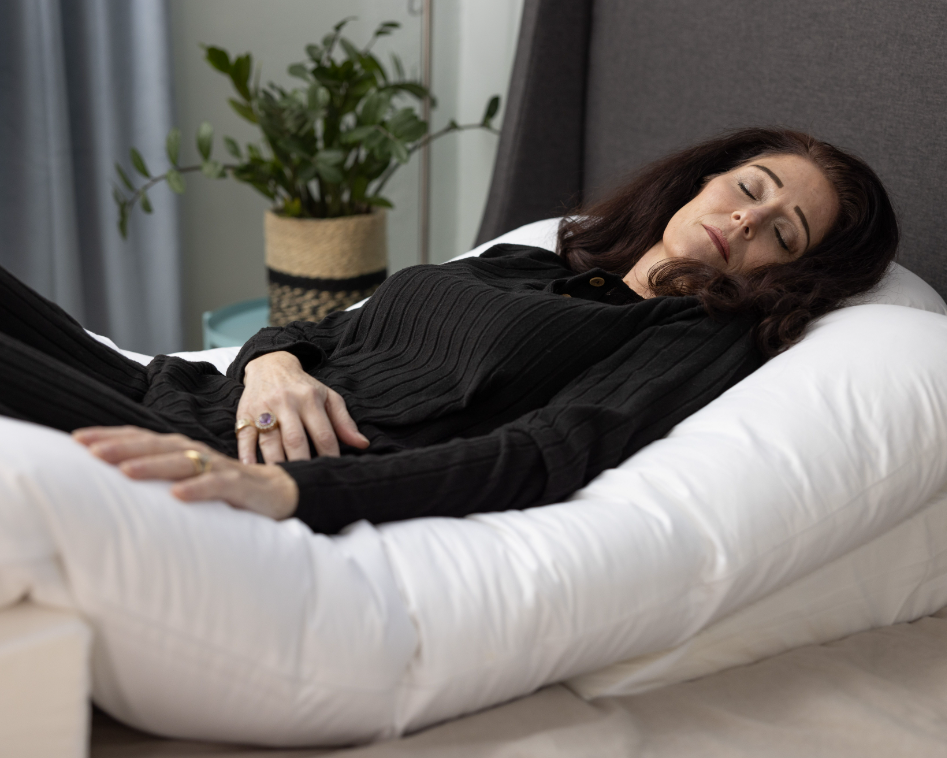
Elevated back sleeping at 30 to 45 degrees is the most biomechanically optimal position for large-breasted sleepers.
Here is why elevated back sleeping is the superior option:
When you sleep on your back at a gentle incline, breast tissue distributes symmetrically across the chest wall. The weight does not pull toward one side, does not hang free, and does not press into a mattress surface. Gravity assists the drainage of any fluid retention in the breast tissue. Spinal alignment is easier to maintain when both the upper body and legs are supported correctly. And because breast tissue is not compressed or pulled laterally, Cooper's ligaments rest in a supported, neutral position through the night.
Flat back sleeping is an improvement over stomach and unsupported side sleeping, but it is not optimal. Without upper body elevation, breast weight still exerts a lateral pull, and the thoracic restriction that large breast volume can create is not addressed.
The 30-to-45-degree incline range opens the airway, improves breathing mechanics, and positions the upper body in a way that flat back sleeping cannot achieve.
How Can You Sleep on Your Back With Large Breasts Comfortably?
Back sleeping is biomechanically ideal for large breasts, but execution matters. Simply lying flat on your back does not resolve the weight distribution and spinal alignment challenges. It just changes them.
The Case for Elevation
A flat back position leaves breast tissue resting at chest level with gravity pulling it laterally. The thoracic spine is unsupported through its natural curve, and without leg elevation, lumbar stress accumulates. Add any tendency toward acid reflux, common in individuals with higher body mass, and flat back sleeping becomes genuinely uncomfortable.
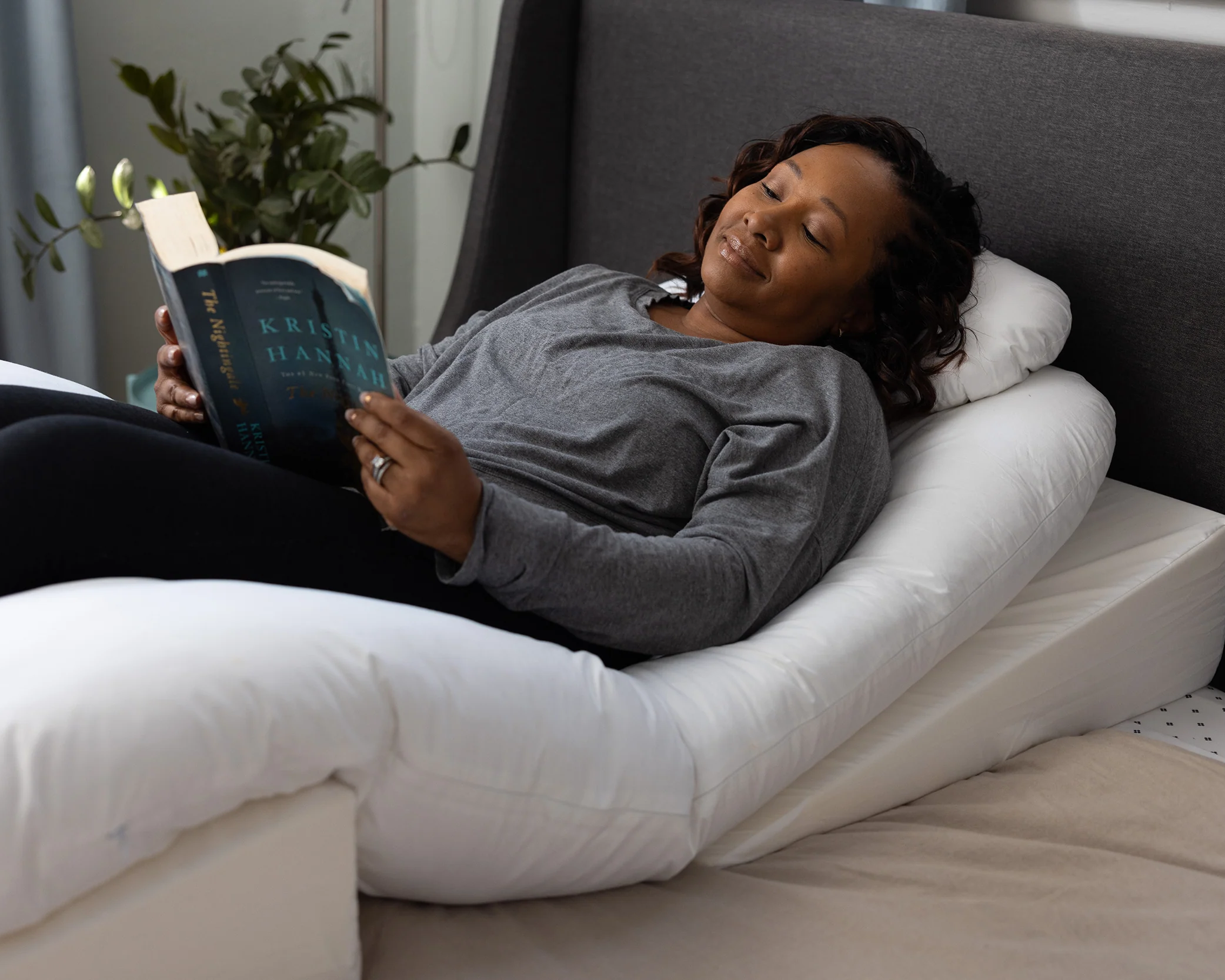
Elevating your upper body at 30 to 45 degrees changes the positioning picture significantly. At this angle, breast tissue rests naturally against the chest wall. Thoracic breathing mechanics improve. Reflux is minimized.
What You Need to Execute This Position Well
Proper elevated back sleeping for large-breasted sleepers requires:
-
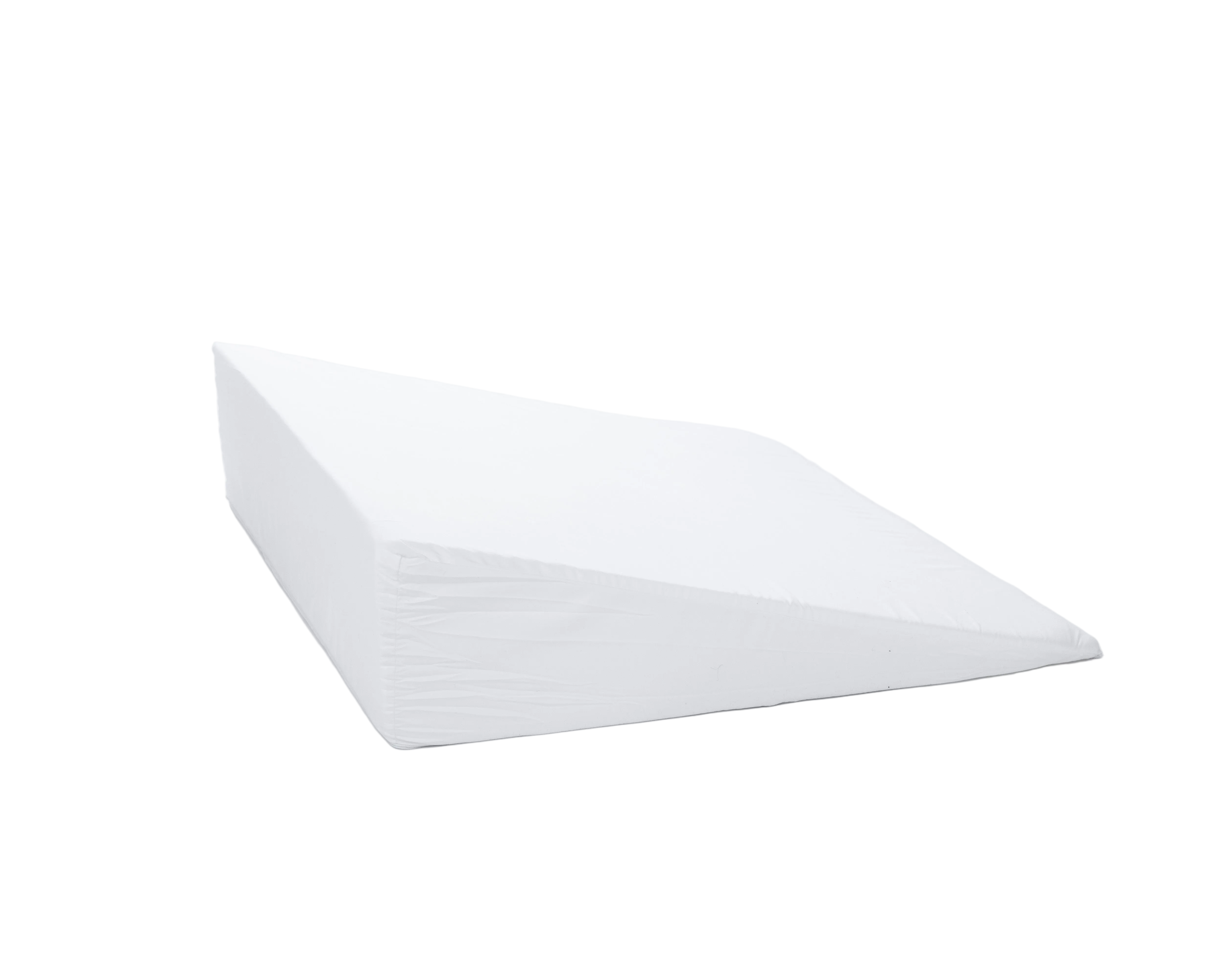
A firm, wedge-based incline that maintains its angle throughout the night — not a stacked pillow arrangement that compresses and shifts
-
Support for the cervical spine and head at the correct height for the incline angle
-
A leg support element under the knees and lower legs to prevent lower back strain from a sliding posture
-
Side support to prevent gradual lateral drift during sleep
Standard pillows do not meet these requirements. They compress under body weight, shift horizontally with movement, and lose their positioning within an hour of sleep. The result is that you start the night correctly positioned and end it in a collapsed configuration that undermines the entire therapeutic benefit of the setup.

The Sleep Again Pillow System: Finally a Solution for Back Sleepers With Large Breasts
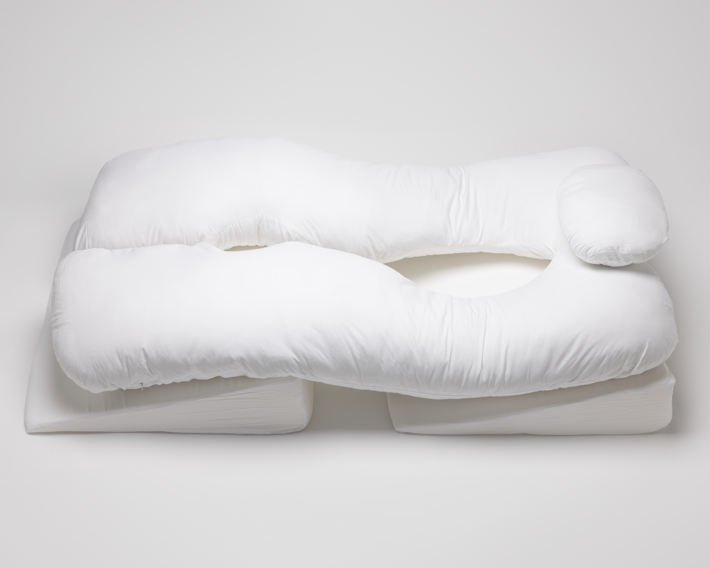
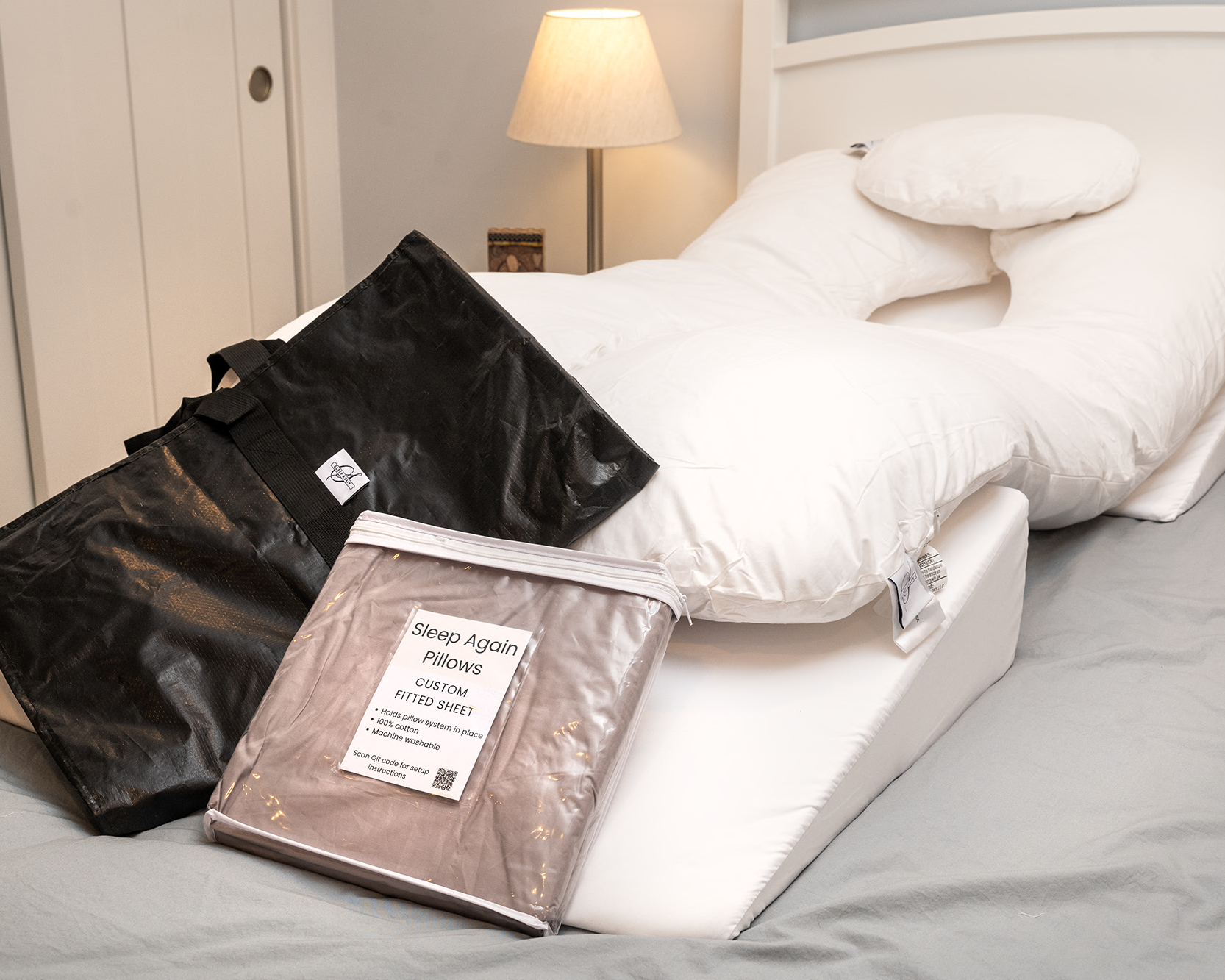
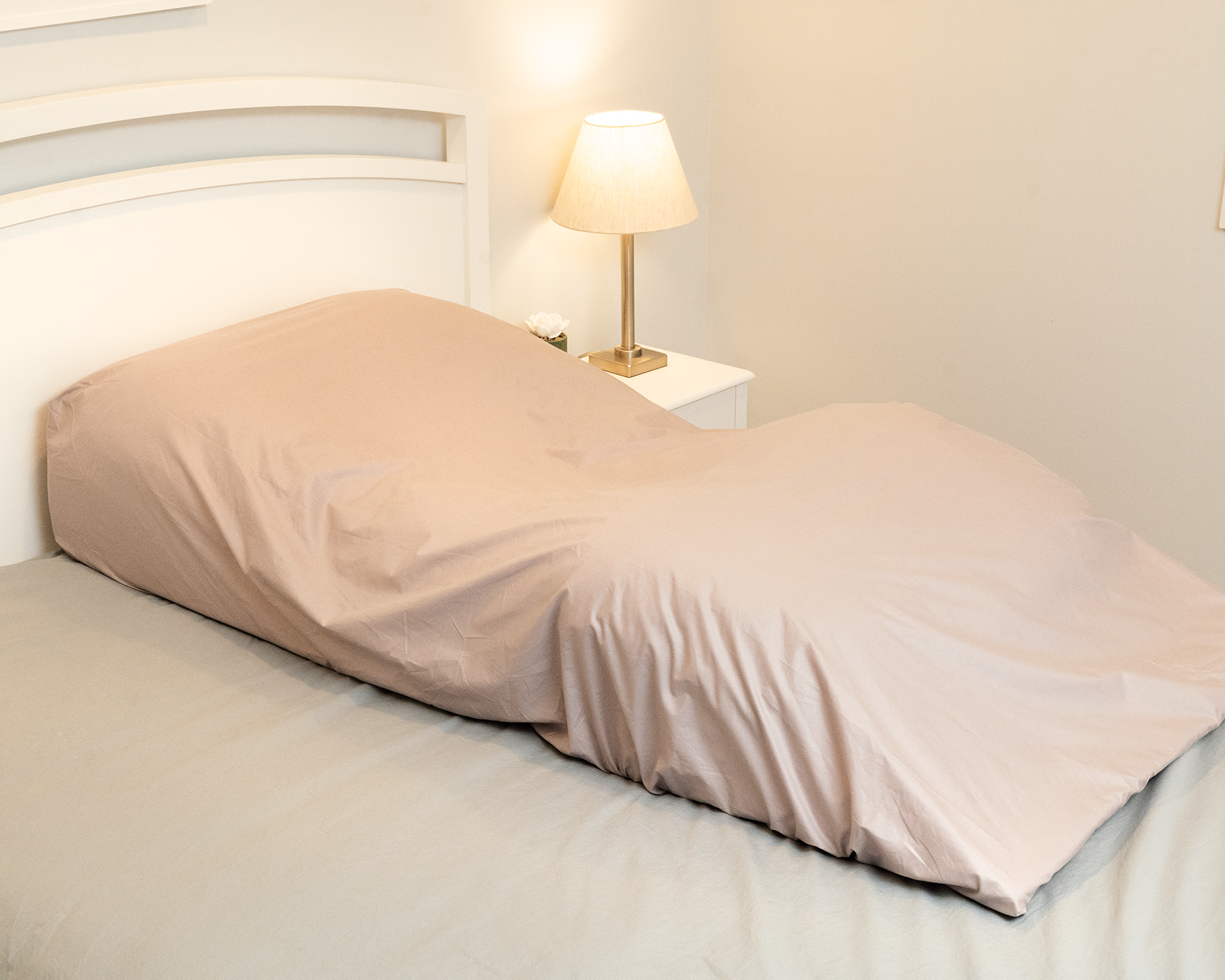
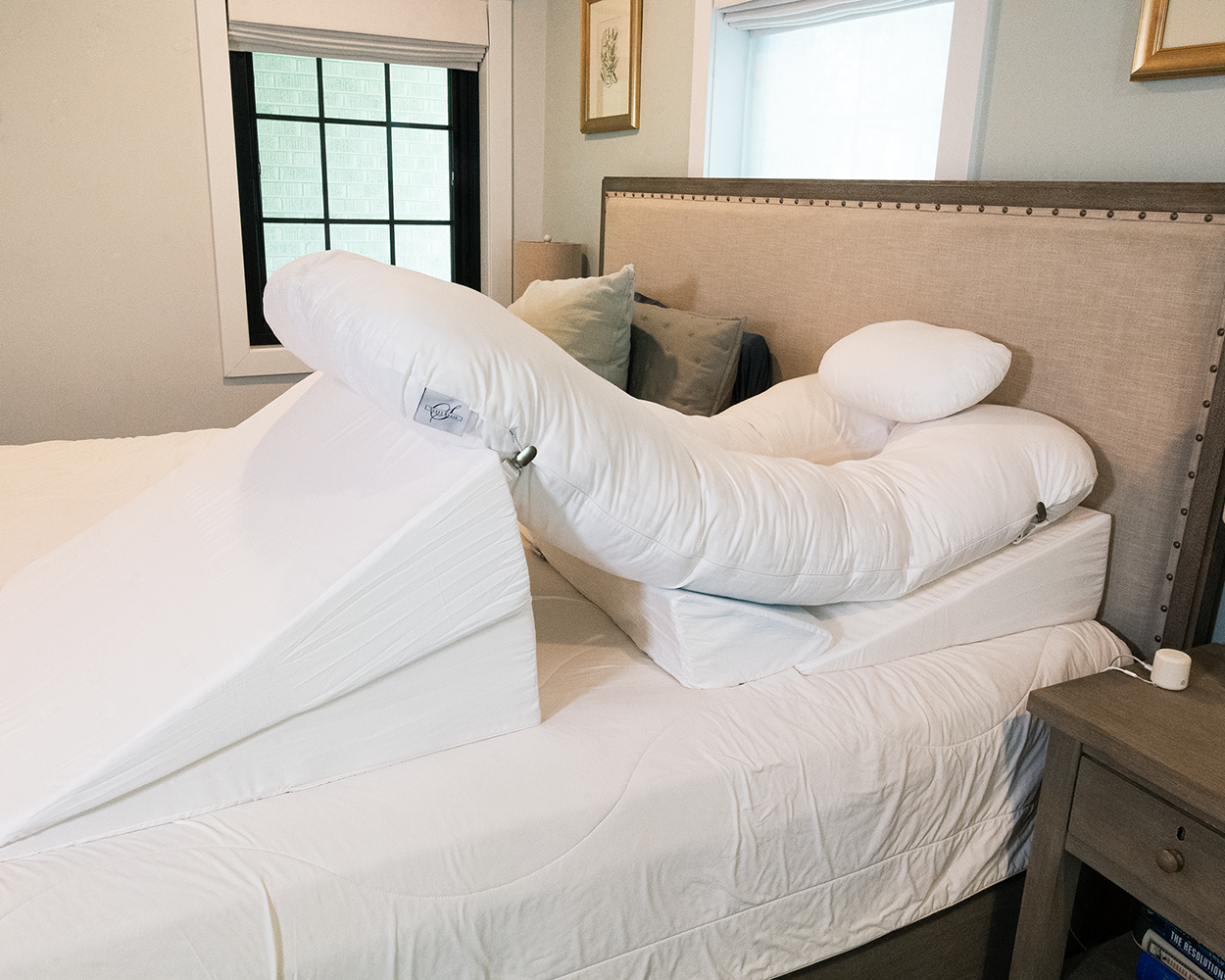
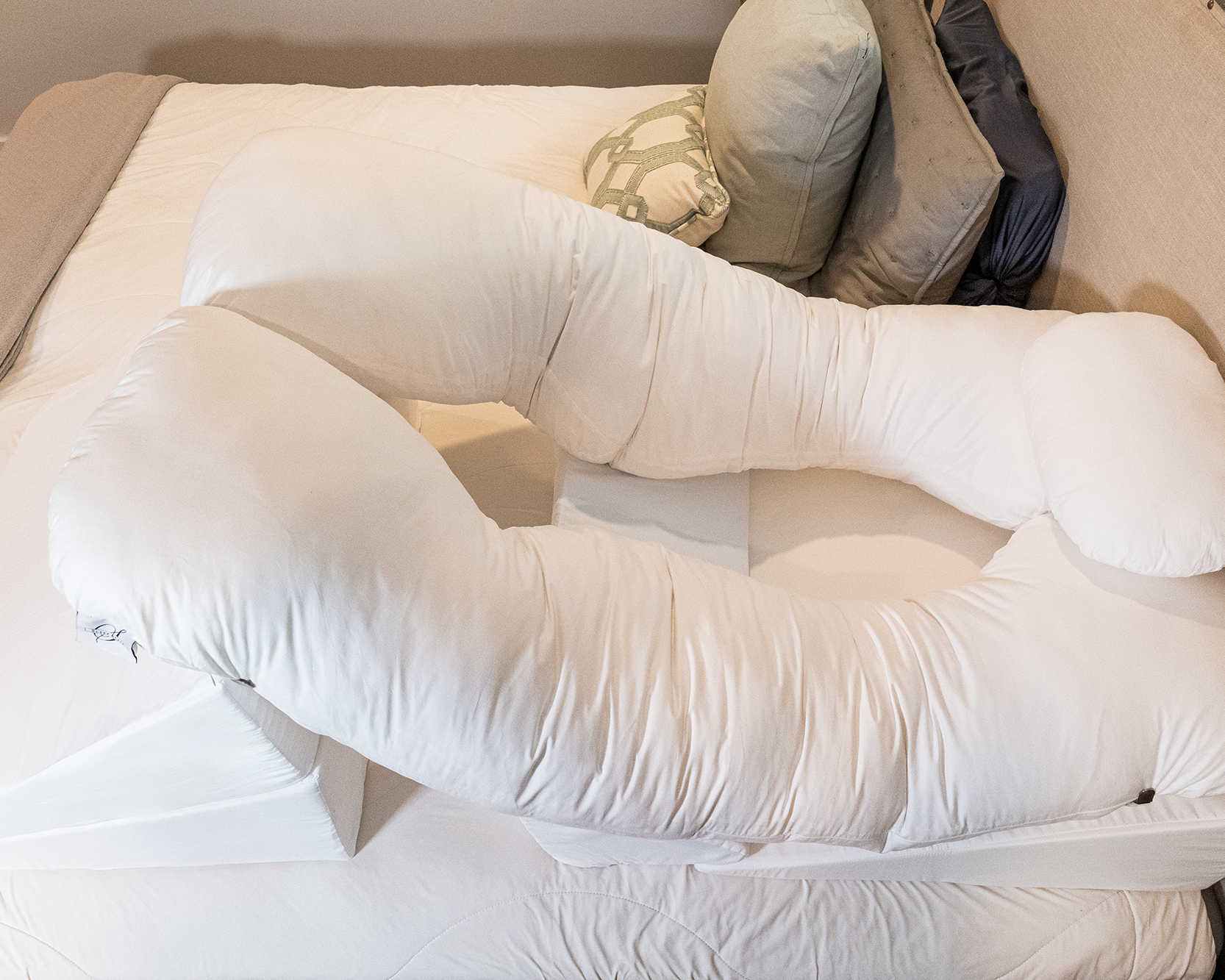
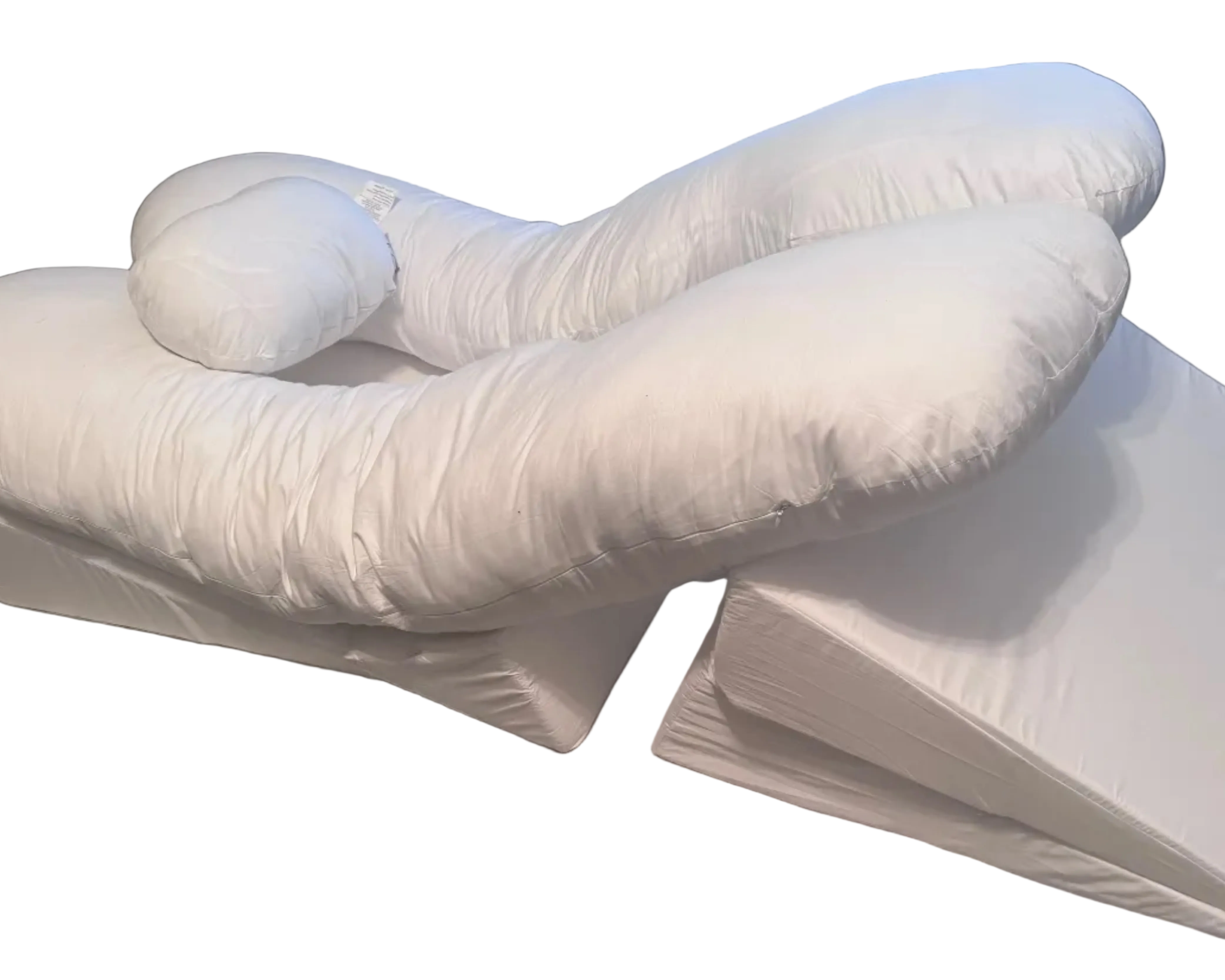
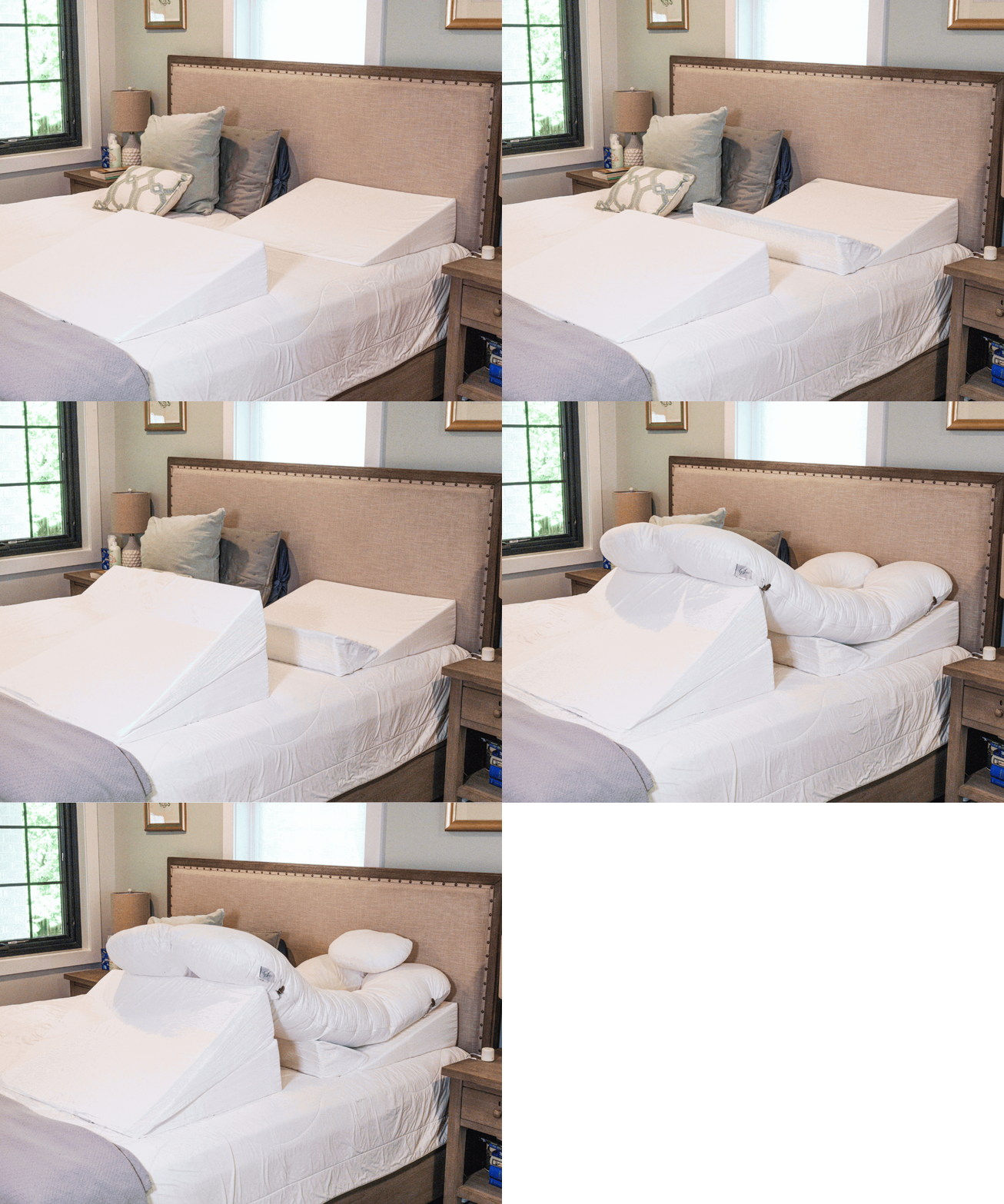
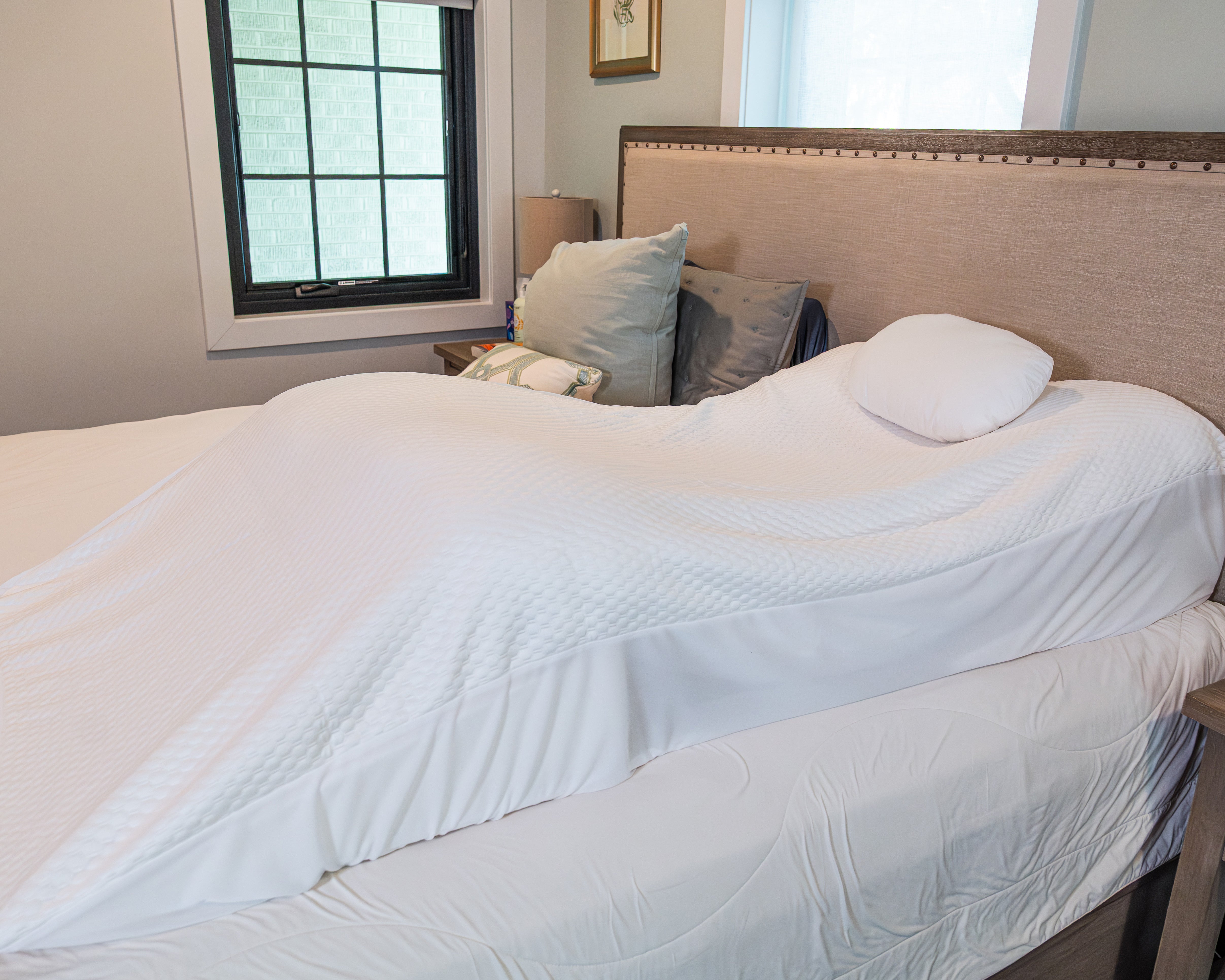
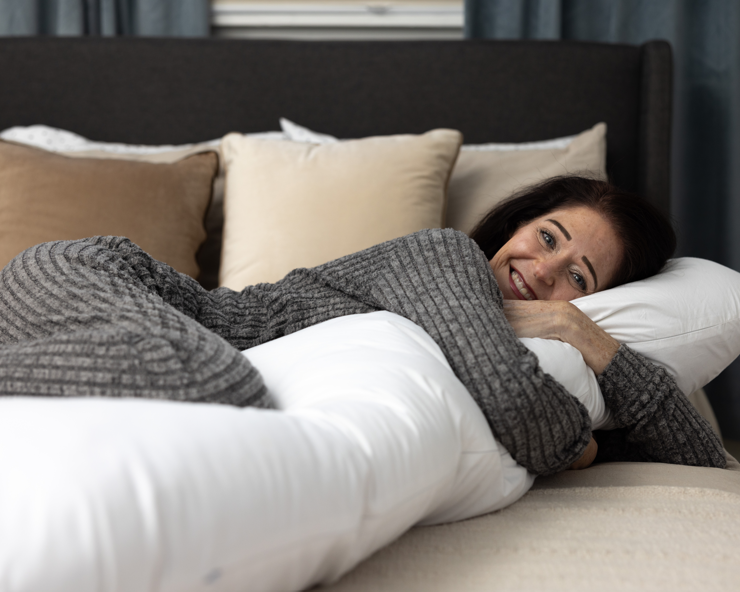
The Sleep Again Pillow System is engineered for the elevated back positioning that large-breasted back sleepers need, with every component serving a defined role in the positioning geometry.
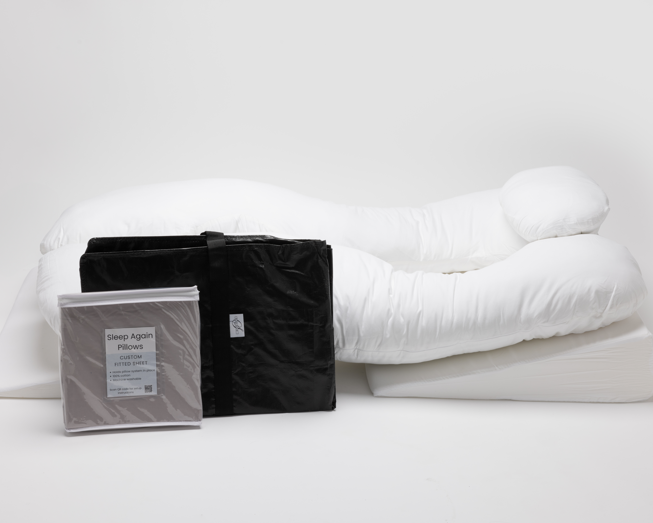
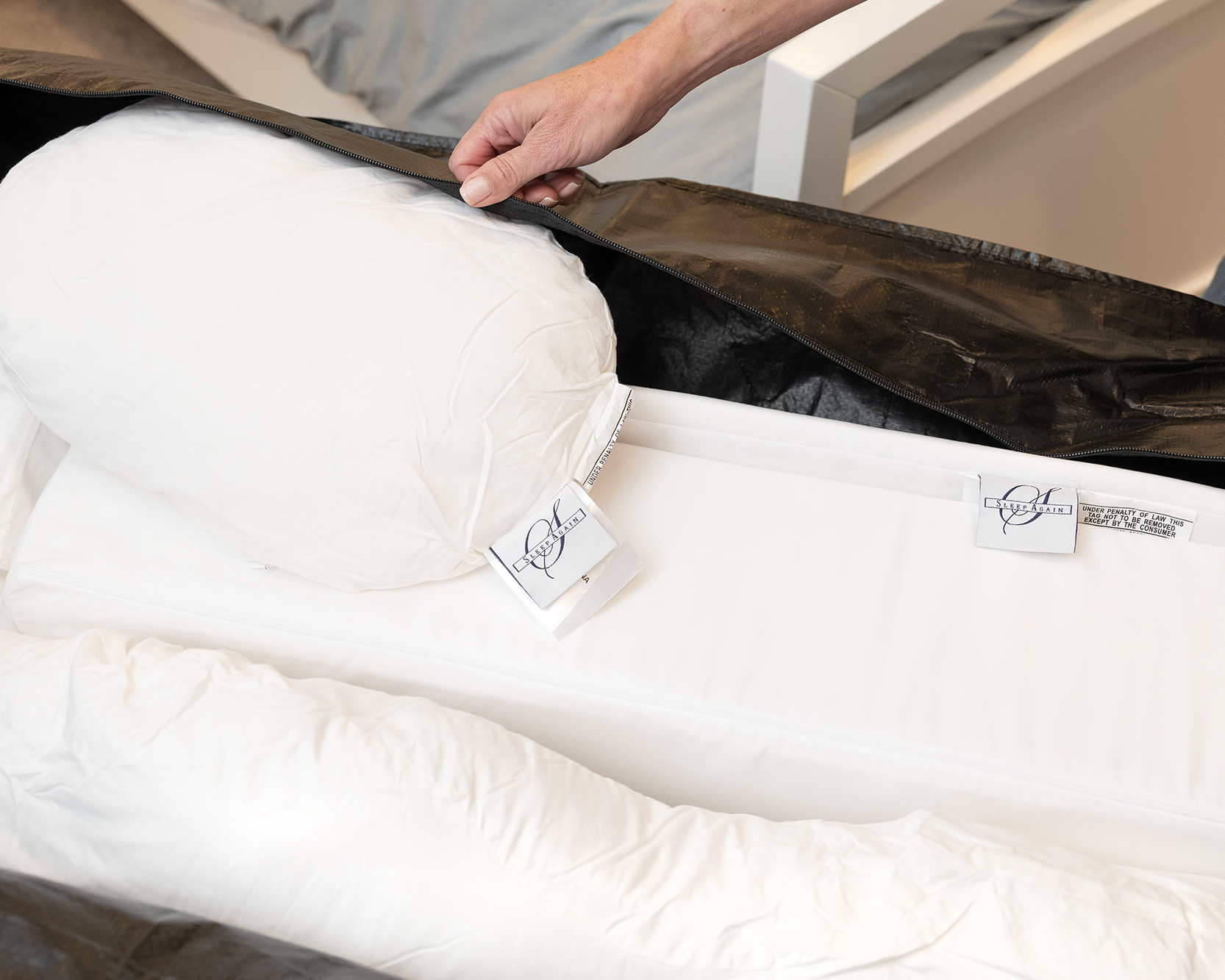
Every Sleep Again Pillow System Includes:
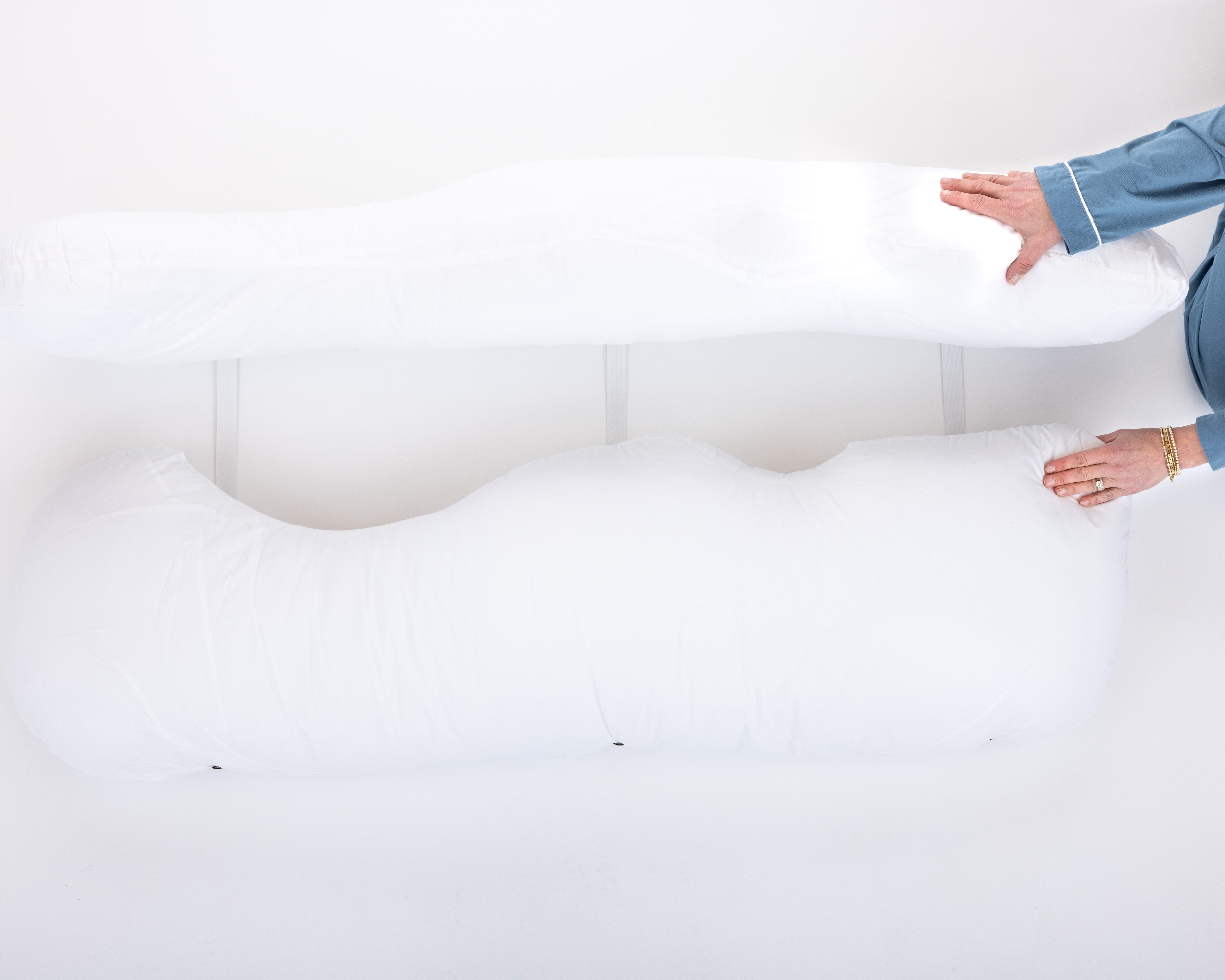
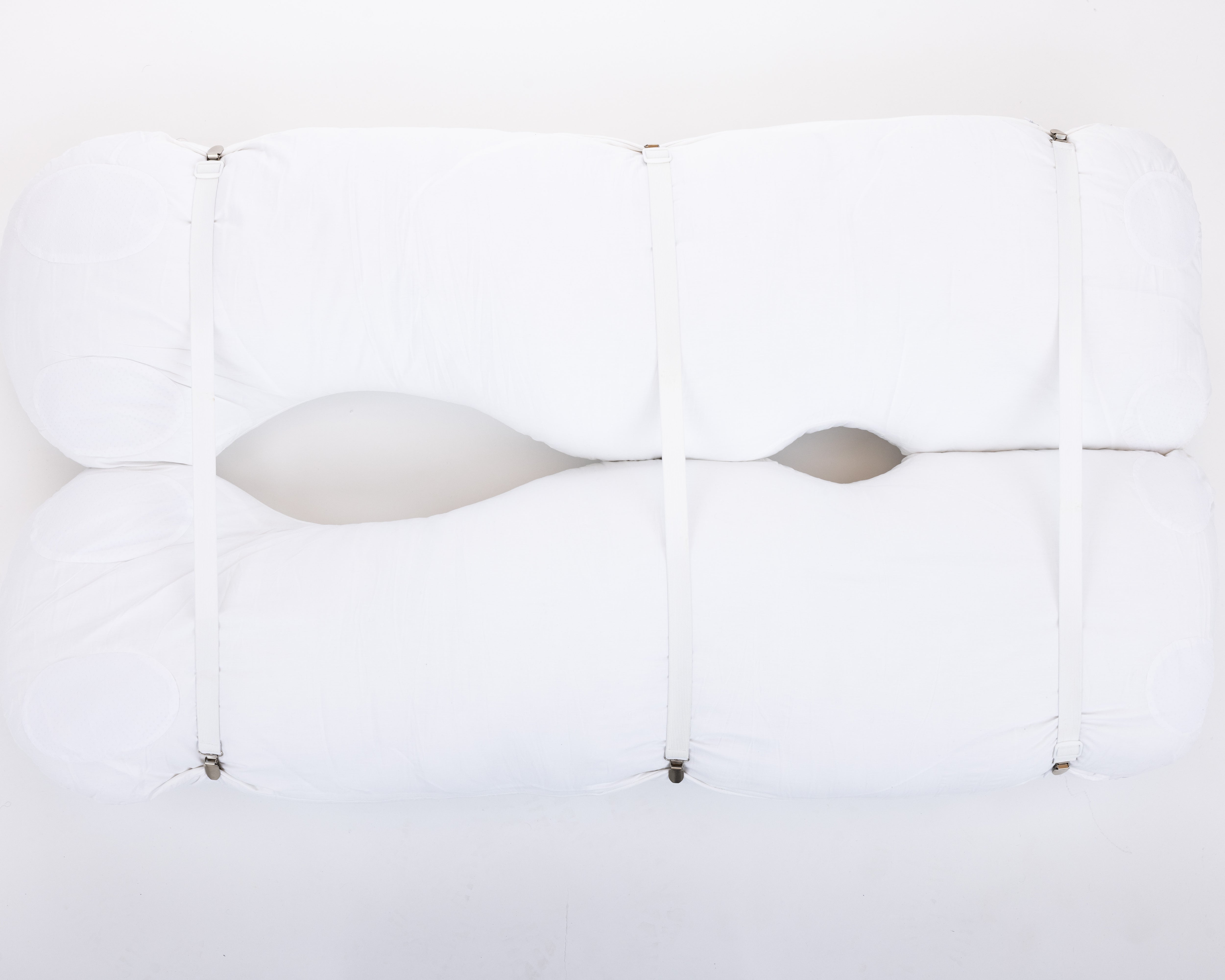
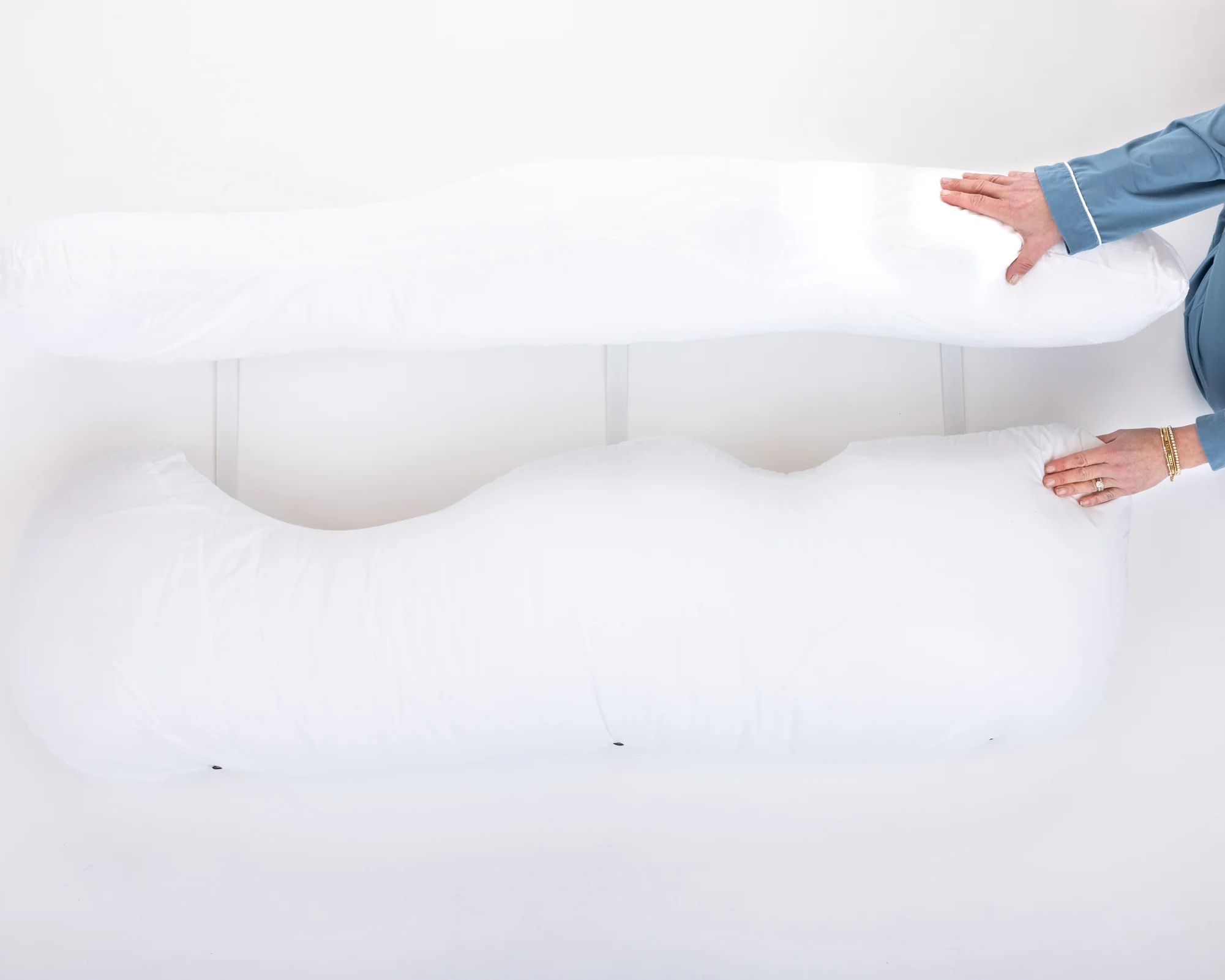
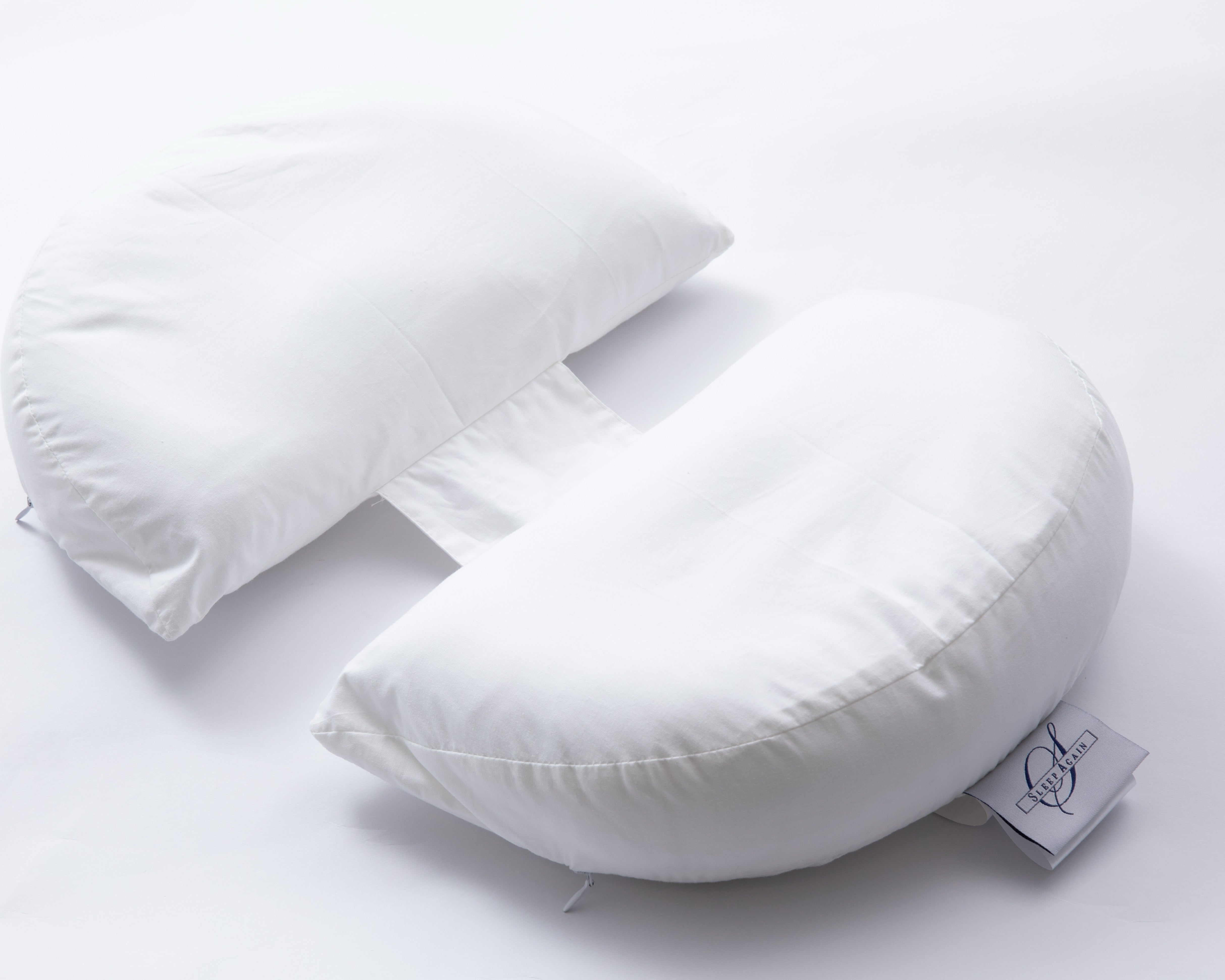
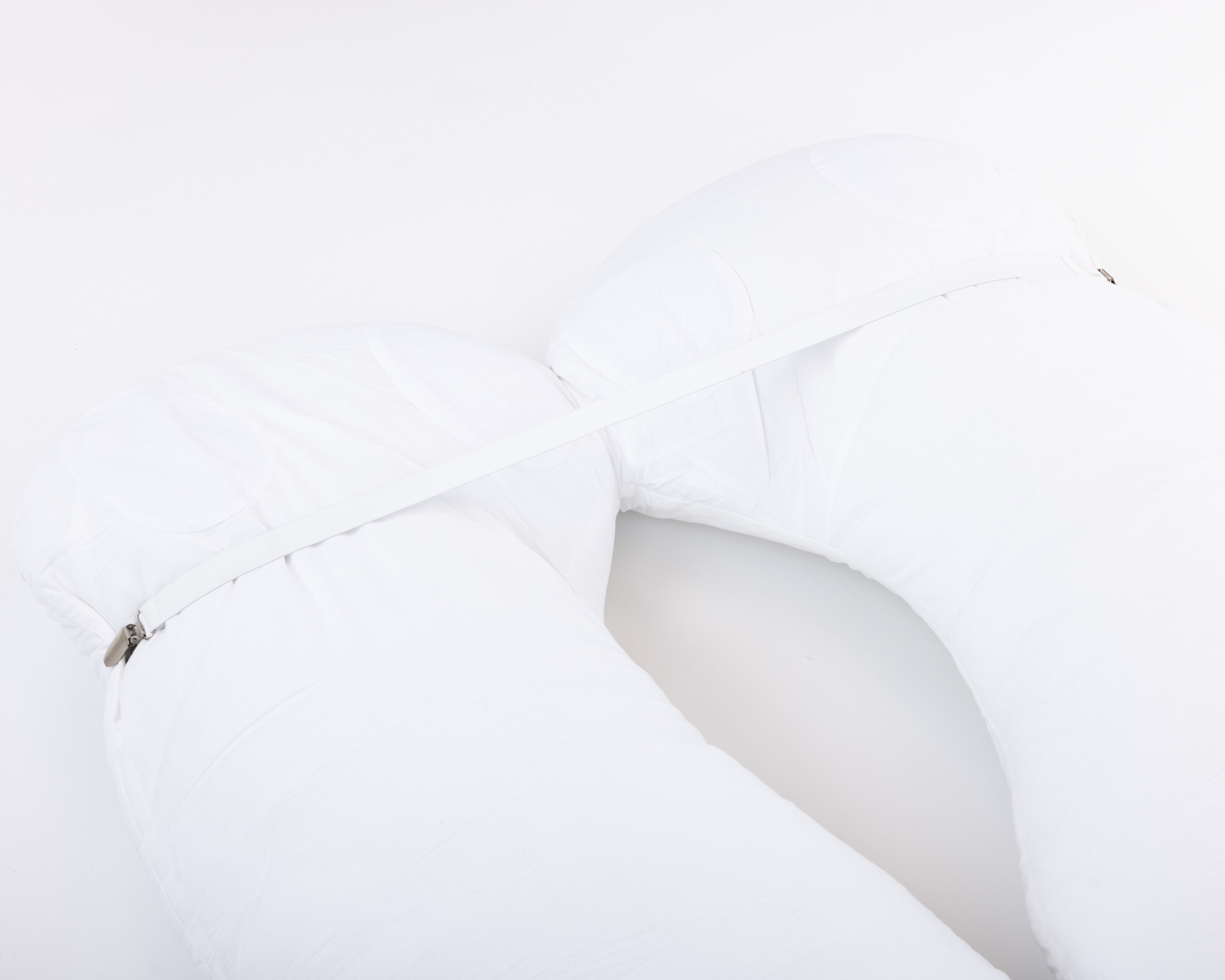
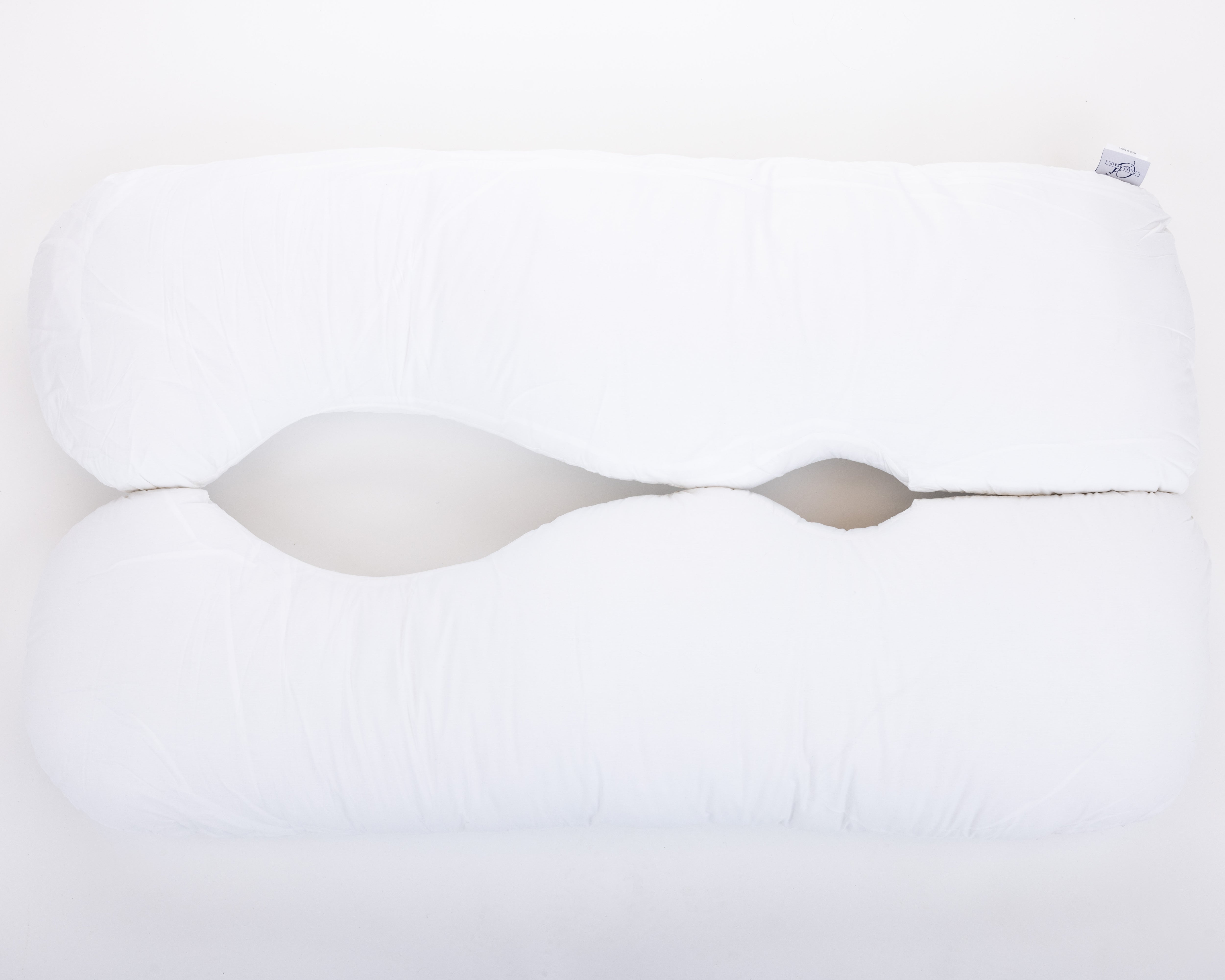
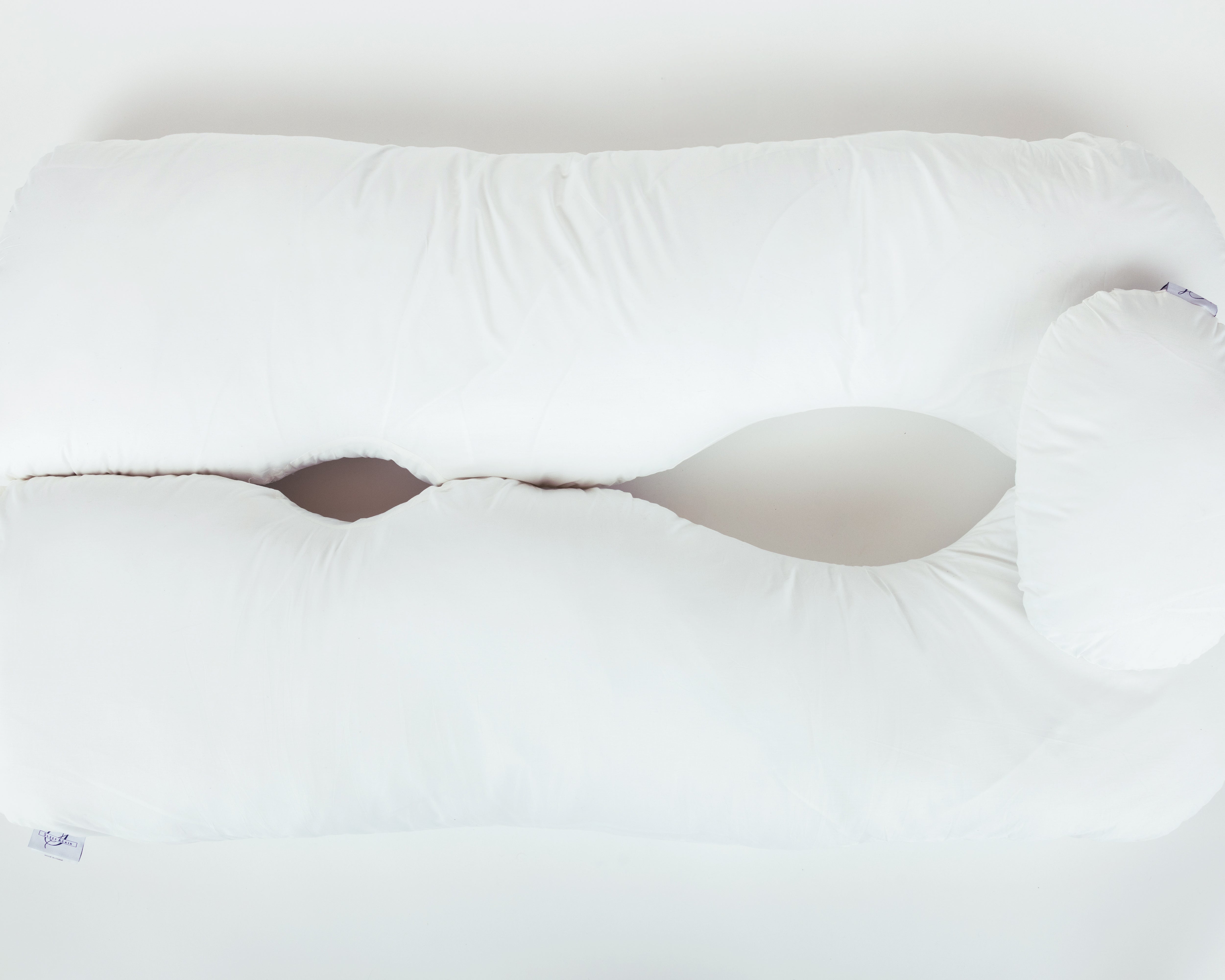
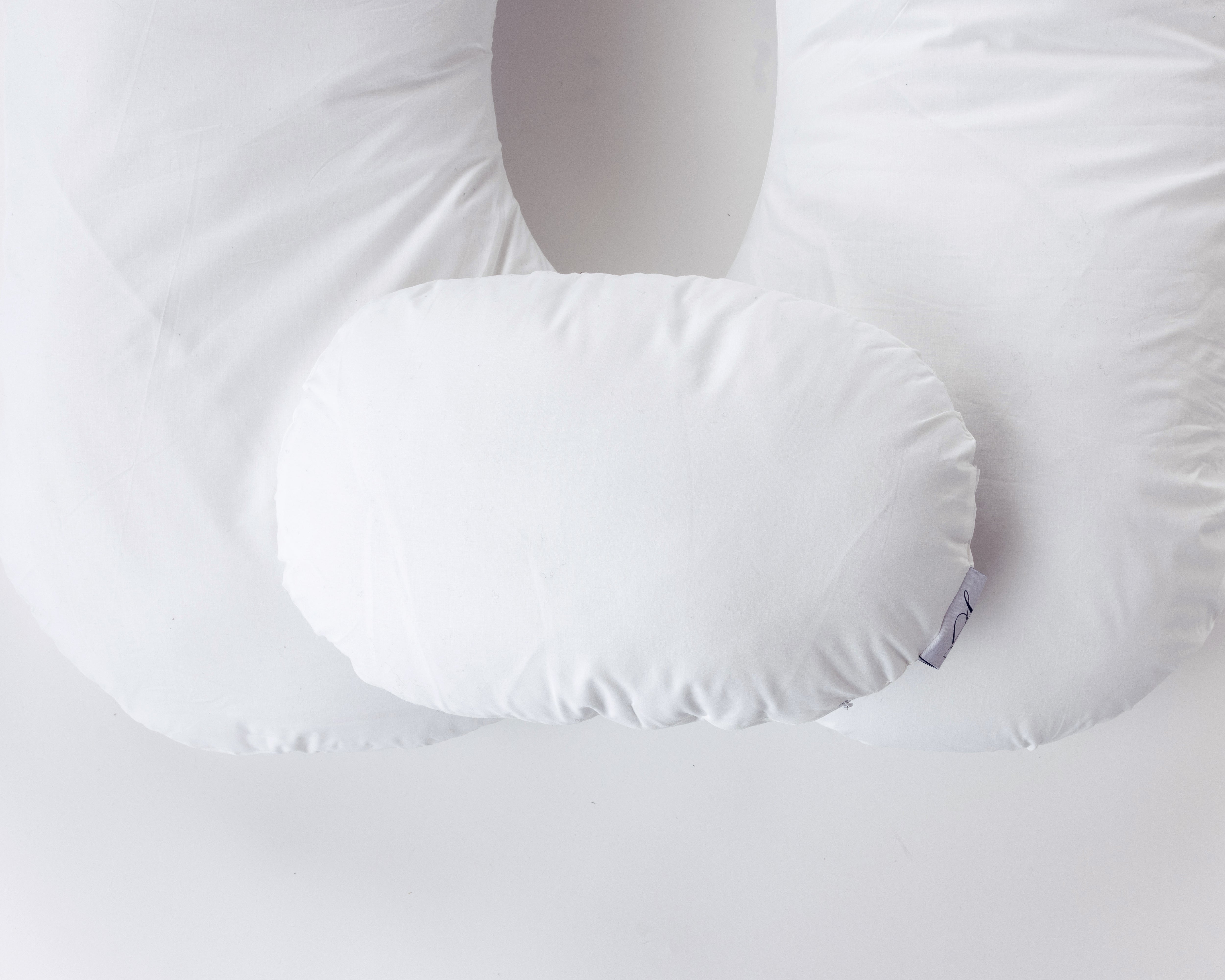
- Two Contoured Side Pillows to cradle the back and hips
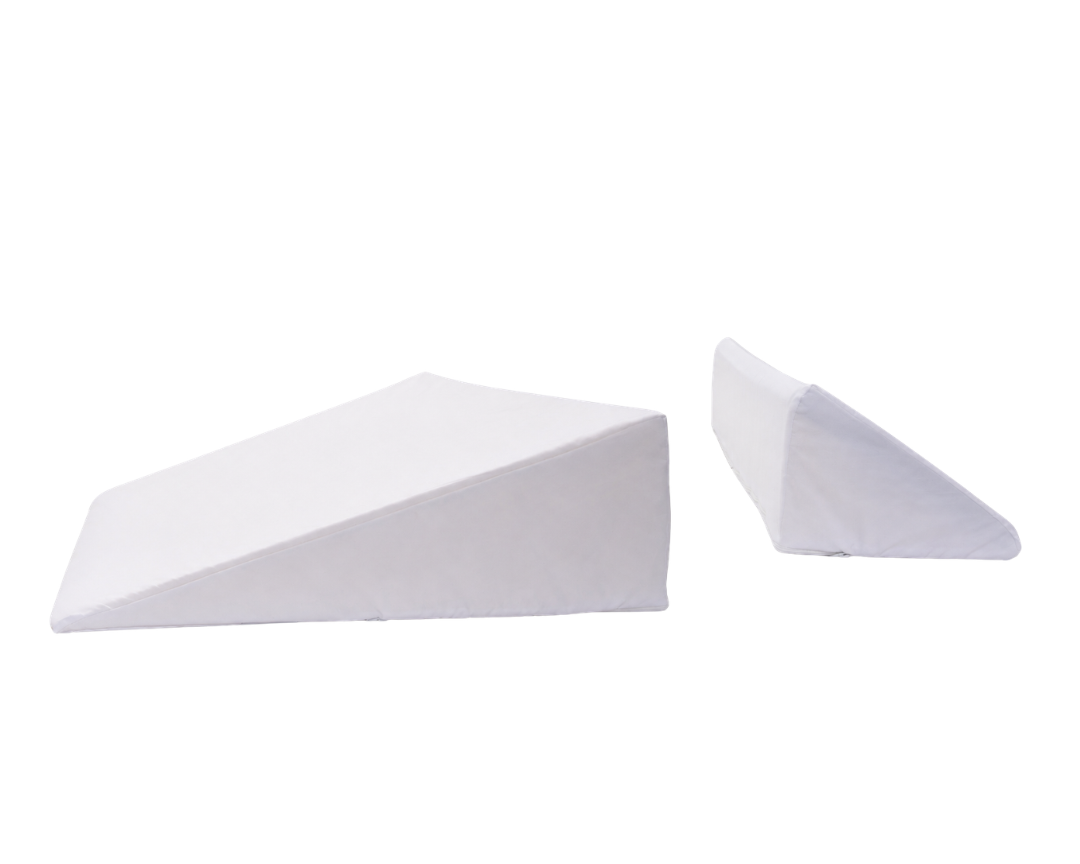
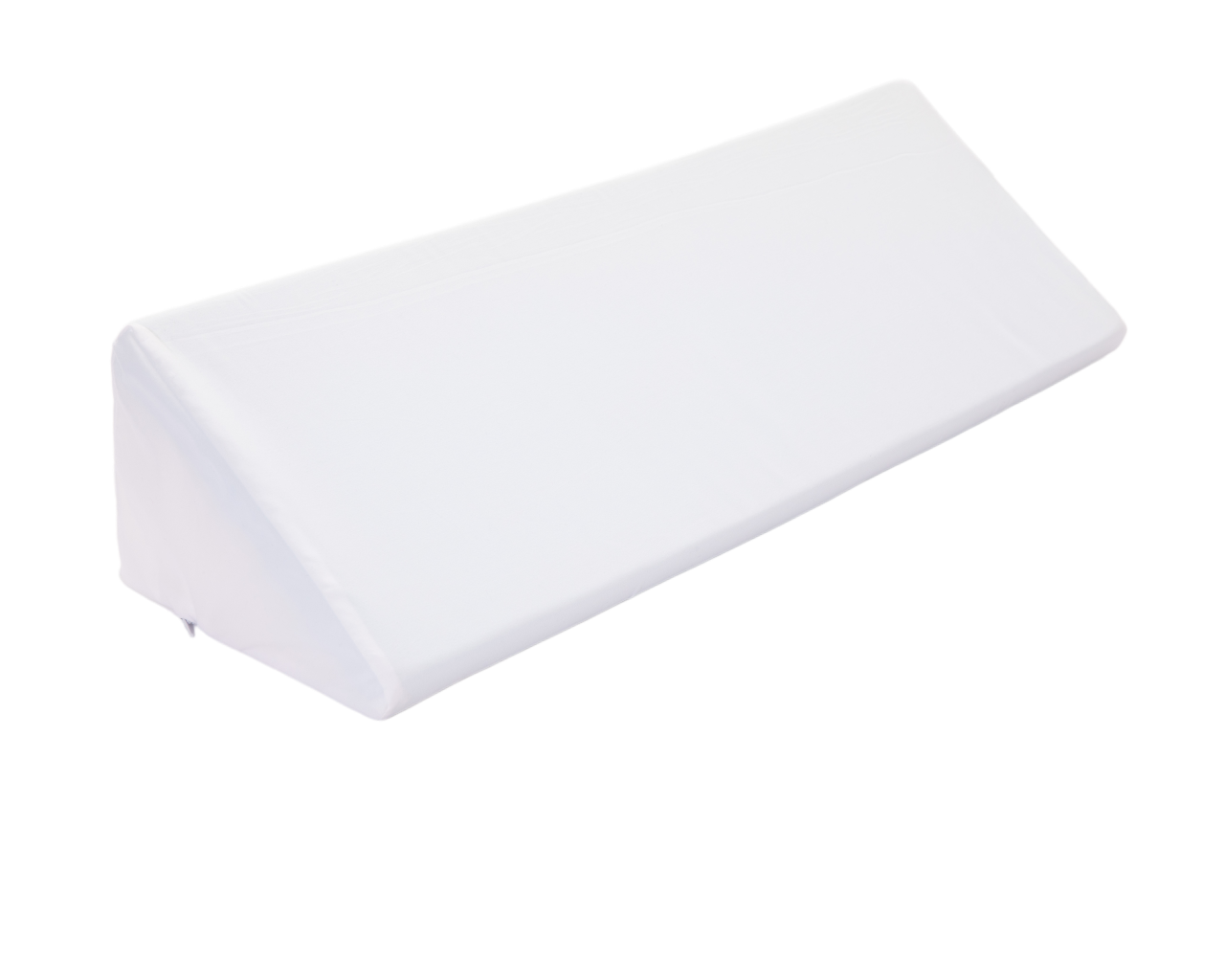
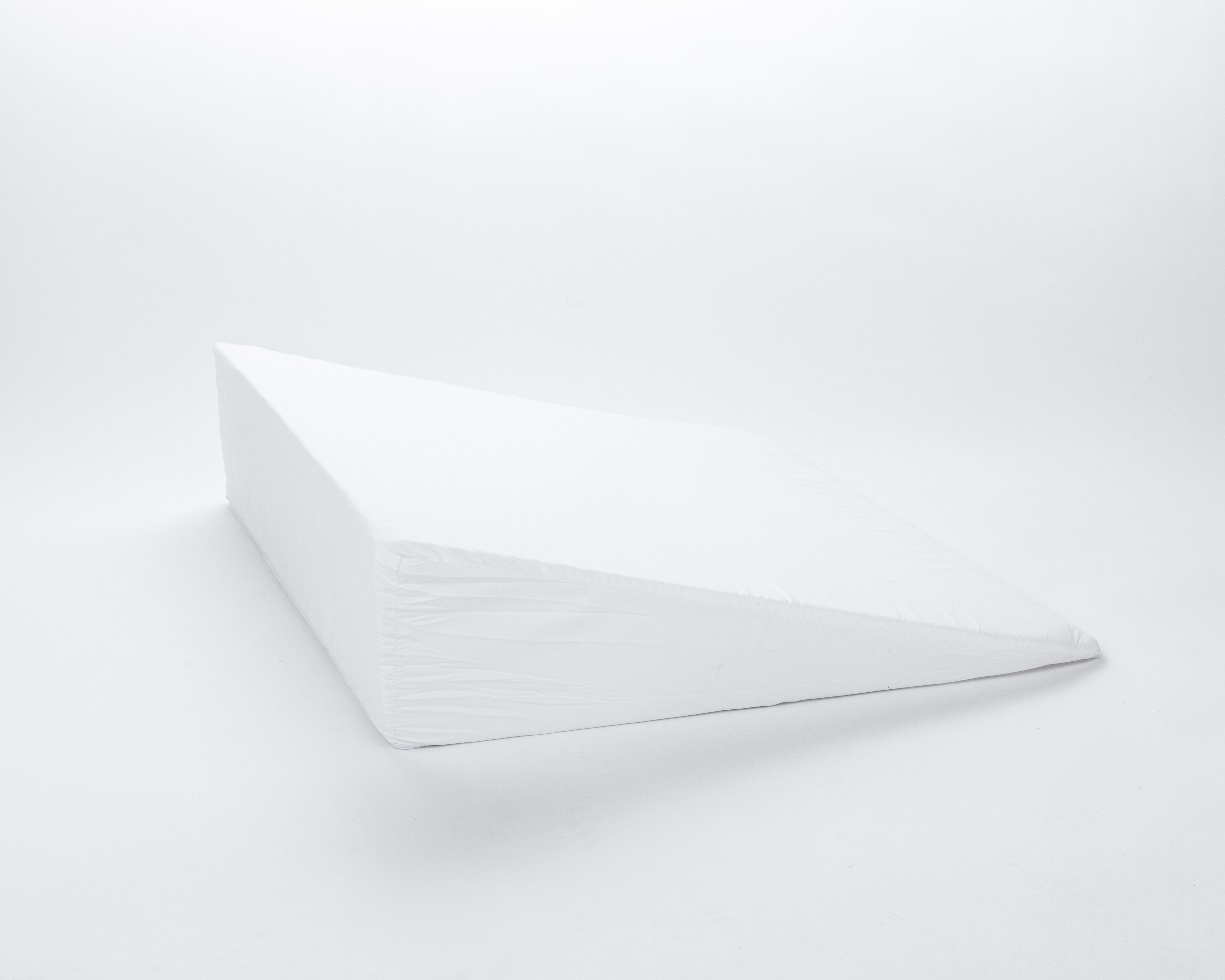
- Upper Body Wedge to create optimal upper body incline
- Leg Support Wedge to gently elevate legs
- Head Pillow to provide head support and neck mobility
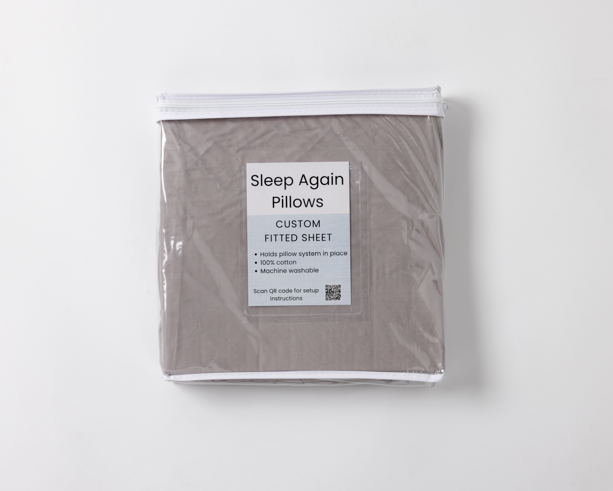
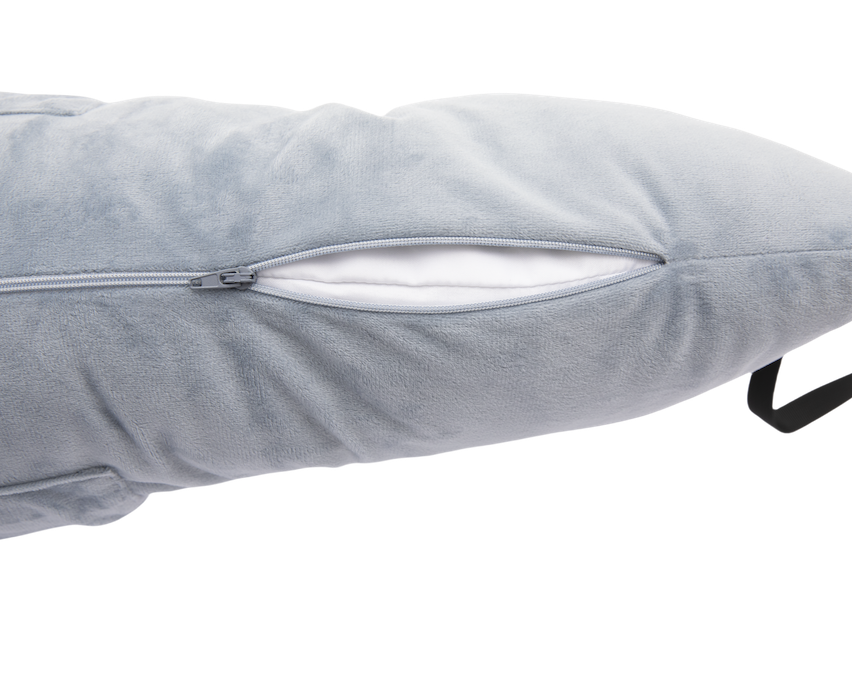
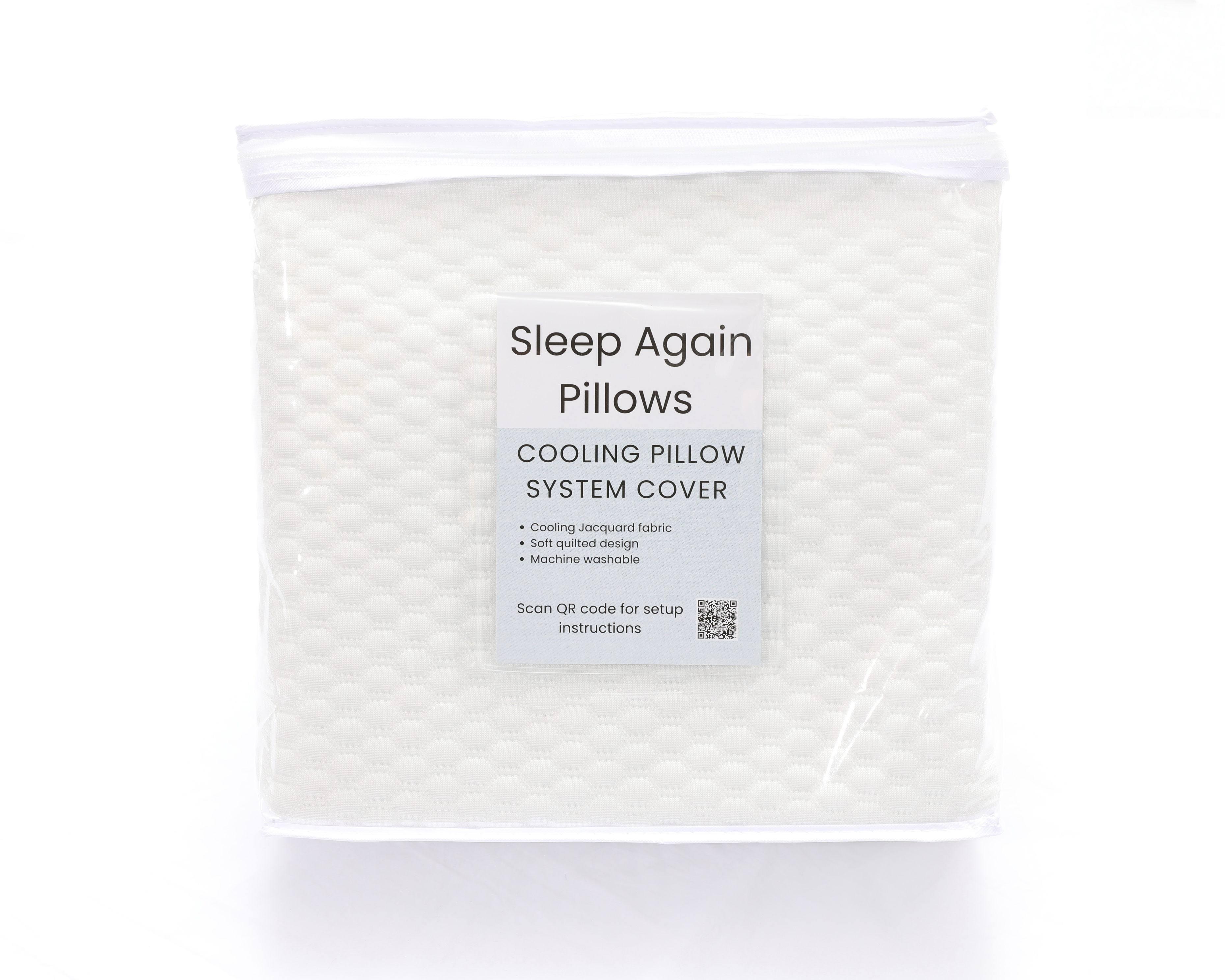
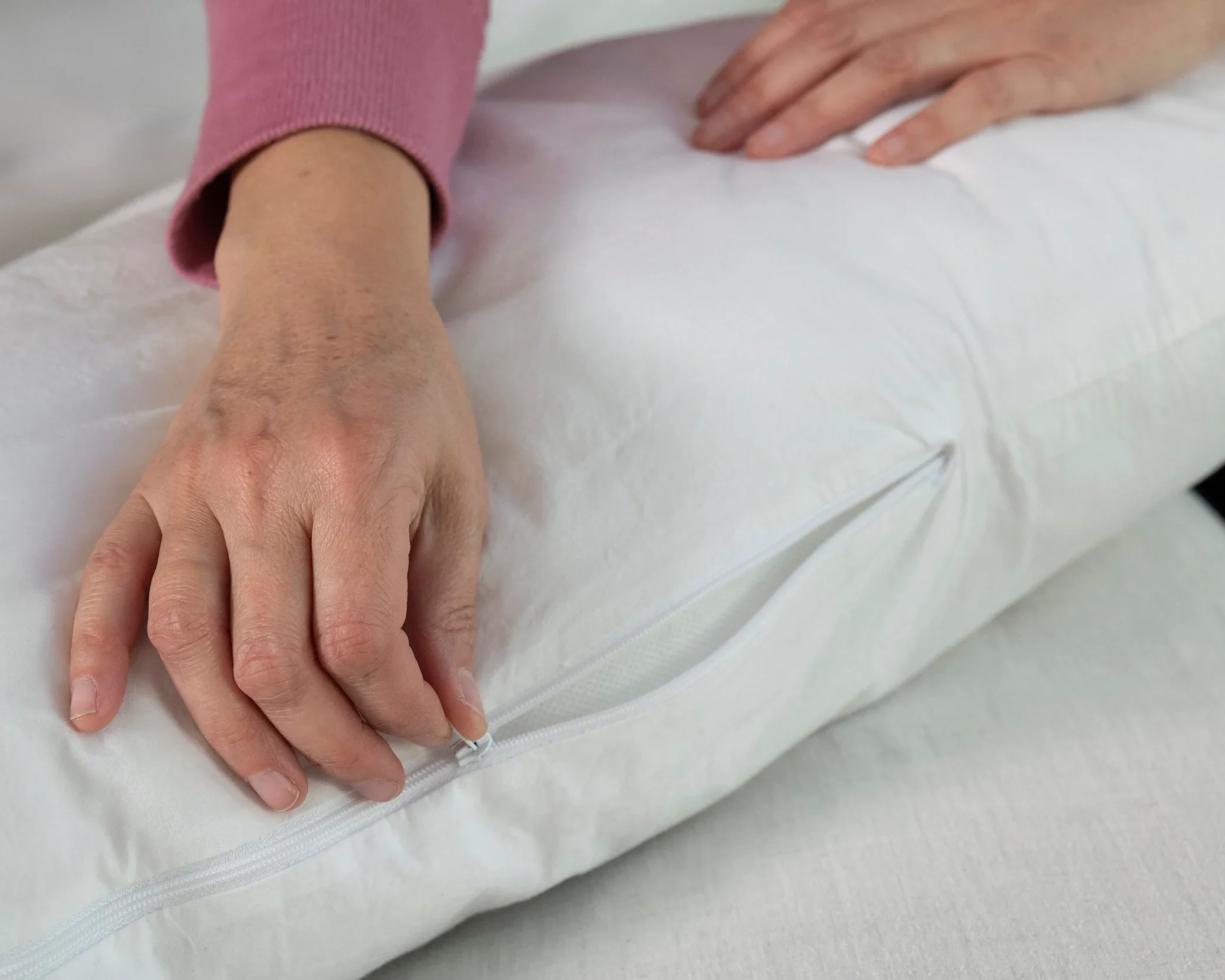
- Removable, washable slipcovers for every piece
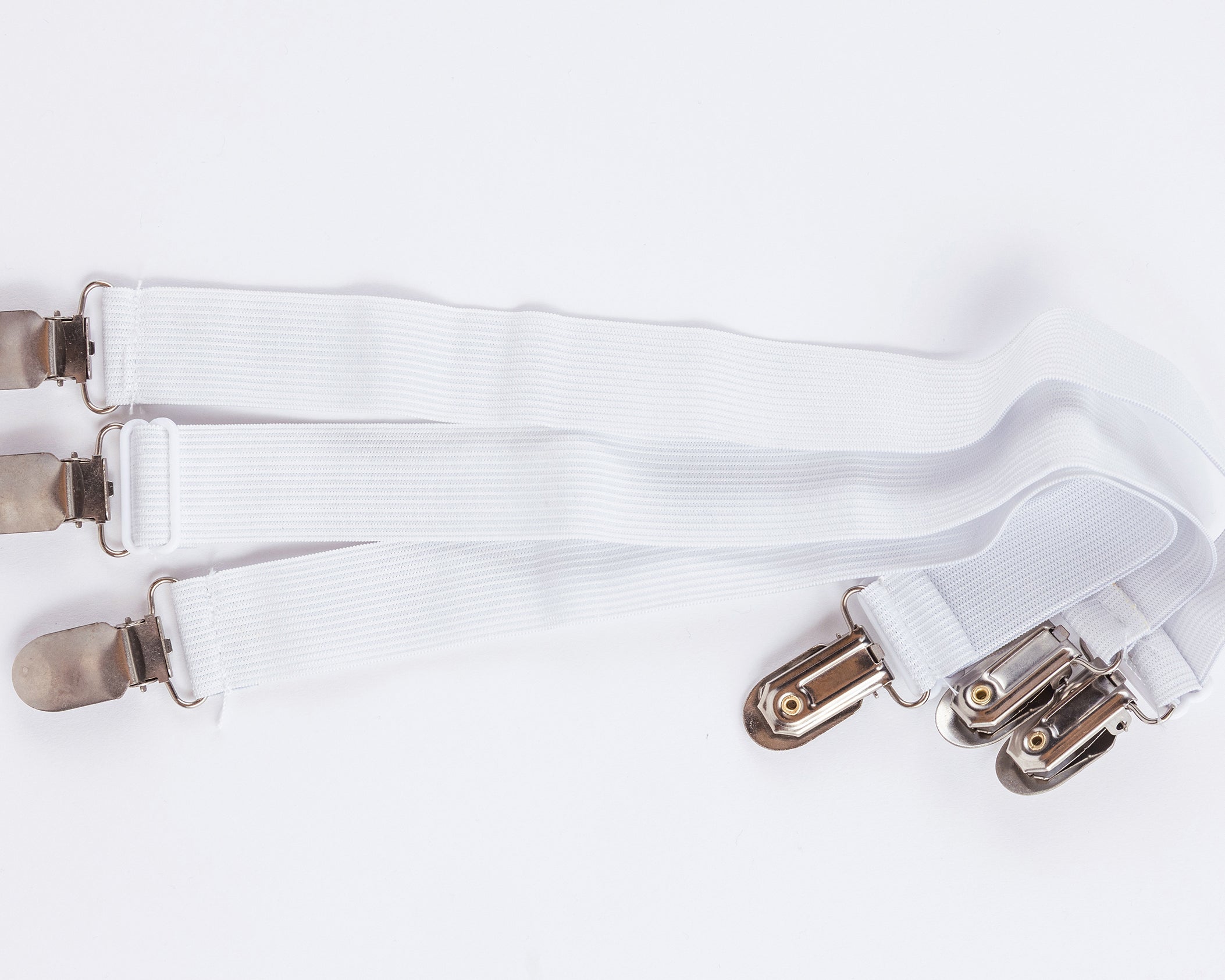
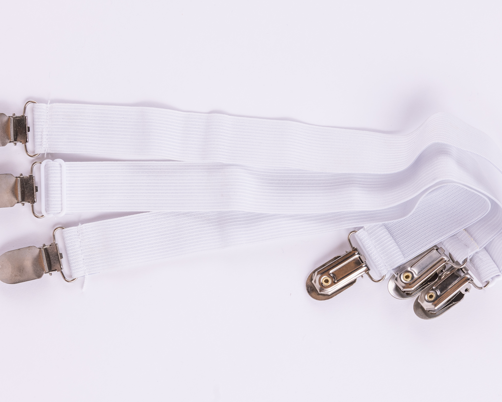
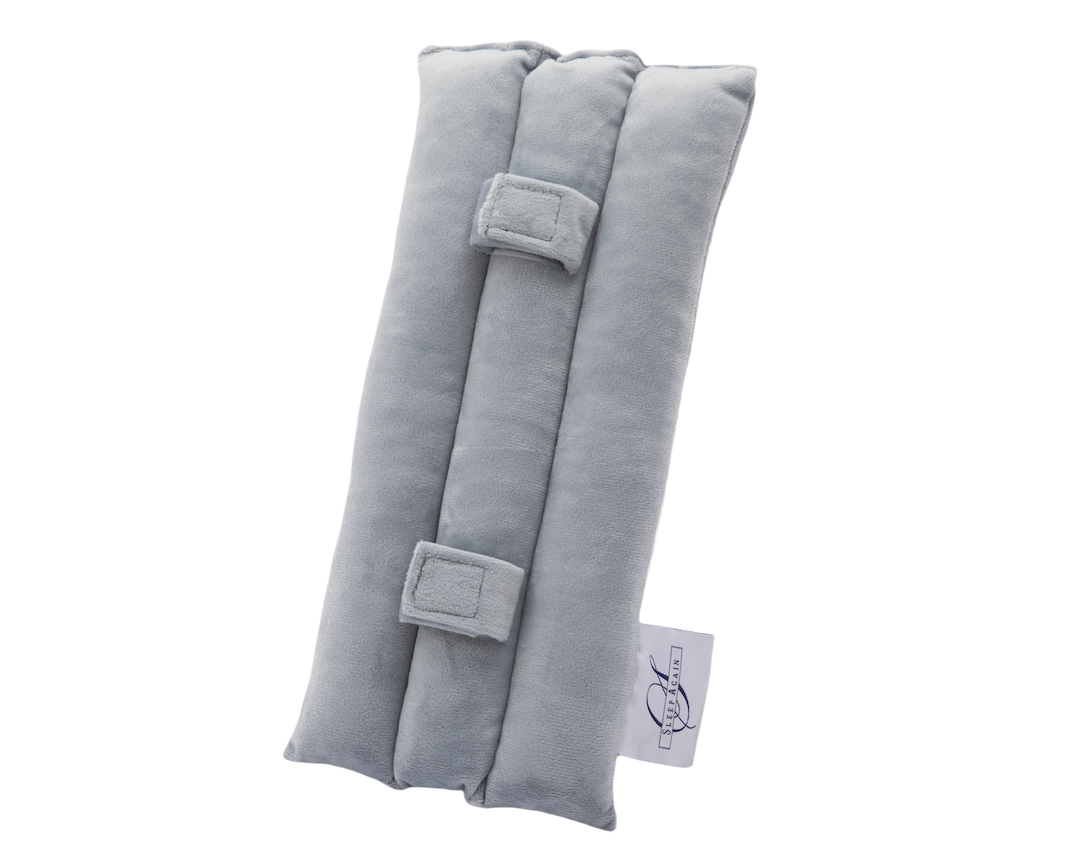
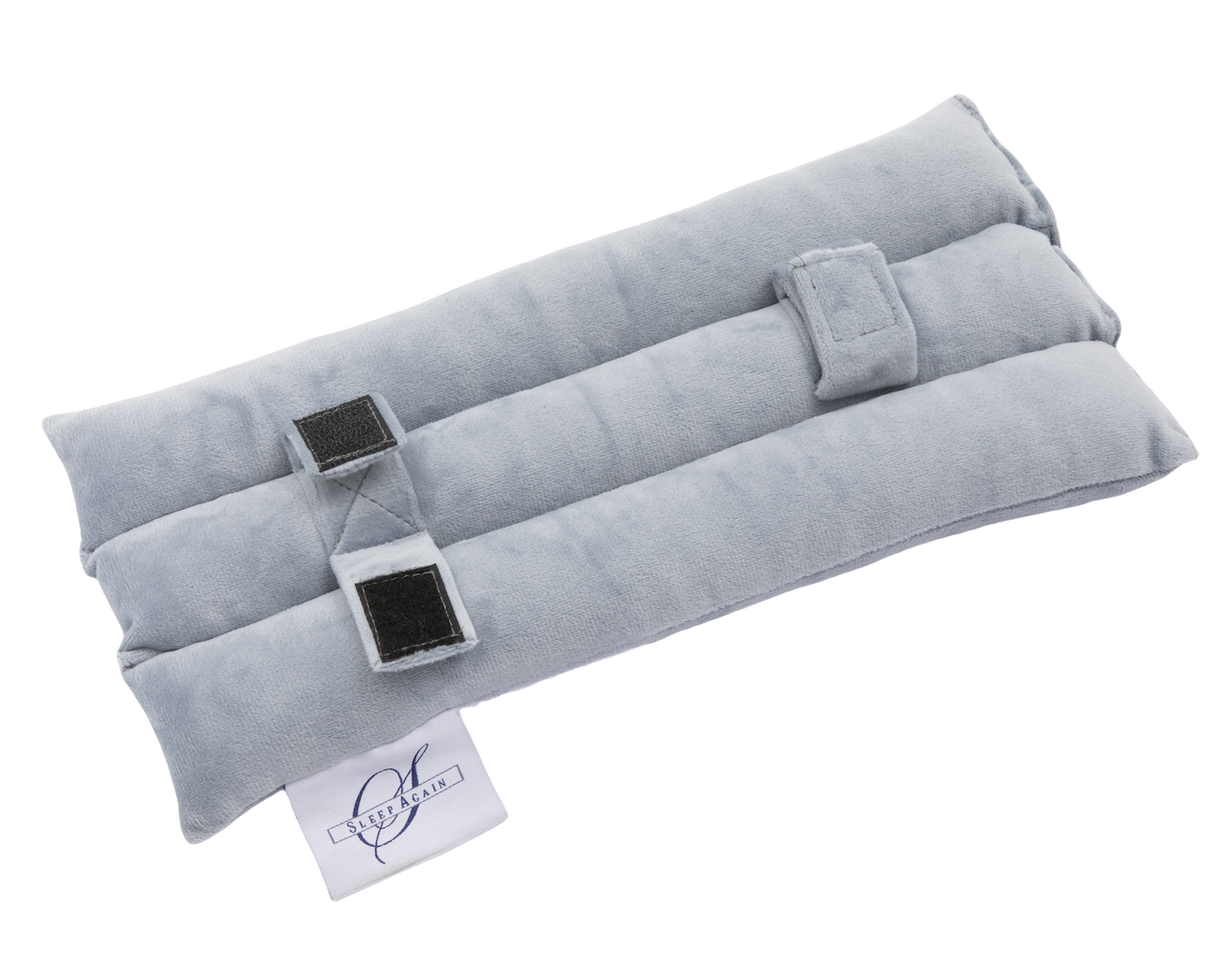
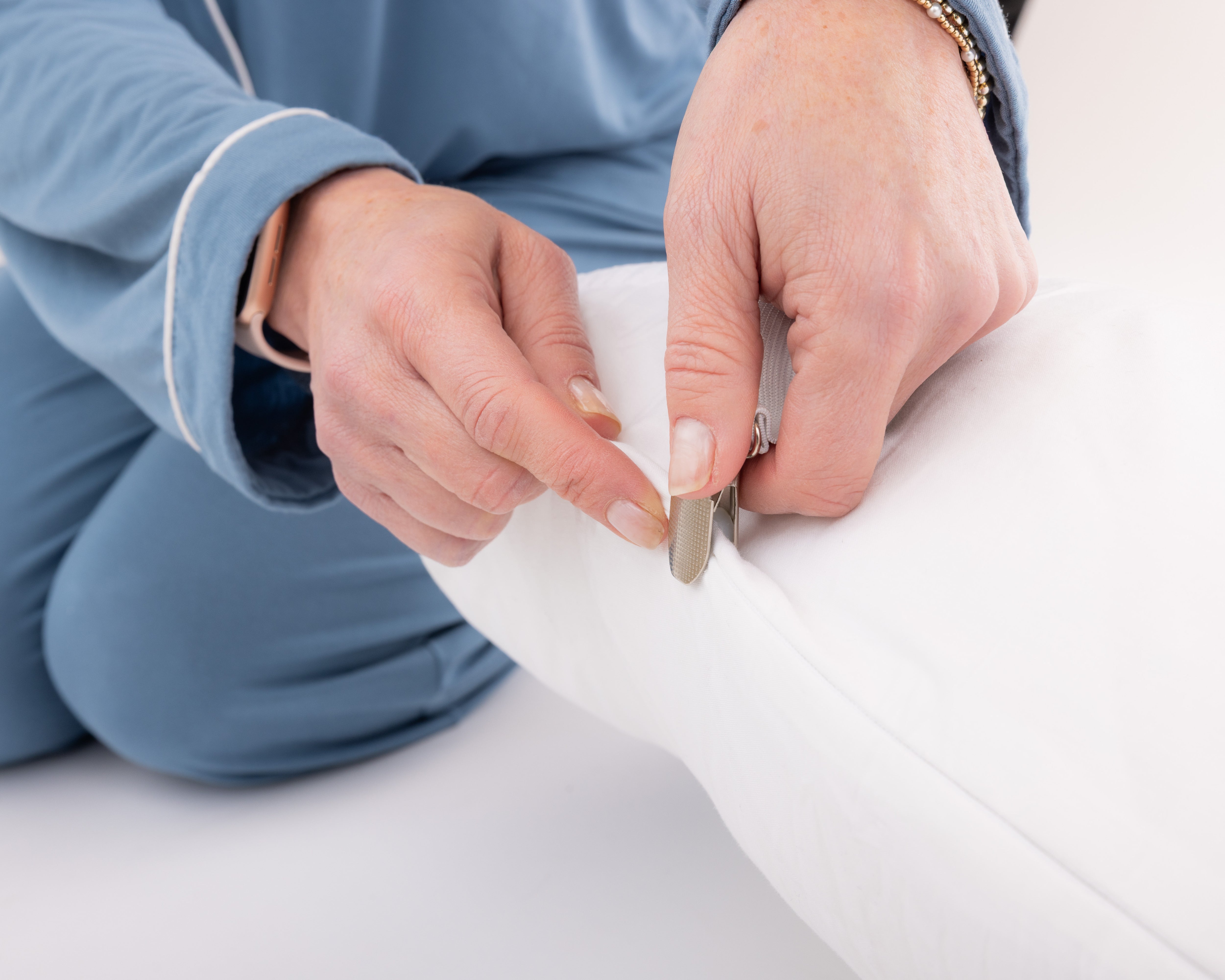
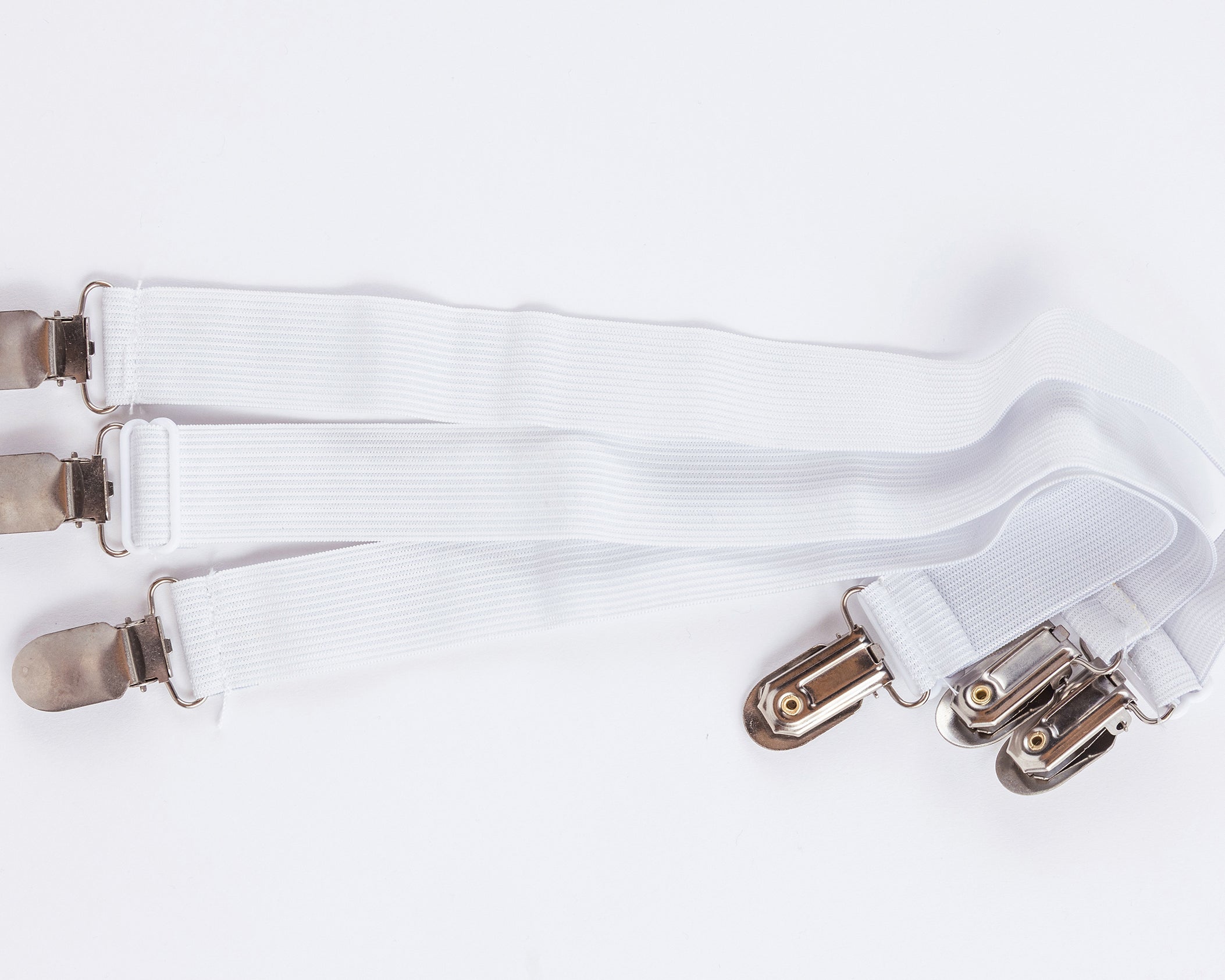
- NEW – Set of Pillow Straps with Clasp (3-pk) now included!
The Sleep Again Pillow System Bundle includes: Two Contoured Side Pillows, an Upper Body Wedge, a Leg Support Wedge, a Head Pillow, and removable washable slipcovers for every piece.
For large-breasted sleepers, this configuration keeps breast tissue resting symmetrically against the chest wall throughout the night rather than pulling laterally or compressing against a flat surface. Because every component works as an integrated unit, the therapeutic incline is maintained consistently through a full night of normal sleep movement.
The Sleep Again Pillow System is eligible for purchase using HSA and FSA funds as a qualified therapeutic sleep positioning product. Due to federal regulations, bedding products are not returnable, and all sales are final.

What Is the Best Way to Sleep on Your Side With Large Breasts?
Side sleeping is the most natural position for a significant percentage of the population, but for large-breasted sleepers, it creates real physical challenges that need to be addressed directly.
What Happens to Your Breast Tissue on Your Side
In a side sleeping position, the bottom breast is compressed against the mattress while the top breast hangs toward the mattress or rests against the arm — both of which exert constant lateral tension on Cooper's ligaments throughout the night. The thoracic spine absorbs asymmetric load from this weight differential. Breathing mechanics can be subtly restricted by the compression of the lower breast against the chest wall.
Over time, unsupported side sleeping with large breasts contributes to accelerated sagging, chronic shoulder and thoracic pain, and disrupted sleep quality from positional discomfort.
Why Side Sleepers Need Dedicated Chest Support
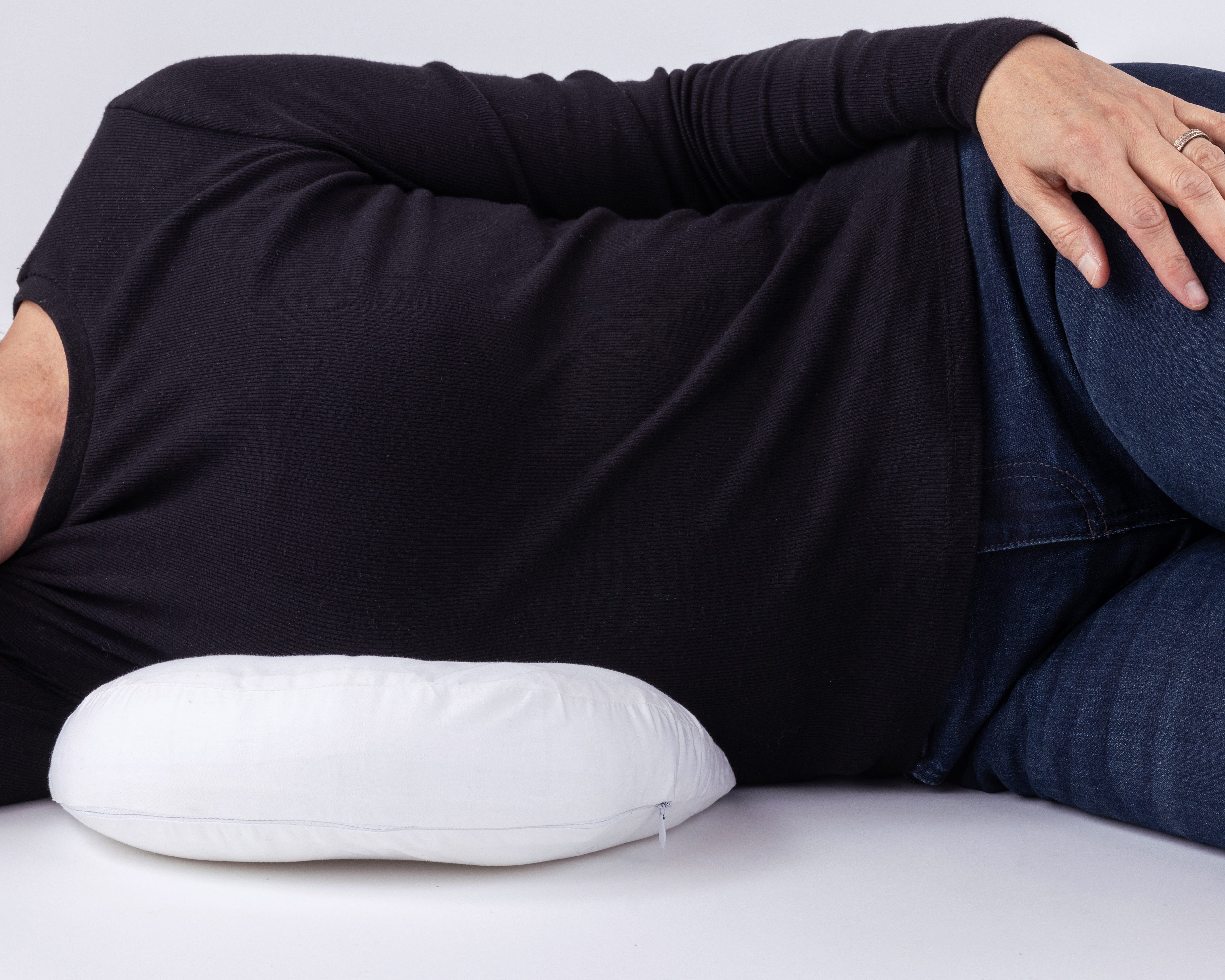
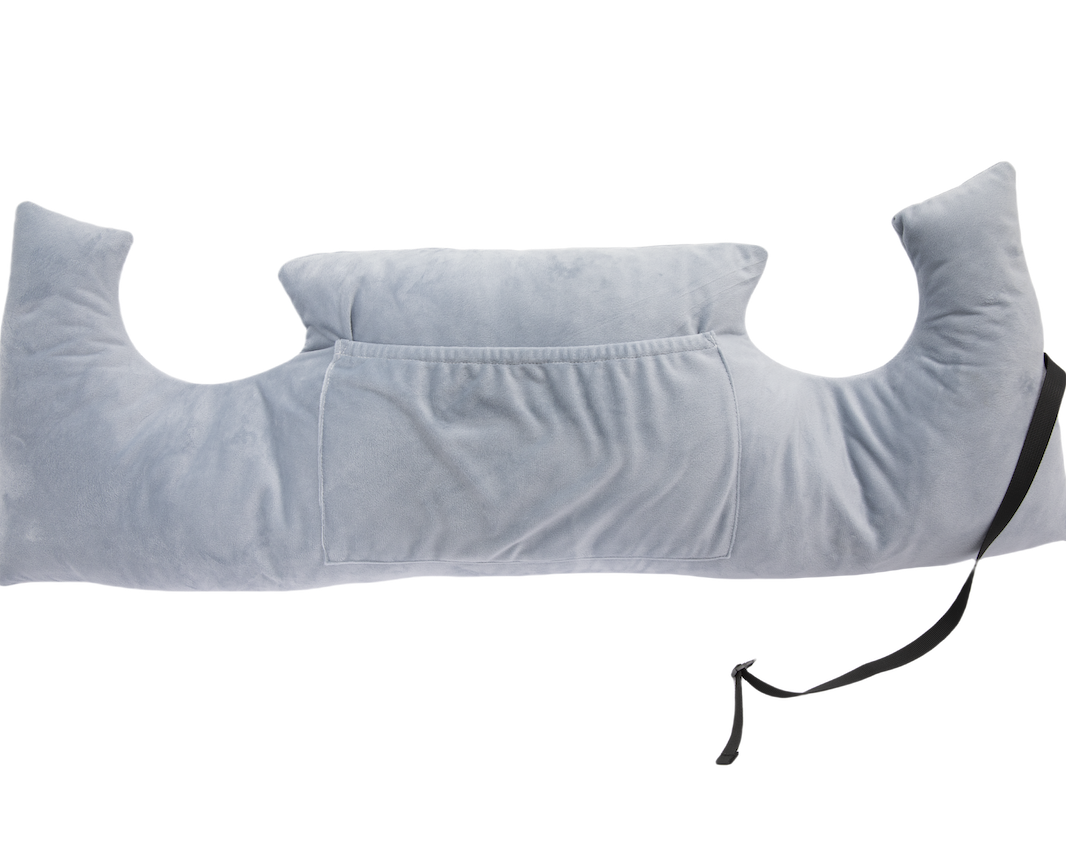
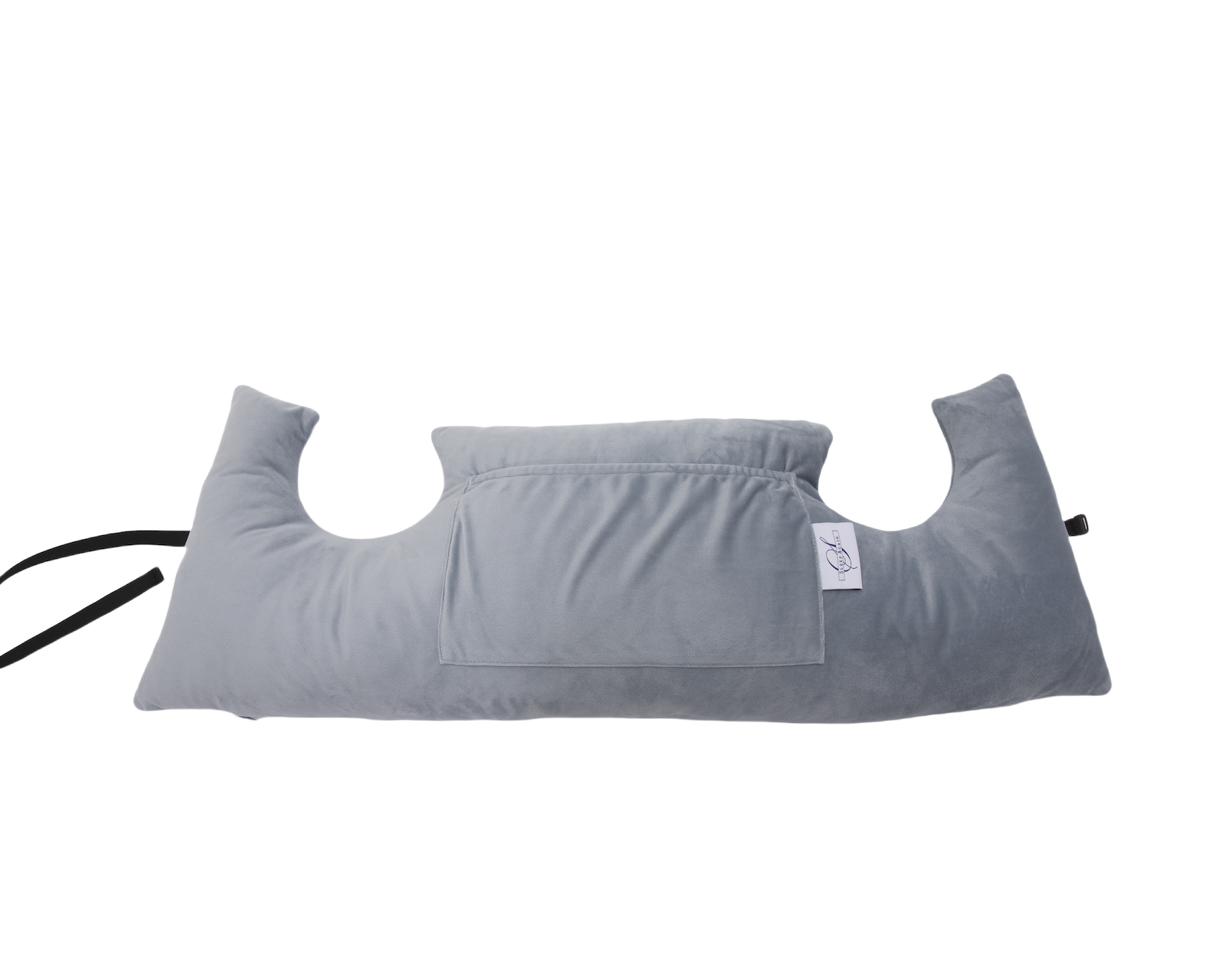
The solution for side sleeping with large breasts is a support structure positioned between the chest and upper arm that eliminates the unsupported hang of the top breast and lifts the bottom breast away from direct mattress compression. This is a different support requirement than a standard pillow, which typically ends up under your head, between your knees, or hugged loosely in front of you without providing the specific chest support that breast tissue requires.

The Side Sleeping Chest Pillow: For Large-Breasted Side Sleepers
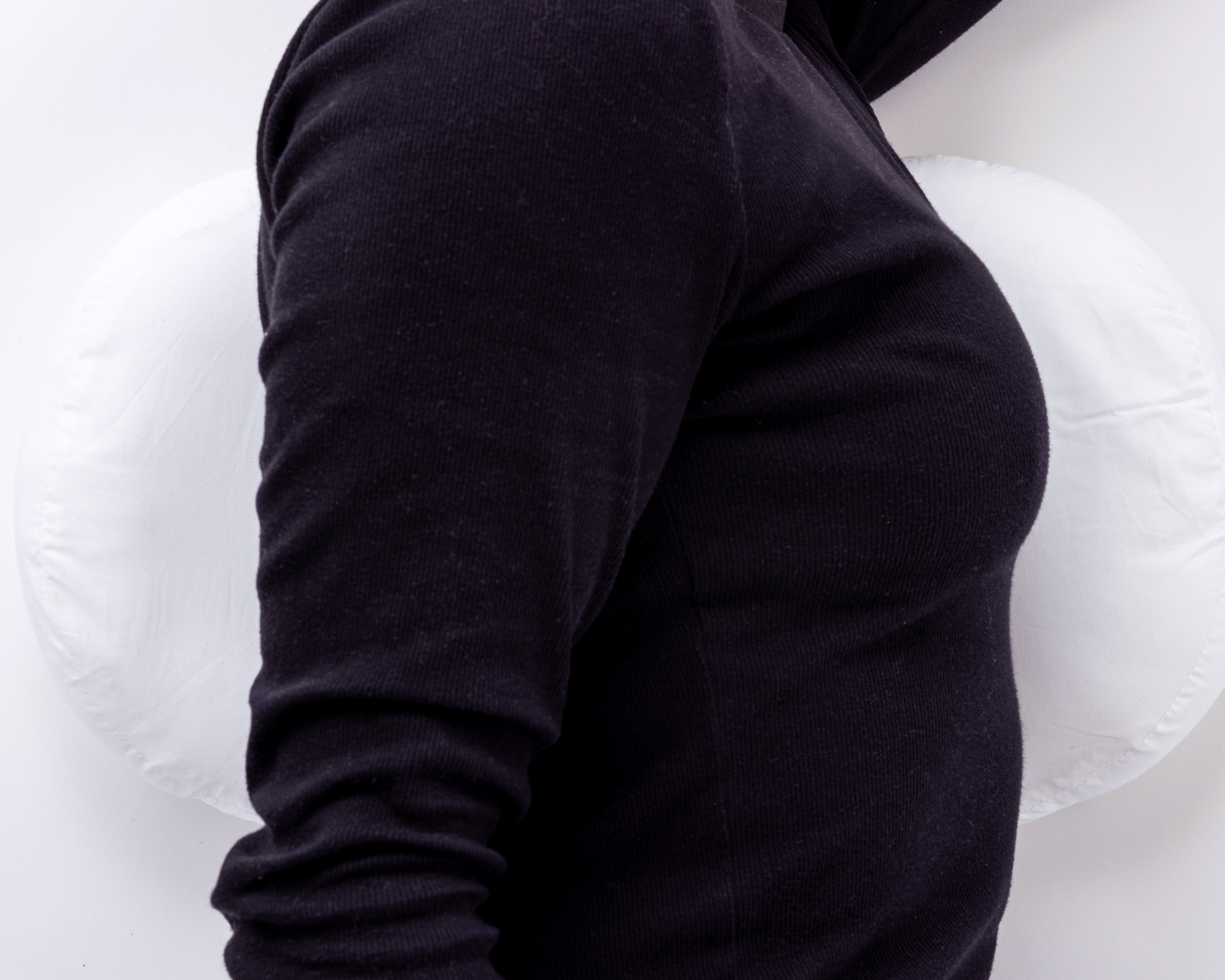
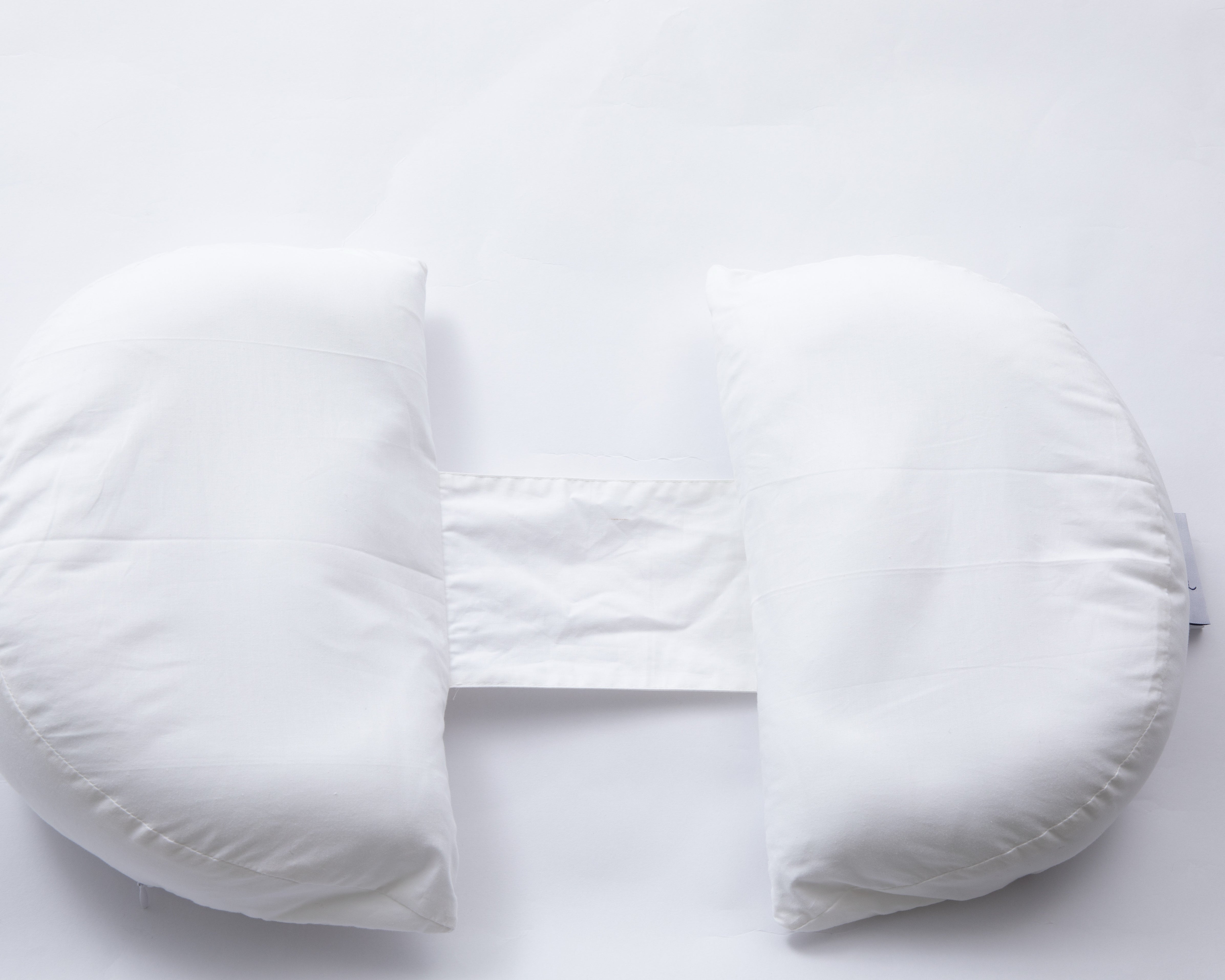
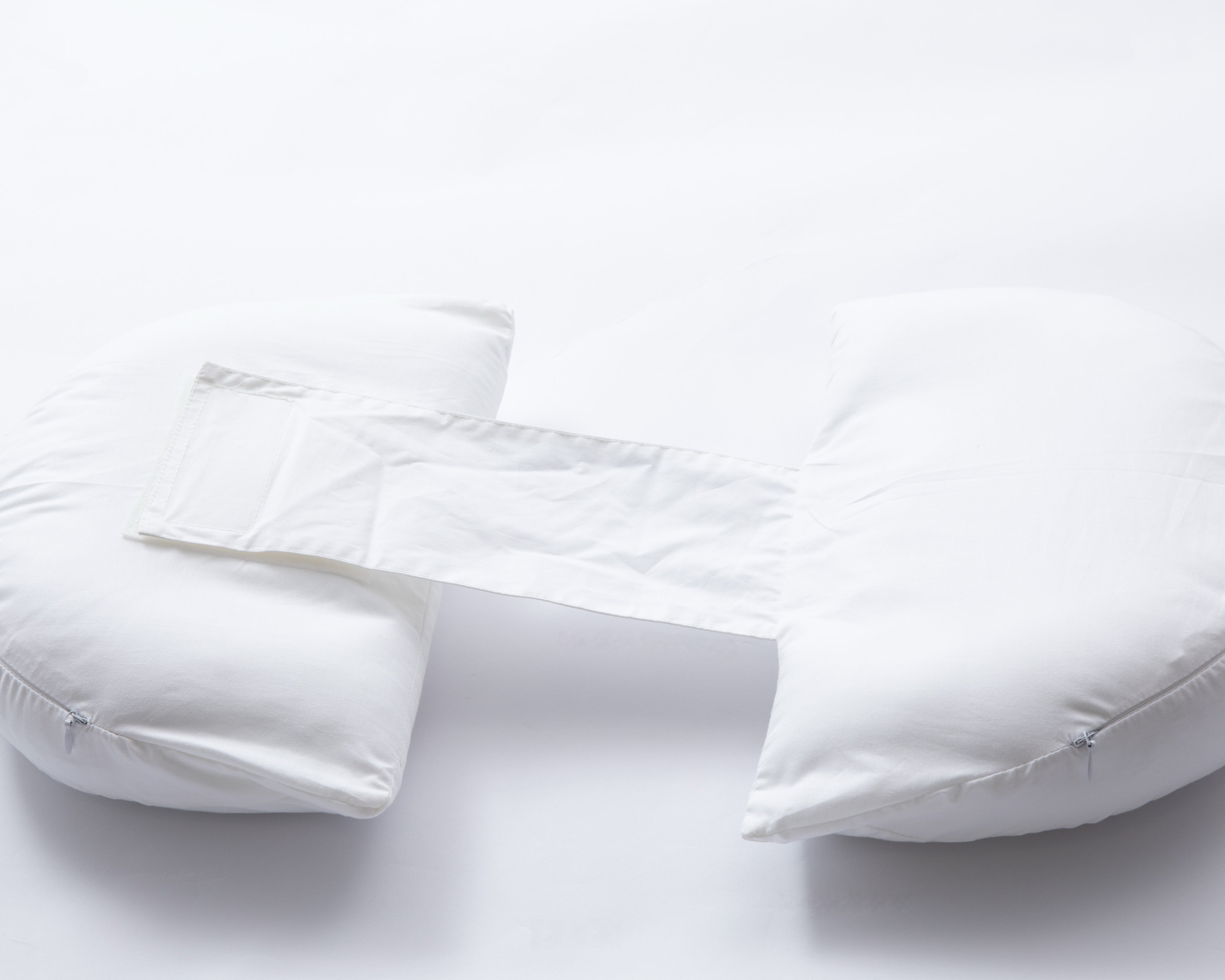
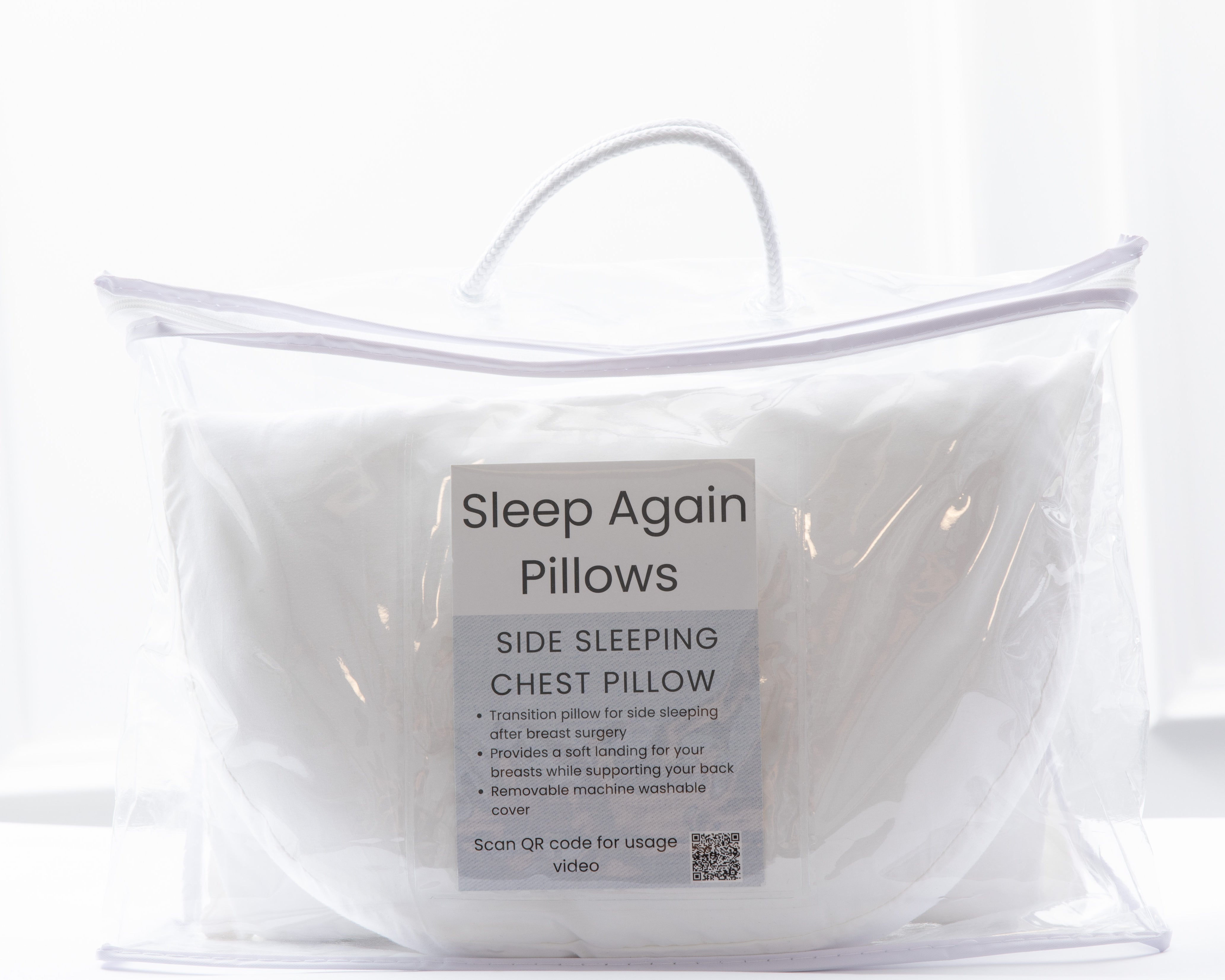
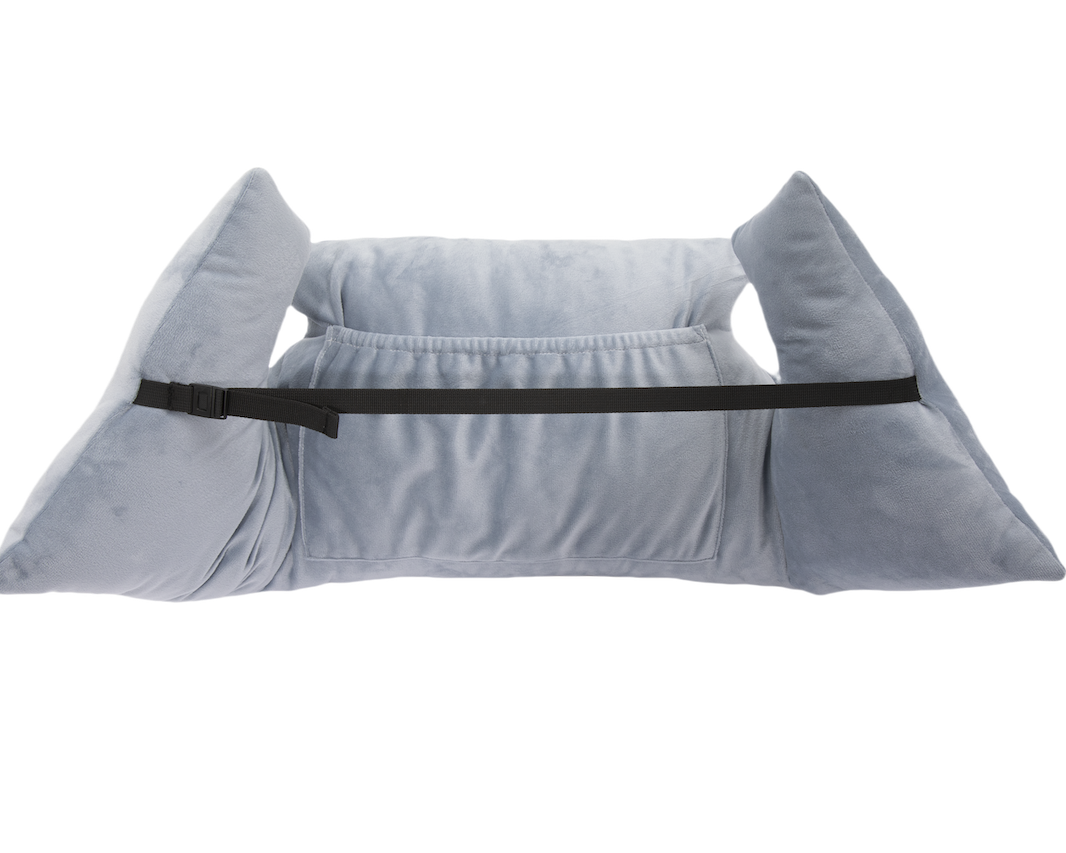
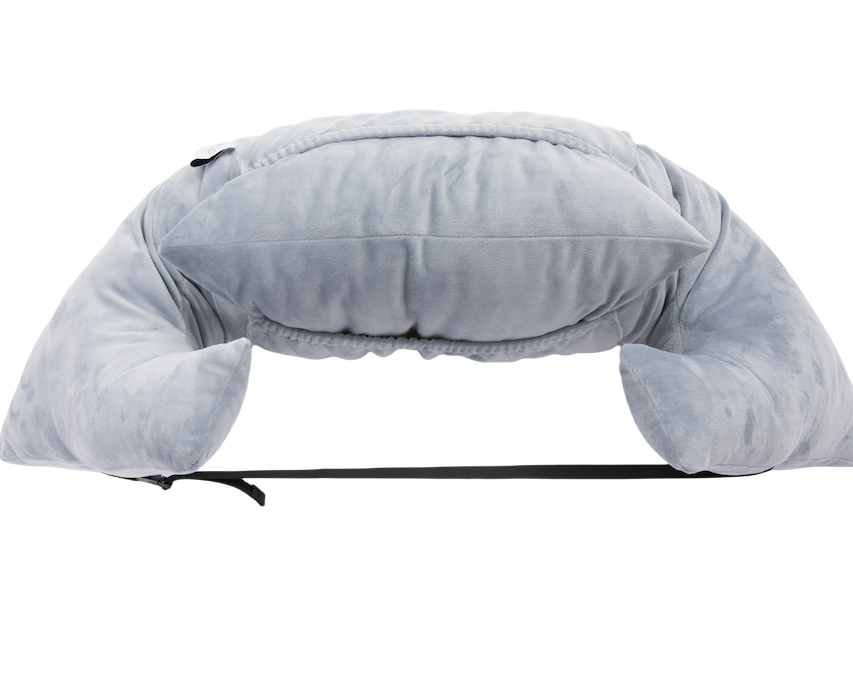
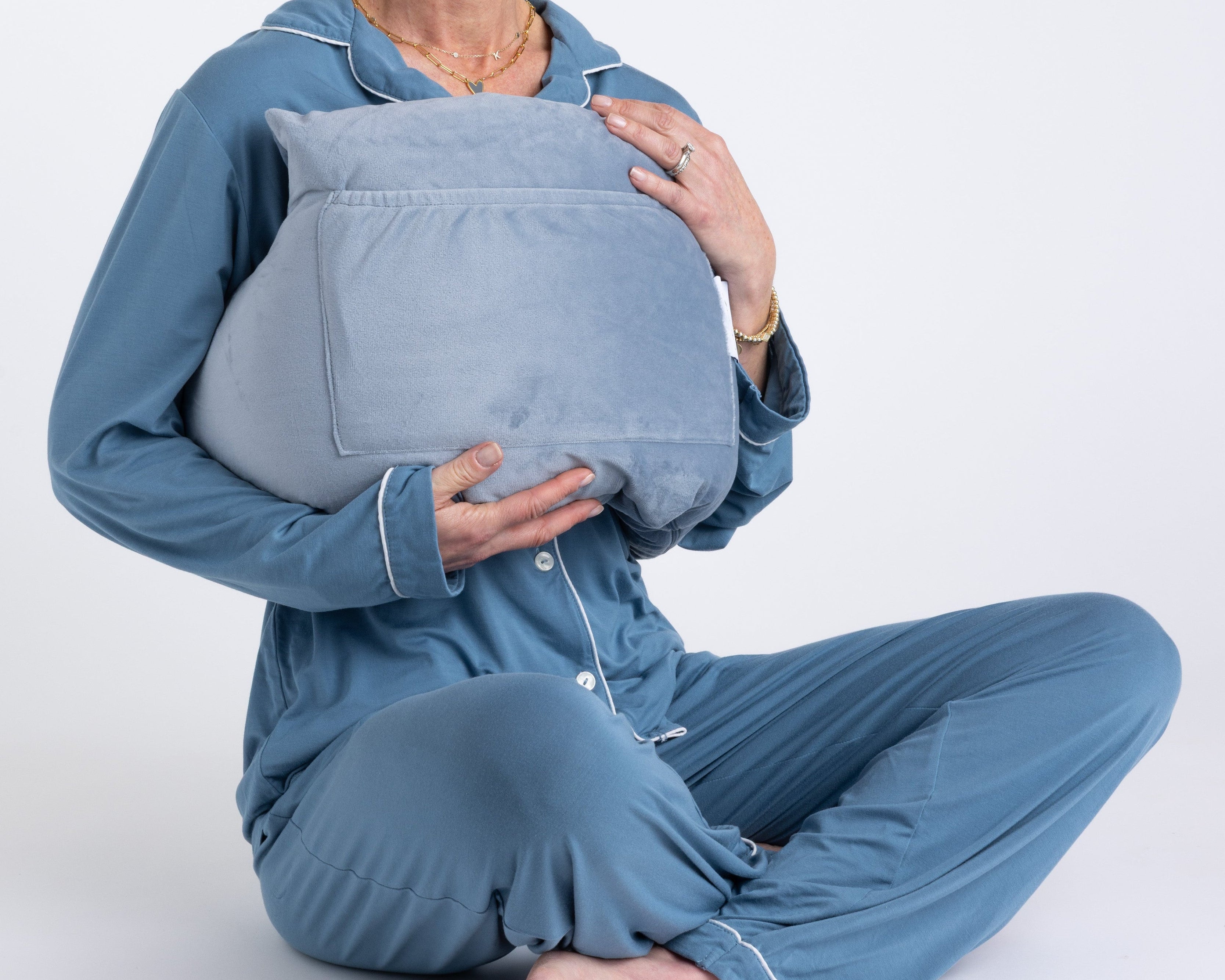
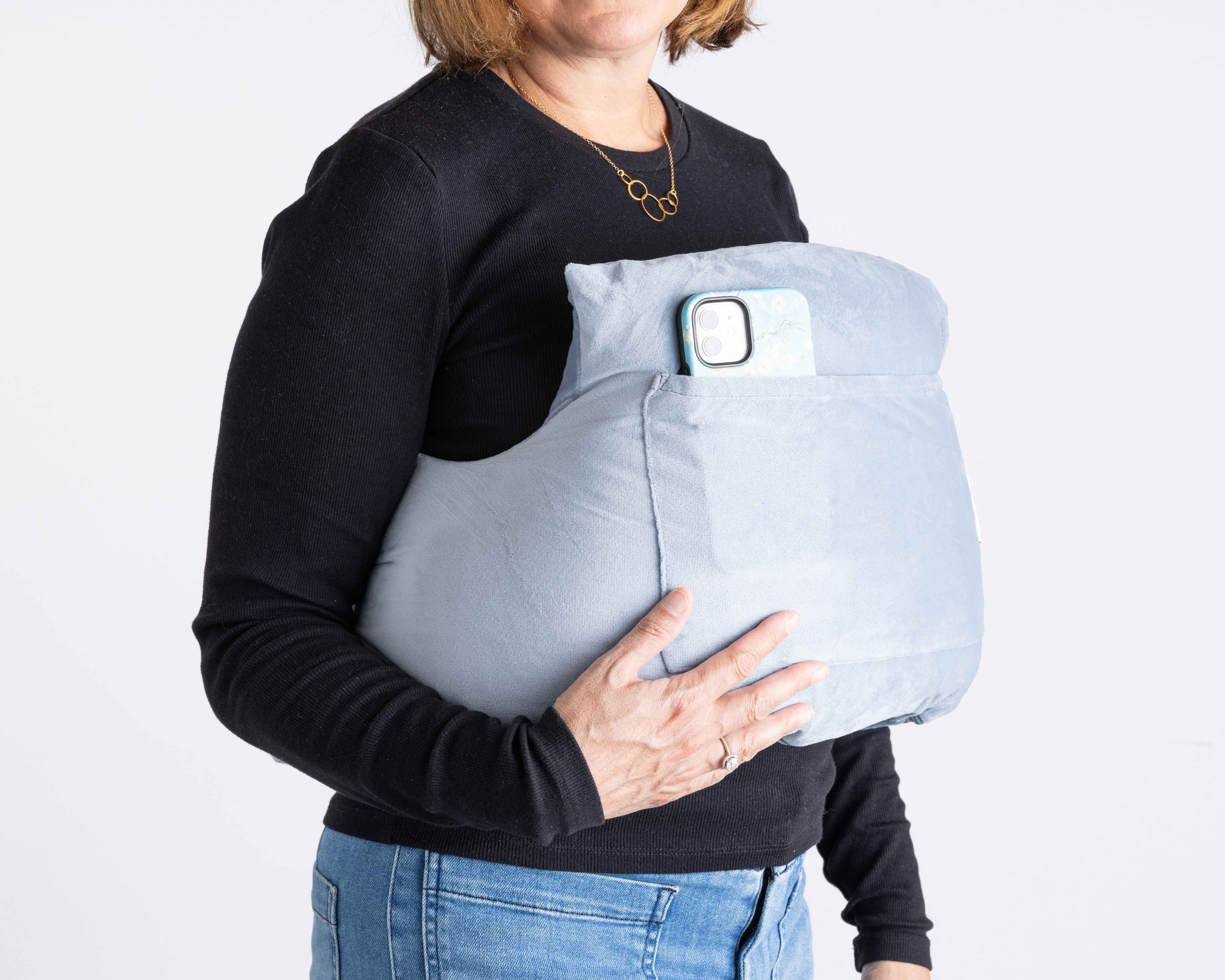
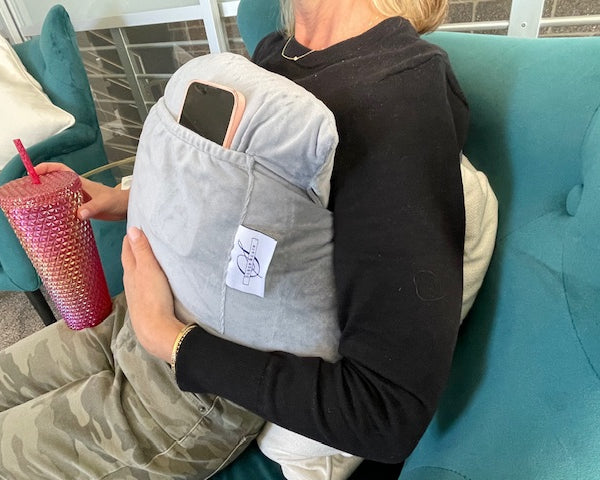
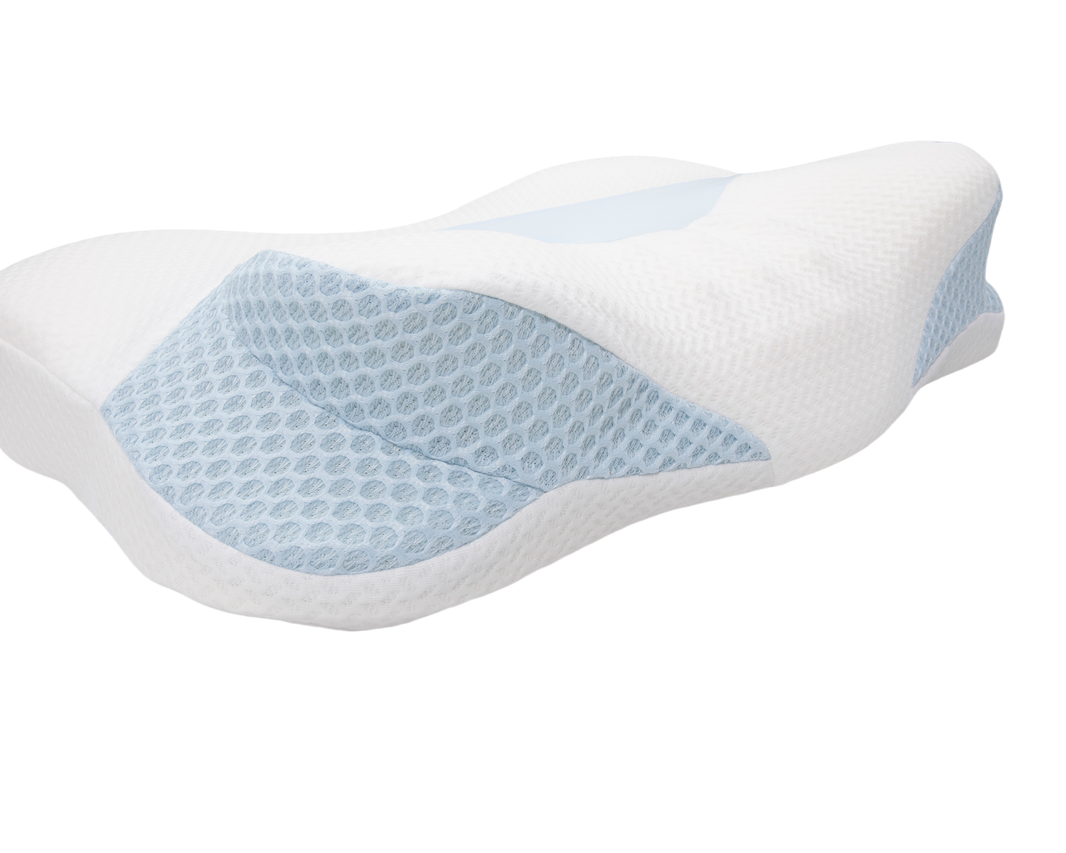
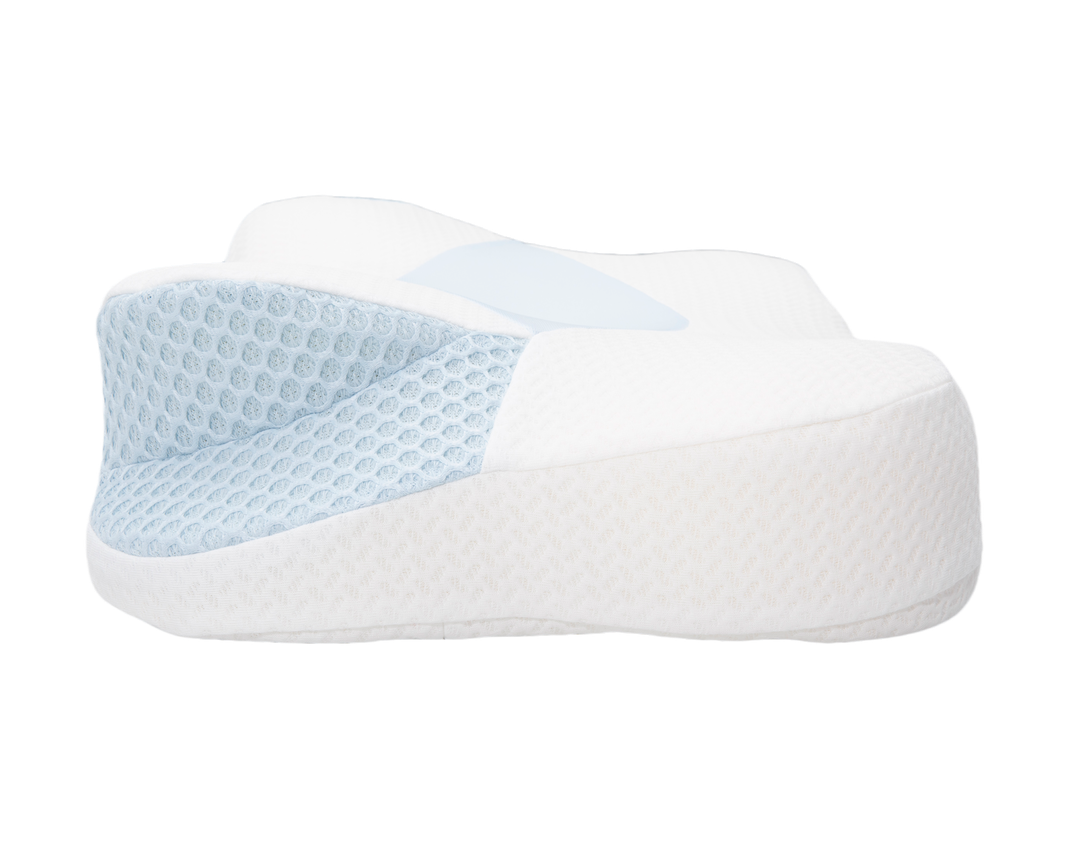
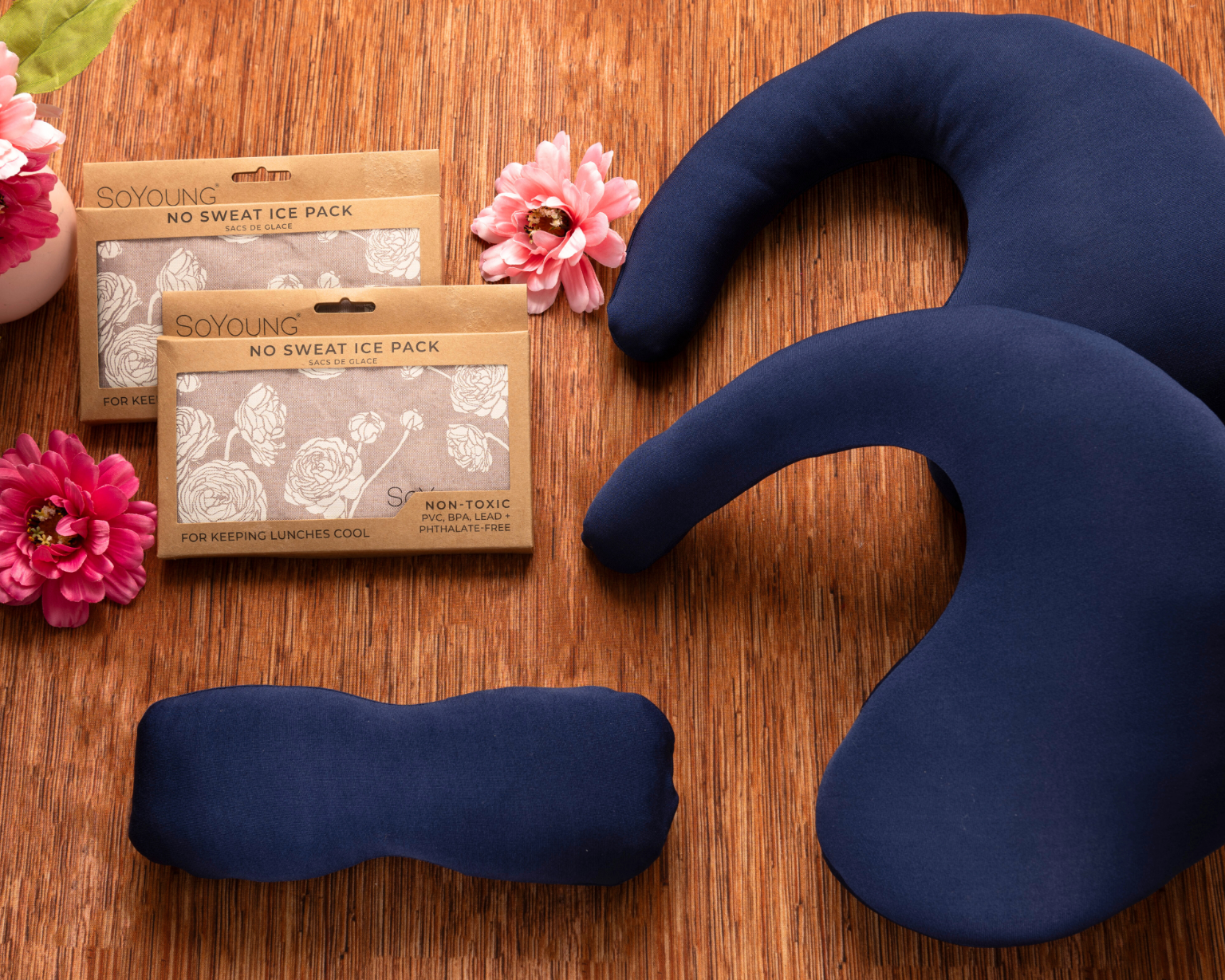
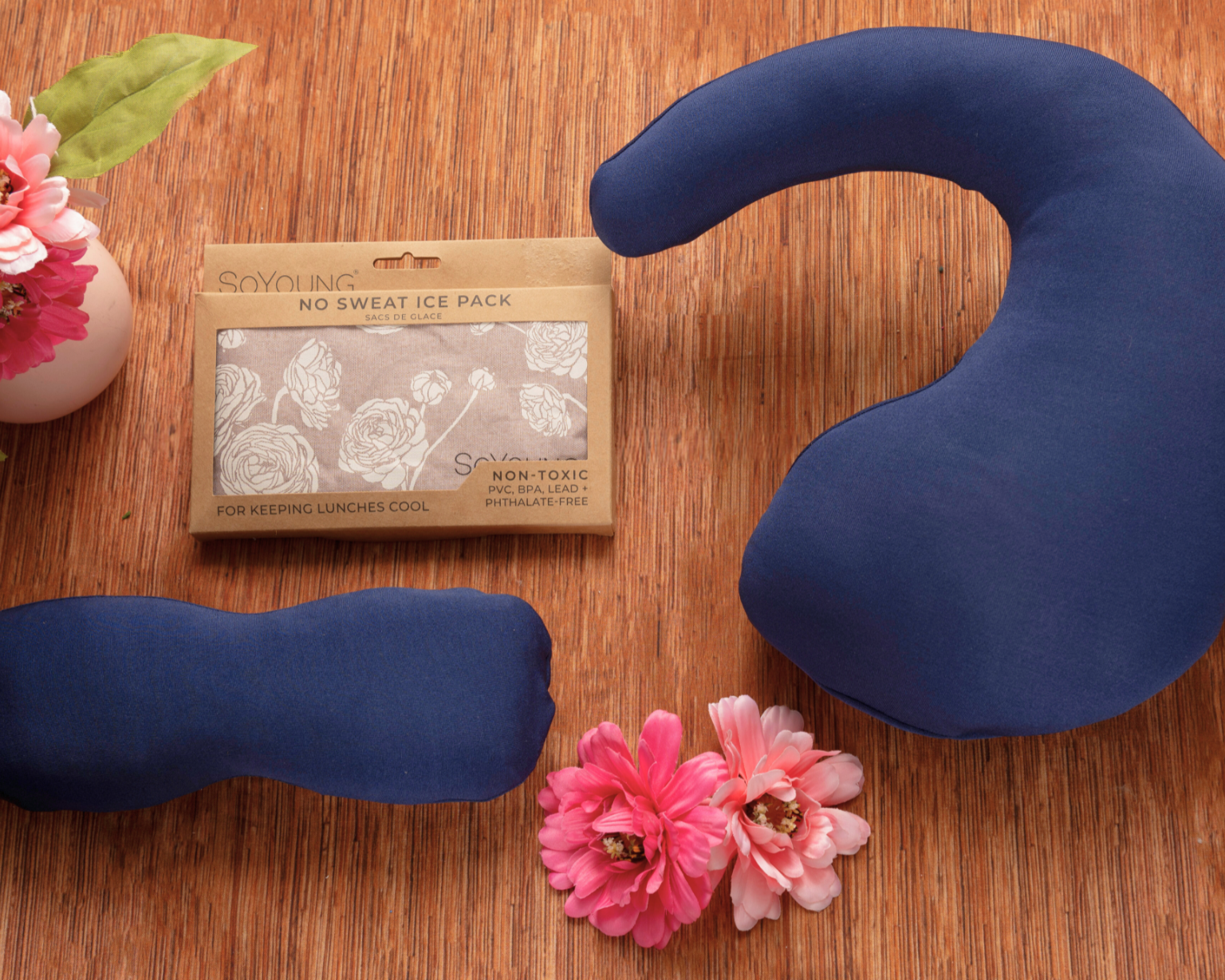
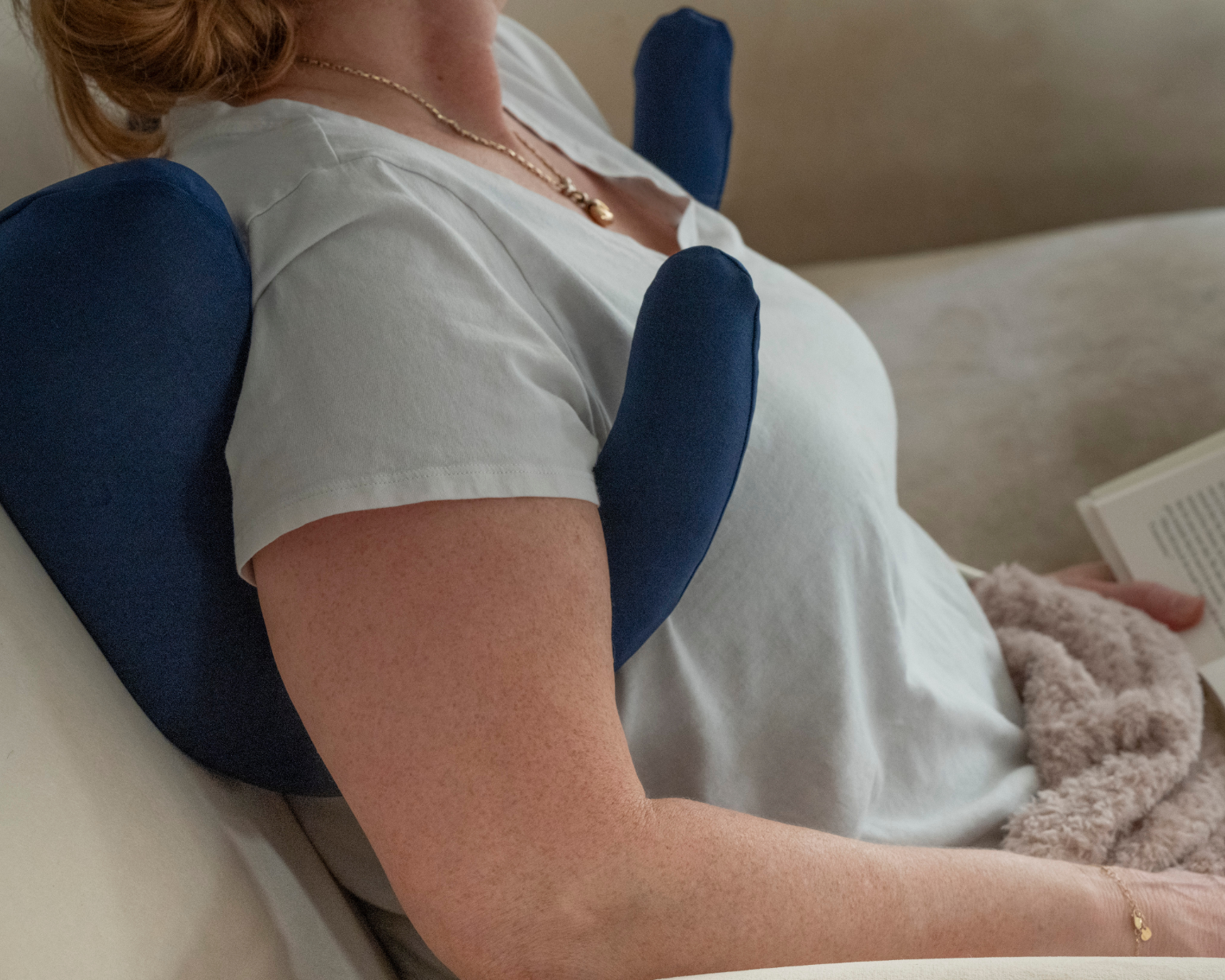
Sleep Again's Side Sleeping Chest Pillow positions between the chest and upper arm, providing contoured support that holds breast tissue in a neutrally supported position rather than allowing it to fall, hang, or compress against the sleep surface. Cooper's ligaments experience substantially less loading during sleep, thoracic rotation is reduced, shoulder alignment improves, and the surface contact between breast tissue and skin that generates overnight heat and moisture is broken.
The pillow's contoured shape is designed to stay in position without requiring active adjustment. It works passively throughout the night, which matters because repositioning during sleep is not something most people can reliably do.
The Side Sleeping Chest Pillow can be used as a standalone solution for committed side sleepers, or it can work in combination with the Sleep Again Pillow System for sleepers who move between elevated back and side positions through the night.
Due to federal regulations, bedding products are not returnable, and all sales are final.
SHOP THE SIDE SLEEPING CHEST PILLOW
Should You Sleep on Your Stomach If You Have Large Breasts?
Stomach sleeping with large breasts is the most problematic position available and is not recommended for regular use.
The Mechanical Case Against Stomach Sleeping
When you lie face down, large breast tissue creates an elevated pressure surface against the mattress. Your chest cannot lie flat — the breast volume prevents it. This forces your thoracic spine into extension, your cervical spine into lateral rotation to allow breathing, and your lumbar spine into hyperextension to compensate for the chest height differential.
The result is a sequence of spinal compensations that accumulates across the night. Neck and upper back pain in the morning is not coincidental for stomach sleepers with large breasts — they are the predictable result of sustained misalignment during sleep.
If stomach sleeping is your default position, the most effective approach is gradual retraining toward side sleeping with chest support, with the longer-term goal of elevated back sleeping as your primary position.

Are You Preparing for Breast Reduction Surgery? What Should You Know About Sleep Positioning?
Breast reduction surgery is one of the most consistently satisfaction-rated plastic surgery procedures available, with high rates of resolution for the chronic neck, shoulder, and back pain that large breast volume creates. If you are in the planning phase, sleep positioning is worth addressing now, not after your procedure.
Why Pre-Surgical Sleep Positioning Matters
Your surgeon will instruct you to maintain elevated back sleeping during your initial recovery period. Elevation reduces swelling, improves circulation to healing tissue, and minimizes pressure on surgical incisions. Most patients attempt to establish this position for the first time while already in post-operative discomfort, which makes the adjustment significantly harder than it needs to be.
The Pre-Surgical Advantage
Establishing elevated back sleeping before your procedure eliminates that variable. When you build the position and the sleep infrastructure in the weeks before surgery, you arrive at recovery already adapted. Your first post-operative night is not the first night you have tried this position.
The Sleep Again Pillow System is designed to be set up and used in advance so that patients enter recovery already adapted to the position their surgeon will require.
What Happens to Sleep Positioning During Recovery
During the initial weeks of breast reduction recovery, you will not be able to sleep on your stomach or your surgical side. Elevated back sleeping will be your primary position, with your surgeon's guidance on when and how to transition to other positions as healing progresses. Having a dedicated, purpose-built positioning system rather than improvised pillow stacks means you can maintain the correct therapeutic angle consistently, which supports better healing outcomes.
For side sleepers who anticipate returning to a side sleeping position during the recovery phase, the Side Sleeping Chest Pillow provides the specific chest support that breast tissue requires post-surgically, once your surgeon has cleared you for non-back positions.
What Other Sleep Strategies Help With Large Breasts?
Beyond core positioning, several supporting strategies make a measurable difference in sleep quality for large-breasted sleepers.
Nighttime Bra and Breast Support
A well-fitted, soft-cup sleep bra provides additional Cooper's ligament support during sleep and reduces the skin-on-skin contact that causes overnight irritation. Look for soft, wire-free construction with enough coverage to hold breast tissue against the chest wall without compressive bands that restrict breathing. This does not replace positional support but works in combination with it.
Mattress Firmness
For back sleepers, a medium-firm mattress provides better spinal support than a very soft surface, which allows the body to sink into misalignment. For side sleepers, a slightly softer surface allows the shoulder to sink appropriately while the hip stays supported — the opposite of back sleeping requirements. If you are transitioning sleep positions, be aware that your existing mattress may not be optimized for the new position.
Pillow Height for Back Sleeping
When using an upper body wedge for elevation, your head pillow height needs to be calibrated to the angle of the incline. Too high and your cervical spine flexes forward; too low and it extends back. Both create neck tension. The Sleep Again Pillow System addresses this through its integrated Head Pillow, which is designed for use at the therapeutic incline the Upper Body Wedge creates.
Shoulder and Thoracic Mobility
Chronic tension in the upper back and neck from the daytime postural demands of large breast weight can make it harder to relax into back sleeping. Gentle thoracic mobility work and chest opening stretches during the day reduce the accumulated tension you carry to bed at night.
Frequently Asked Questions: Sleeping With Large Breasts
What is the single most important change a large-breasted sleeper can make to improve sleep quality?
Transitioning from stomach sleeping to either elevated back sleeping or well-supported side sleeping. For large-breasted stomach sleepers specifically, the transition also tends to produce secondary benefits beyond sleep quality — reduced morning neck stiffness, less upper back tension, and over time, reduced cumulative load on Cooper's ligaments that stomach sleeping accelerates.
Does sleeping without a bra at night damage breast tissue over time?
Going braless at night is not uniformly harmful, but it removes the active support that large breast tissue benefits from. For larger breast volumes, nighttime soft-cup support reduces the sustained load on Cooper's ligaments and is generally recommended. Your individual anatomy, breast density, and sleep position all influence how much this matters for your specific situation.
Can the way I sleep contribute to back and neck pain from large breasts?
Yes. Daytime posture for large-breasted individuals already trends toward forward head carriage and rounded shoulders from anterior chest weight. Sleep positions that place the cervical or thoracic spine under asymmetric load extend that strain across six to eight additional hours nightly — making poor sleep positioning a significant contributor to chronic pain over time.
How long before breast reduction surgery should I start using an elevated back sleep system?
Ideally, two to four days before your procedure. This gives you enough time to adapt to the position before recovery begins, so the elevated back sleep requirement is already familiar rather than a new challenge layered onto post-operative discomfort.
Is the Sleep Again Pillow System appropriate for everyday use, not just surgical recovery?
Yes. The Sleep Again Pillow System is appropriate for any large-breasted sleeper who benefits from therapeutic elevated back sleeping, regardless of whether surgery is planned. HSA/FSA eligibility reflects its classification as a therapeutic positioning product with applications beyond surgical recovery.
Does elevation help with morning breast soreness from sleep?
For many large-breasted sleepers, yes. Elevated back sleeping reduces the sustained lateral tension on breast tissue and ligaments that side sleeping creates, and it facilitates mild fluid drainage from breast tissue that can contribute to morning heaviness and soreness.
Important Medical Disclaimer
The information provided on this page is for educational purposes only and should not replace professional medical advice from your healthcare provider. Sleep Again Pillows are positioning support products designed to help maintain sleep positions recommended by medical professionals during recovery and for therapeutic use.
Always follow your surgeon's or physician's specific post-operative instructions and positioning requirements. Medical guidance from your healthcare team takes precedence over any general information provided here. Recovery timelines, positioning angles, and product suitability vary based on individual surgical procedures, medical conditions, and patient-specific factors.
Consult your healthcare provider before purchasing positioning equipment if you have specific medical concerns or questions about whether these products are appropriate for your recovery or medical condition(s). Your medical team can provide personalized recommendations based on your unique situation.
Sleep Again Pillows do not diagnose, treat, cure, or prevent any medical condition. These products provide positioning support to help maintain sleep angles and positions as directed by your healthcare provider.