
Sleep after Lipo 360 is different from ordinary sleep. The procedure treats your abdomen, flanks, waist, and back simultaneously, which means no untreated area is available to default to when positioning for sleep. Sleeping incorrectly during recovery can increase swelling, displace fluid, add stress to healing tissue, and affect the final contouring results you worked hard to achieve.
The right sleep position for Lipo 360 recovery is straightforward, well-established, and fully plannable before your procedure date. This guide covers the science behind positioning, how to build an effective sleep setup, what to expect at each recovery phase, and which products are purpose-built for exactly this situation.
What Is Lipo 360, and Why Does It Make Sleep So Complicated?
Lipo 360 refers to circumferential liposuction of the midsection — a procedure that removes fat deposits from the abdomen, flanks, lower back, and waist in a single surgical session. The result is a more sculpted, defined silhouette when viewed from all angles. Patients often combine Lipo 360 with a tummy tuck or Brazilian Butt Lift for more comprehensive body contouring.
The sleep challenge with Lipo 360 comes down to coverage: the procedure treats your entire midsection, 360 degrees. Most surgical recovery guidelines recommend avoiding pressure on treated areas during sleep. With standard liposuction on a single region, patients can typically side-sleep on the untreated side with relative comfort. Lipo 360 eliminates that option.
Sleeping on your stomach is not a viable option. Direct pressure on abdominal incisions interferes with healing and can displace fluid. Sleeping on your side places lateral pressure on treated flanks and lower back.
That leaves one consistent recommendation across virtually every plastic surgery practice: back sleeping with upper body elevation.
The challenge for most people isn't understanding that recommendation. I's executing it comfortably for six to eight weeks while their body heals. That execution is what this guide is for.

Why Do Surgeons Recommend Elevated Back Sleeping After Lipo 360?
Surgeons recommend elevated back sleeping after Lipo 360 because the physiological case for it is well-established.
It Reduces Swelling Through Gravity Management
Swelling after liposuction is caused by fluid accumulation in the treated areas. When the upper body is elevated at 30 to 45 degrees, gravity assists in directing fluid away from the surgical site rather than allowing it to pool. Keeping the torso elevated during sleep maintains continuous drainage throughout the night — the longest uninterrupted period of recovery during which you're not upright.
It Protects Healing Tissue from Compression
When you lie flat on your back, body weight creates passive pressure on the lower back and posterior flank areas treated during Lipo 360. Elevating the upper body shifts that weight distribution, reducing direct compression on posterior incision sites and allowing healing tissue to remain in a decompressed state.
It Supports Circulation
Tissues healing from liposuction depend on consistent blood flow to deliver oxygen and nutrients to repair sites. The elevated back-sleeping position supports cardiovascular efficiency during rest and reduces the risk of fluid stagnation in the early recovery window.
It Keeps the Abdominal Wall Relaxed
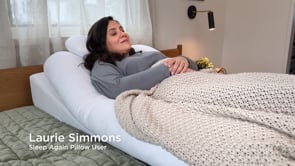
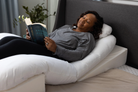
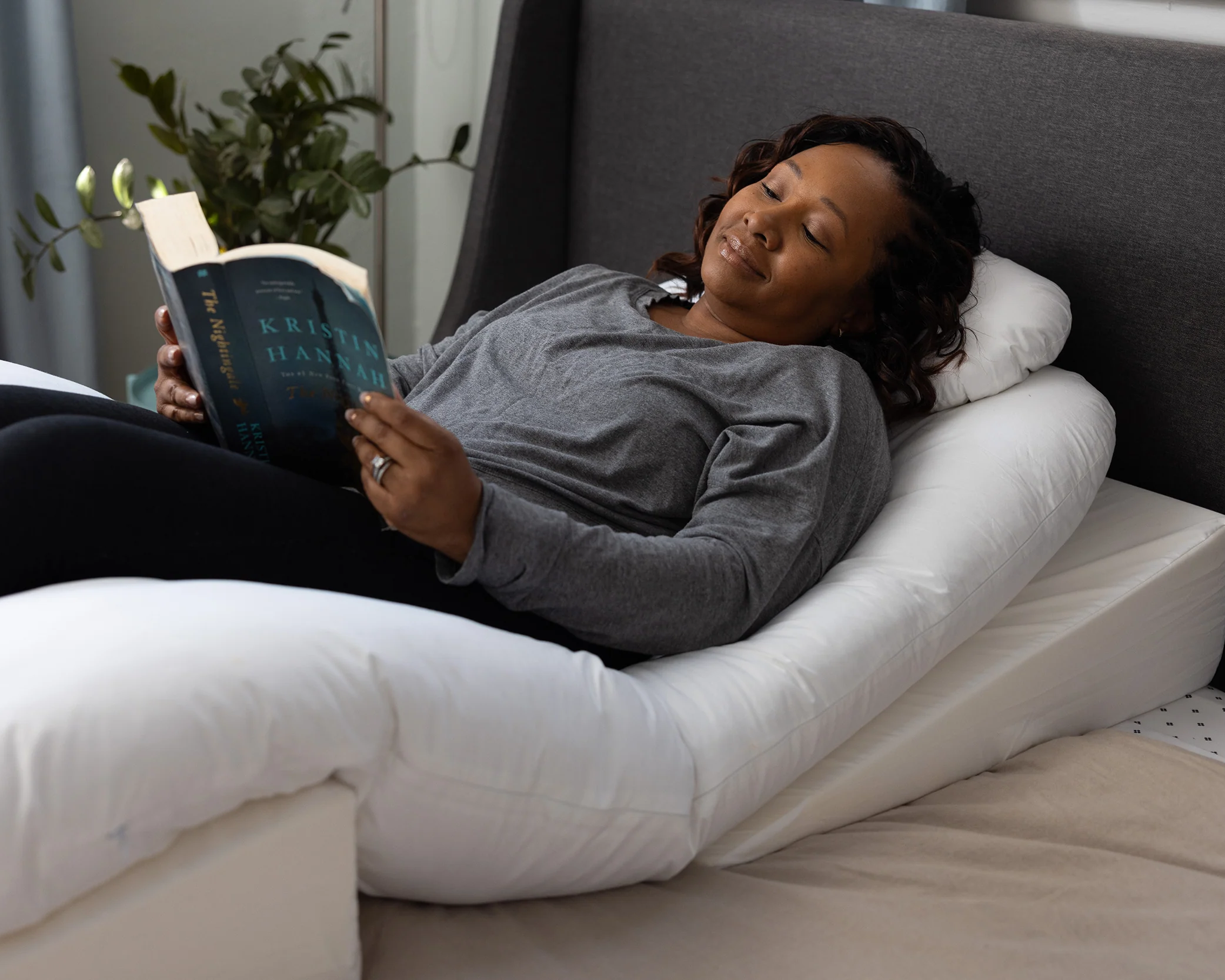
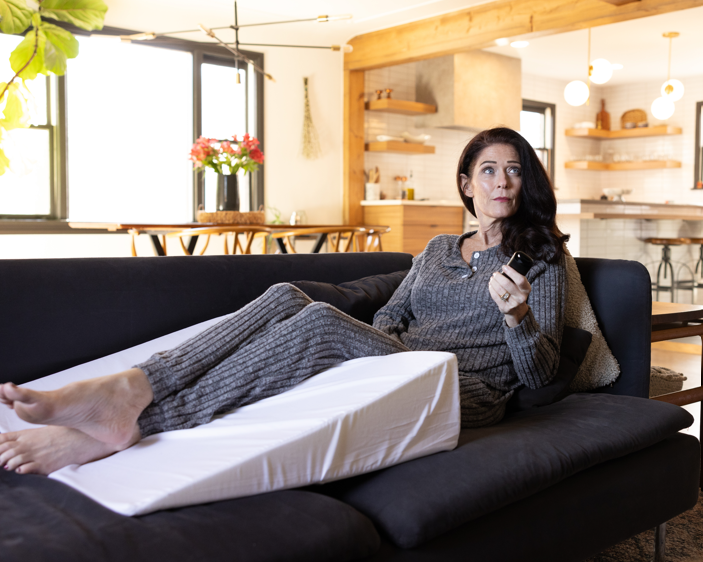
A slight hip and knee bend, supported by a leg wedge, reduces tension across the lower abdominal region. Combined with upper body elevation, this creates what surgeons often describe as the "recliner position" — the closest bed-based equivalent to the naturally supported posture of a reclining chair, which many surgeons recommend as an alternative sleeping surface during the first week of recovery.
What Is the Correct Sleeping Position After Lipo 360?
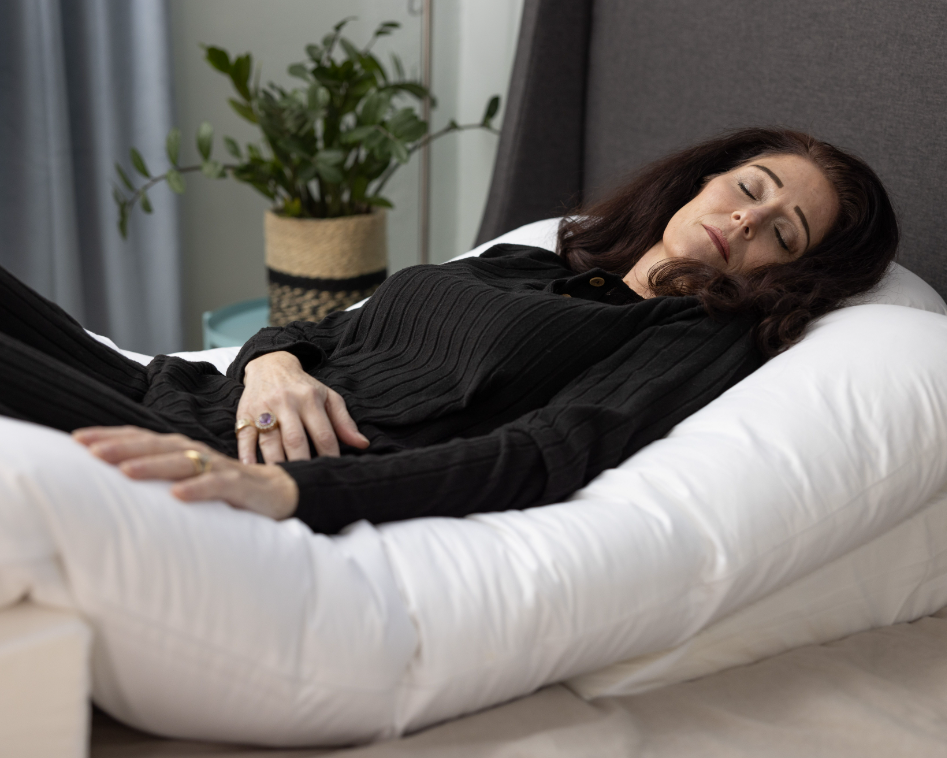
The correct Lipo 360 sleep position combines three elements:
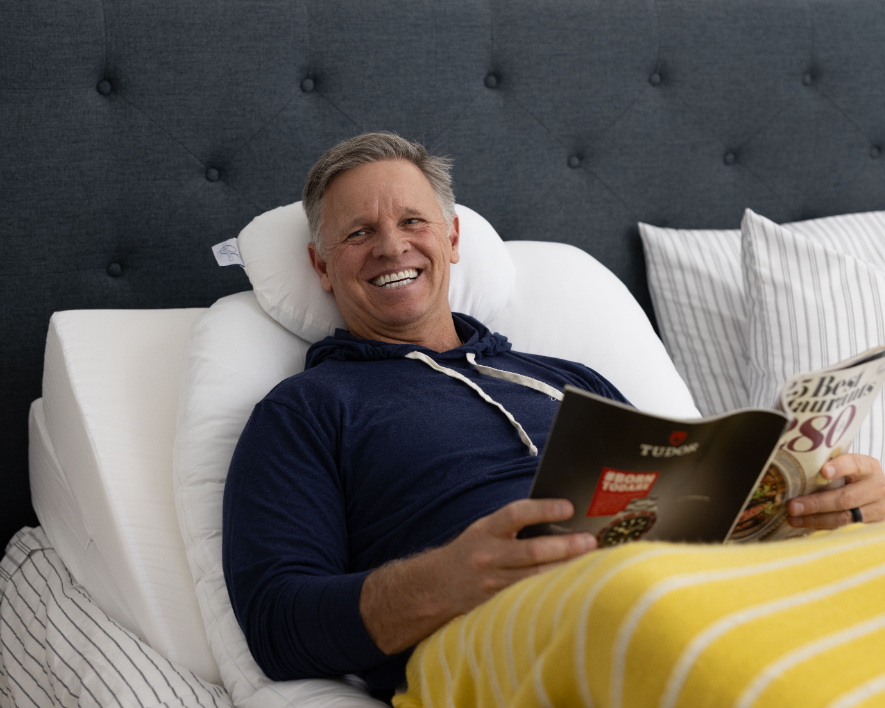
1. Upper body elevated at 30 to 45 degrees. The upper body should be angled, not flat. Your head, shoulders, and upper torso should all be supported at this incline — not just your head propped on an extra pillow, which creates neck strain without achieving therapeutic elevation.
2. Knees and hips slightly bent. A supported bend at the knees — typically achieved with a leg support wedge — reduces tension across the lower abdominal region and makes it easier to get out of bed without engaging the abdominal muscles.
3. Arms resting at your sides. Keeping arms supported and close to the body, rather than overhead, prevents shoulder strain and keeps the lateral torso free from unnecessary tension.
This three-point position should be your default for at least the first two weeks, with your surgeon providing clearance for any modifications based on your specific healing progress.
How Long Do You Need to Sleep Elevated After Lipo 360?
Most surgeons recommend the elevated back-sleeping position for a minimum of two weeks following Lipo 360. Many patients maintain it for four to six weeks, particularly when Lipo 360 was performed in combination with other procedures.
Weeks 1–2: Strict elevated back sleeping. No side sleeping. No stomach sleeping. This is the period of peak swelling and most active healing at incision sites.
Weeks 2–4: Back sleeping remains the primary position. Some patients cautiously attempt supported side sleeping with surgical clearance, with pillow support positioned to prevent direct pressure on treated flanks. Any increase in swelling or discomfort is a signal to return to back sleeping.
Weeks 4–6: Most patients receive clearance to begin returning to preferred sleep positions. Stomach sleeping is typically the last to be reintroduced. Residual swelling in liposuction patients can persist for three to six months, but structural healing of incision sites is largely complete.
Your surgeon's timeline takes precedence over any general guideline. Do not advance your sleep position ahead of medical clearance based on comfort alone.

How Do You Set Up Your Bed Before Lipo 360 Surgery?
Pre-surgery preparation is not optional. The first night home is not the right time to improvise a positioning setup from whatever pillows happen to be in the house. Your sleep environment needs to be in place and tested before your procedure.
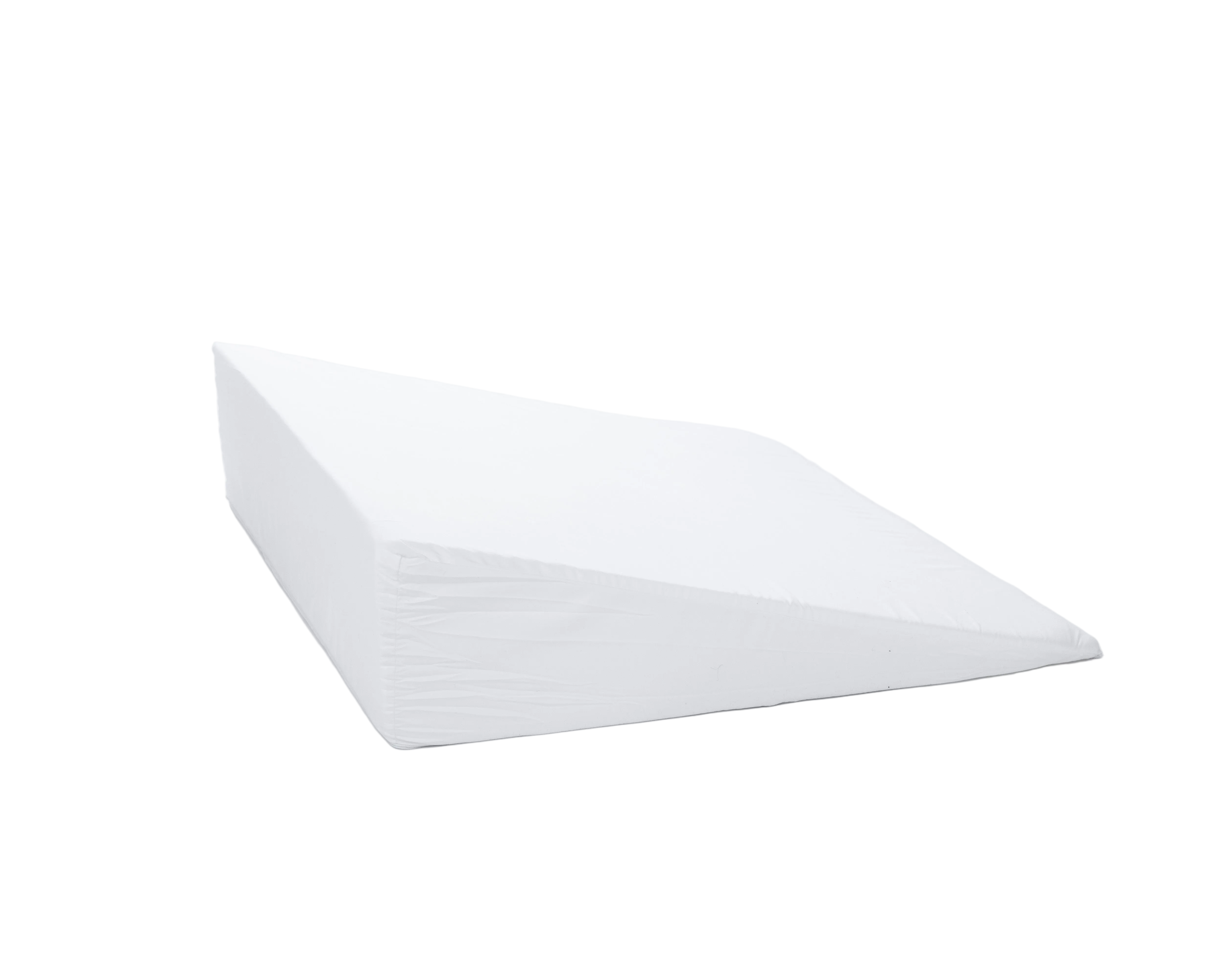
Create your incline. A purpose-built pillow system designed for post-surgery recovery, incorporating an upper body wedge, is the most reliable solution. Stacked household pillows tend to shift, compress, and lose their angle overnight — which means your therapeutic incline disappears well before morning.
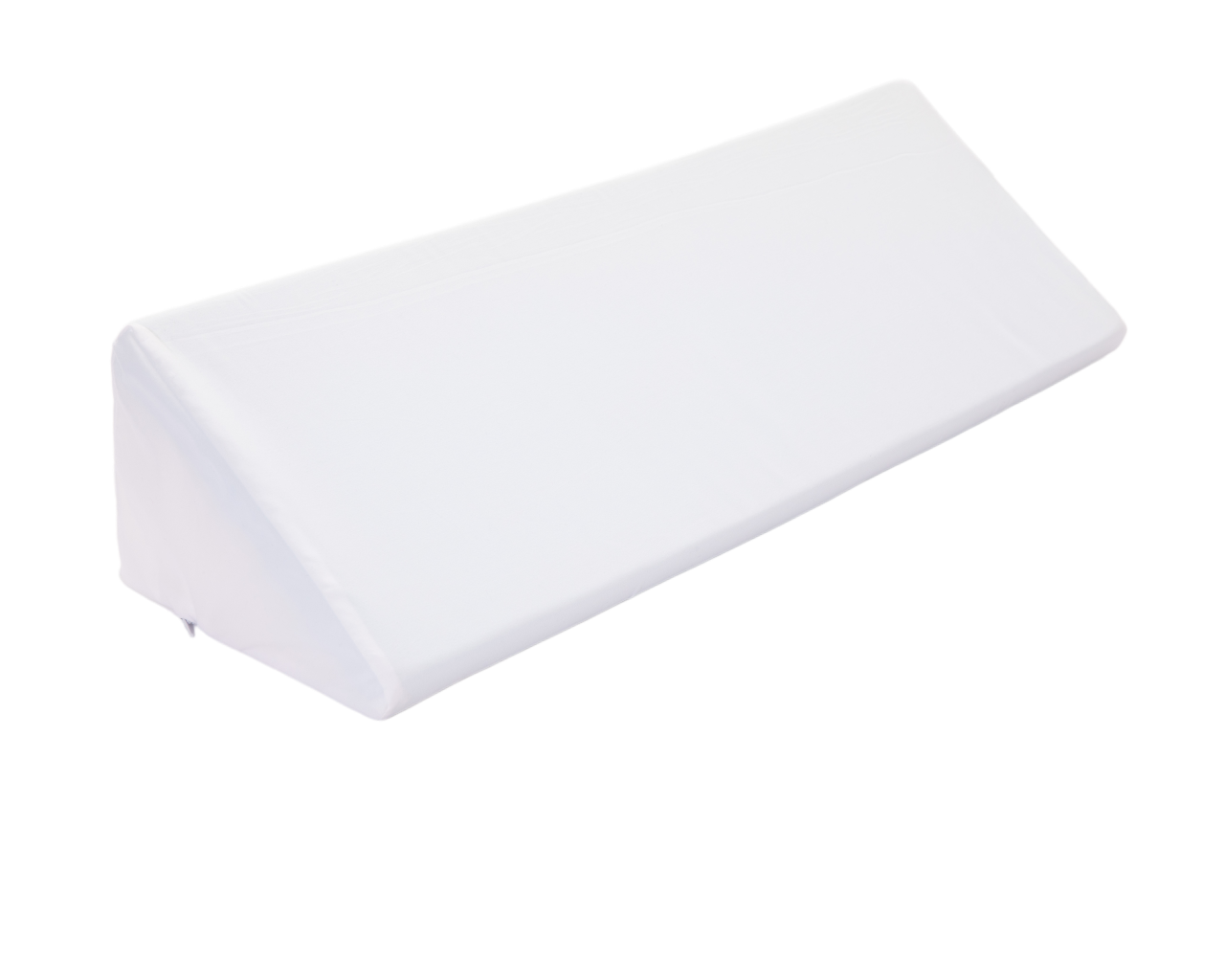
Prepare your leg support. A firm wedge or bolster under your knees reduces lower back strain and abdominal wall tension. This component is frequently overlooked in DIY setups.
Minimize obstacles. Keep your path from the bed to the bathroom clear. Getting up from an elevated position in the first week requires deliberate, careful movement.
Place essentials within reach. Water, medications, your phone, and compression garment supplies should be on your bedside table before you arrive home.
Test the setup. Lie in your planned sleep configuration the night before surgery to confirm it is workable before you need it.

How Does the Sleep Again Pillow System Support Lipo 360 Recovery?
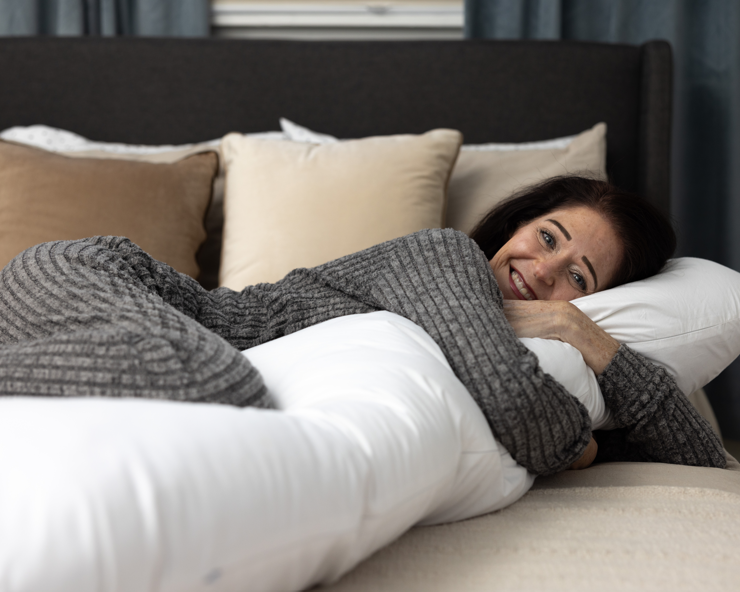
For patients who want a comprehensive, purpose-built solution for Lipo 360 recovery sleep, the Sleep Again Pillow System is designed to address every element of the therapeutic positioning outlined in this guide.
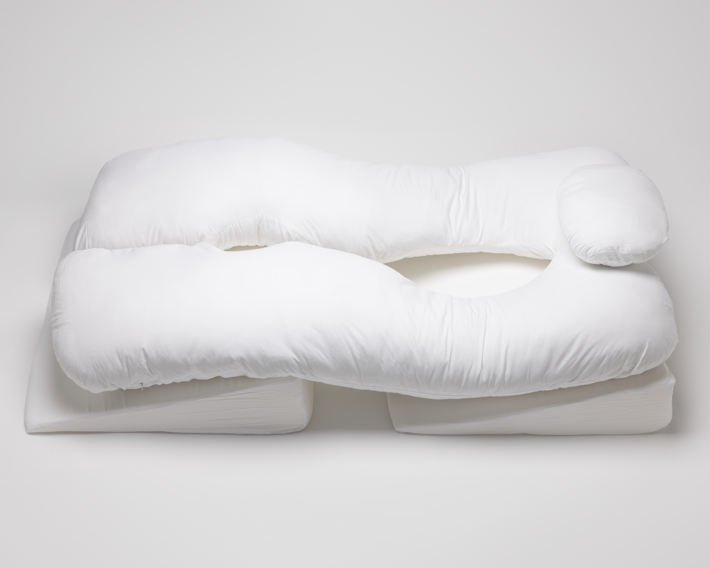
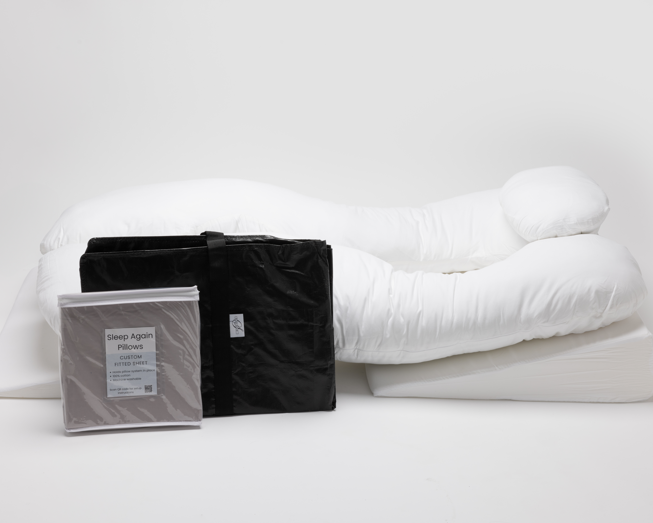
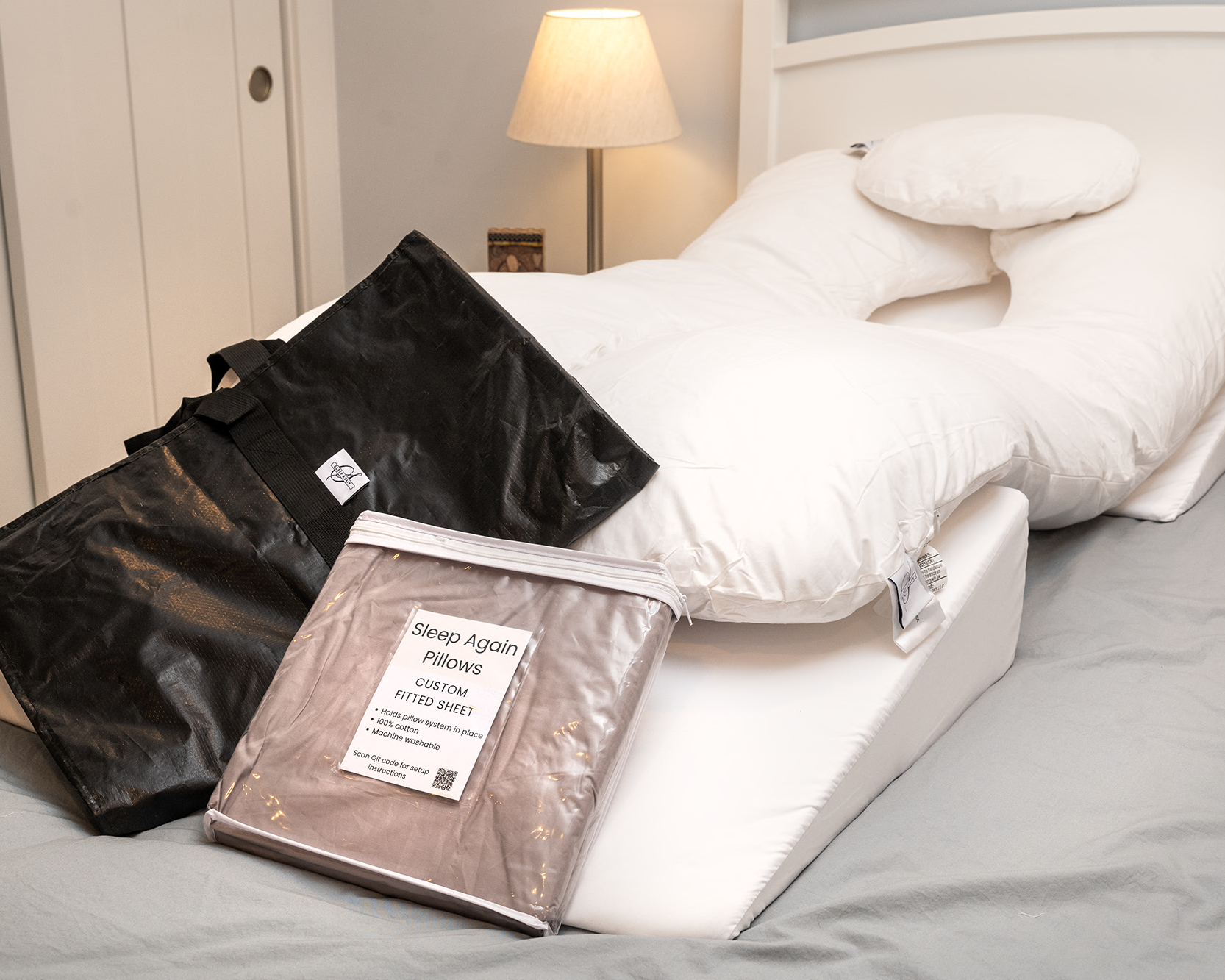
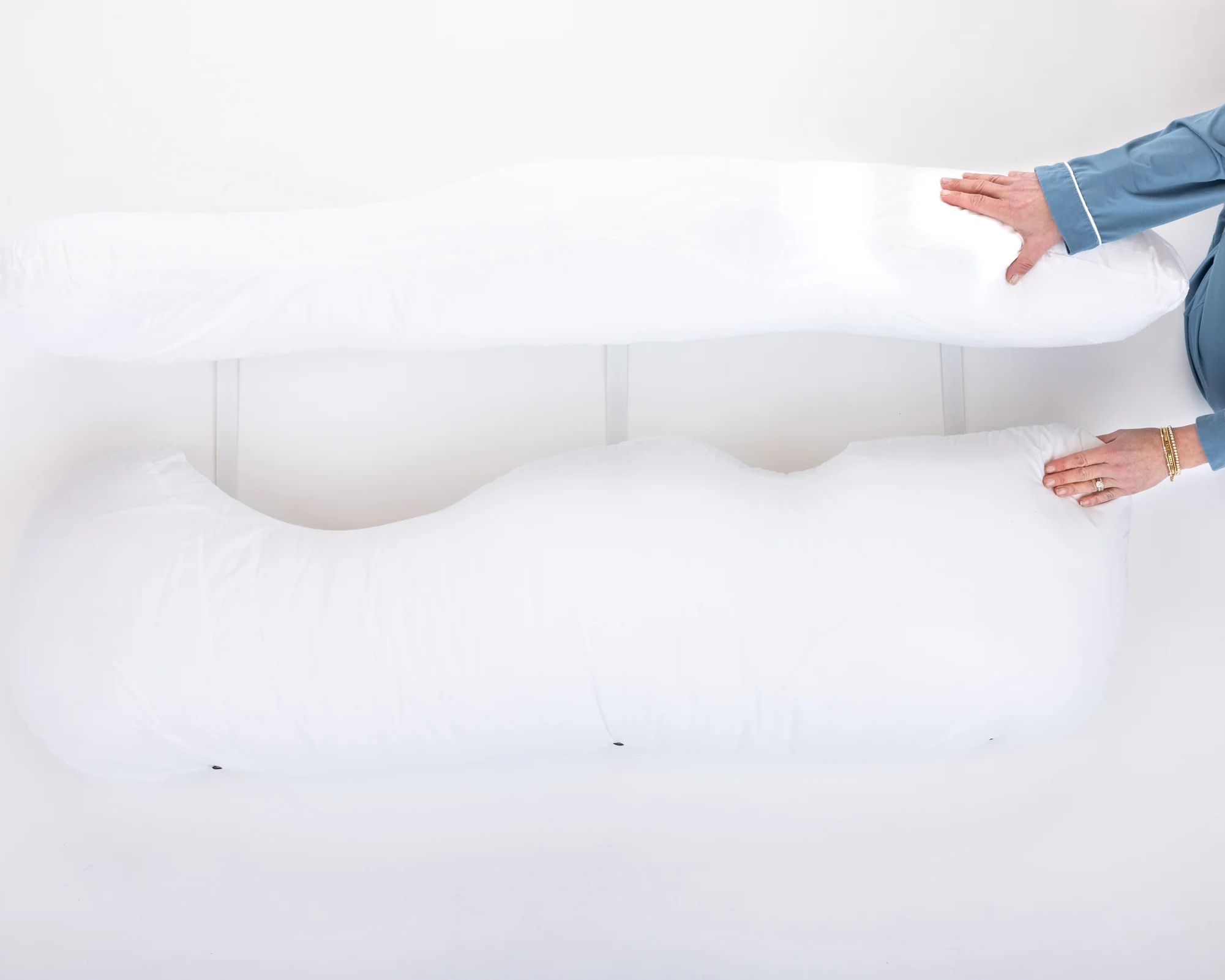
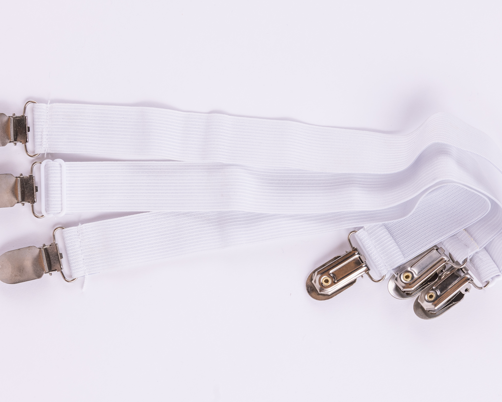
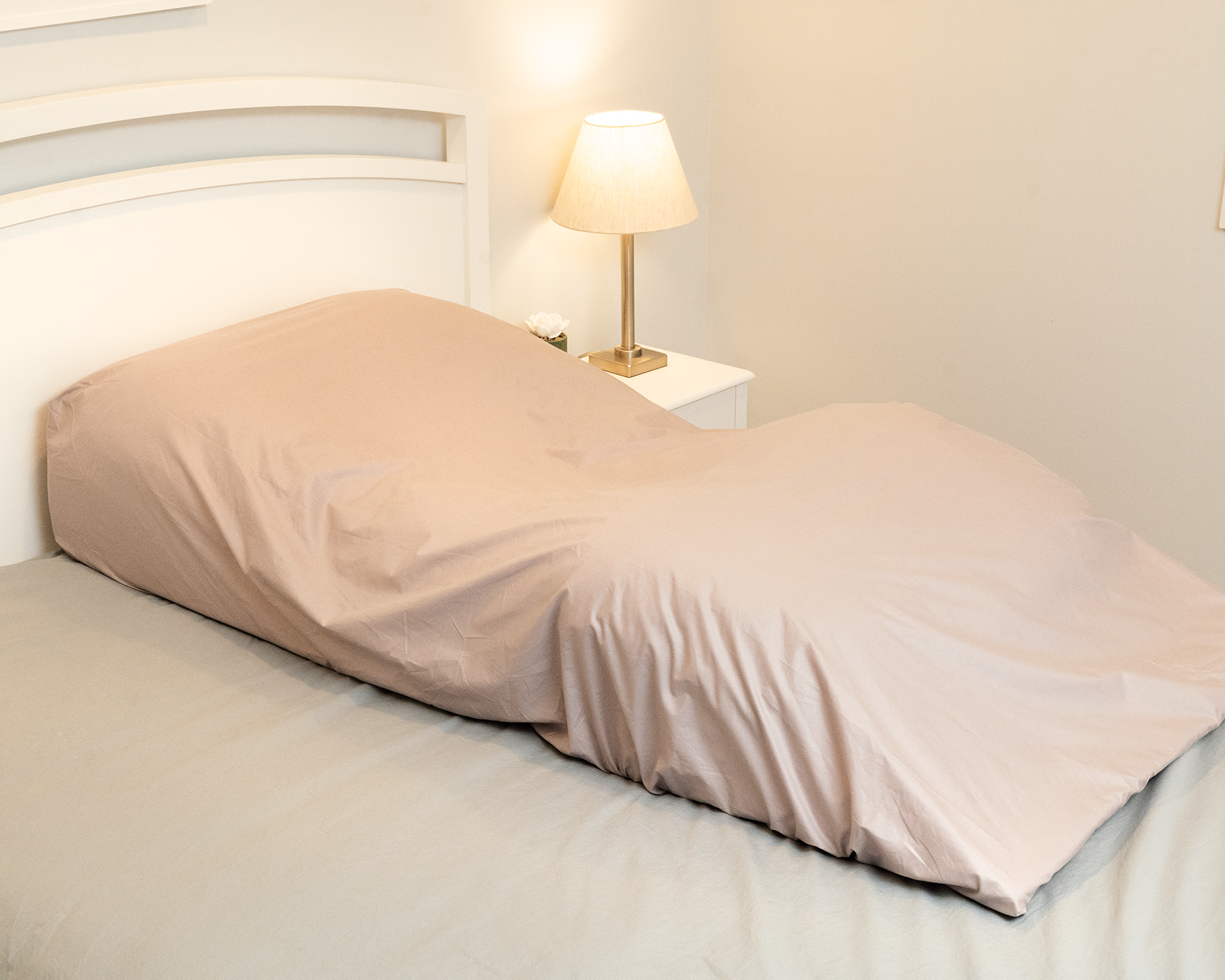
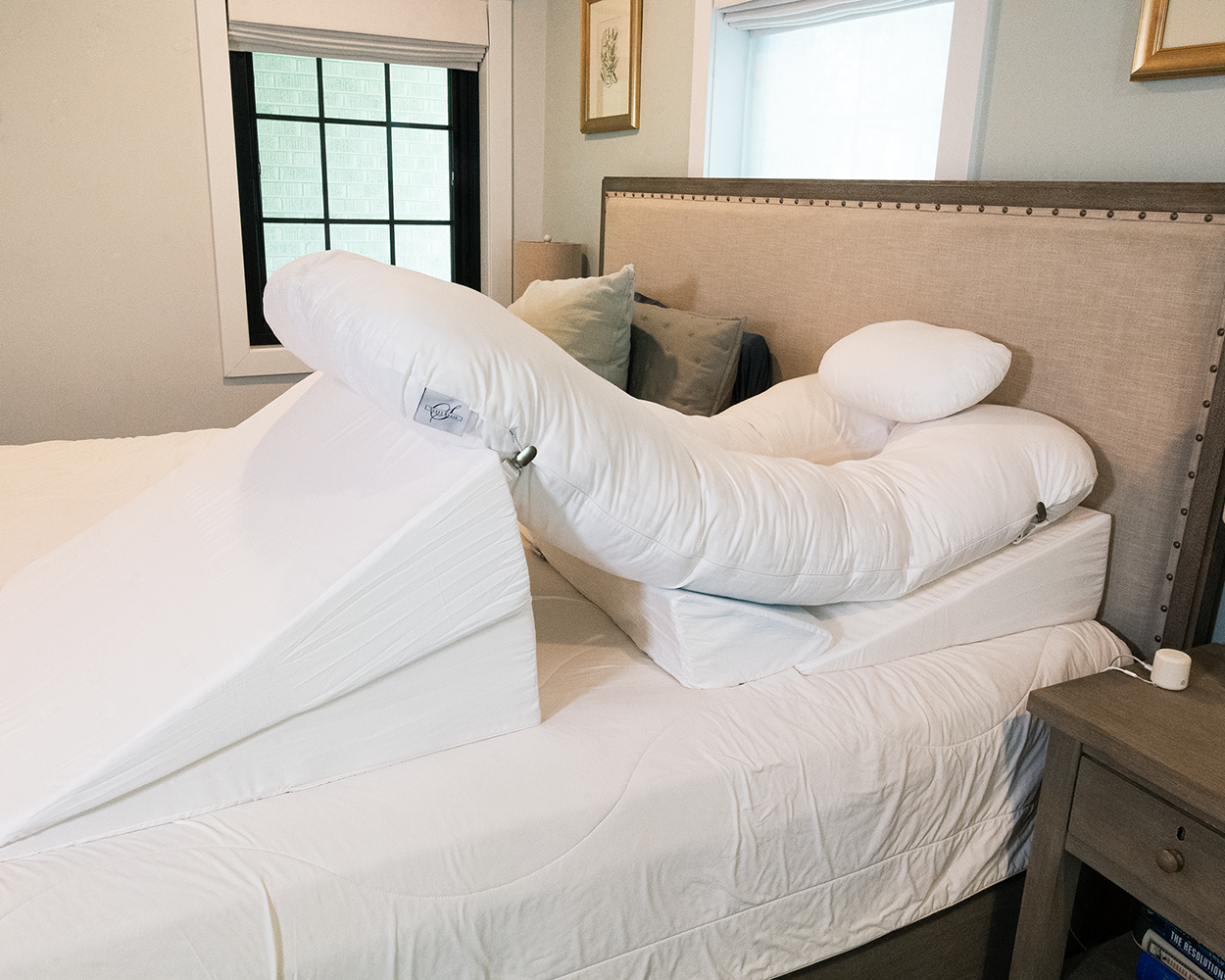
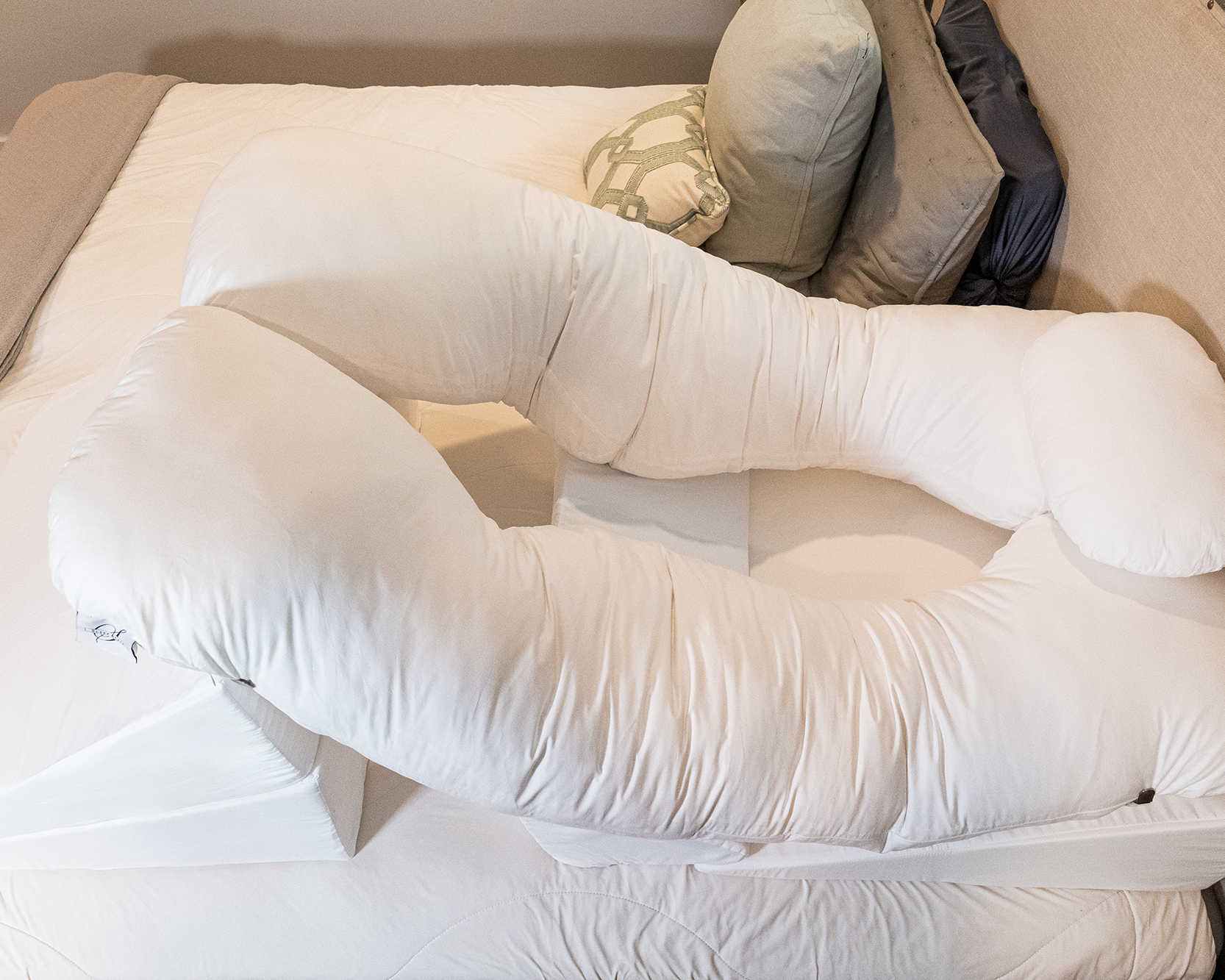
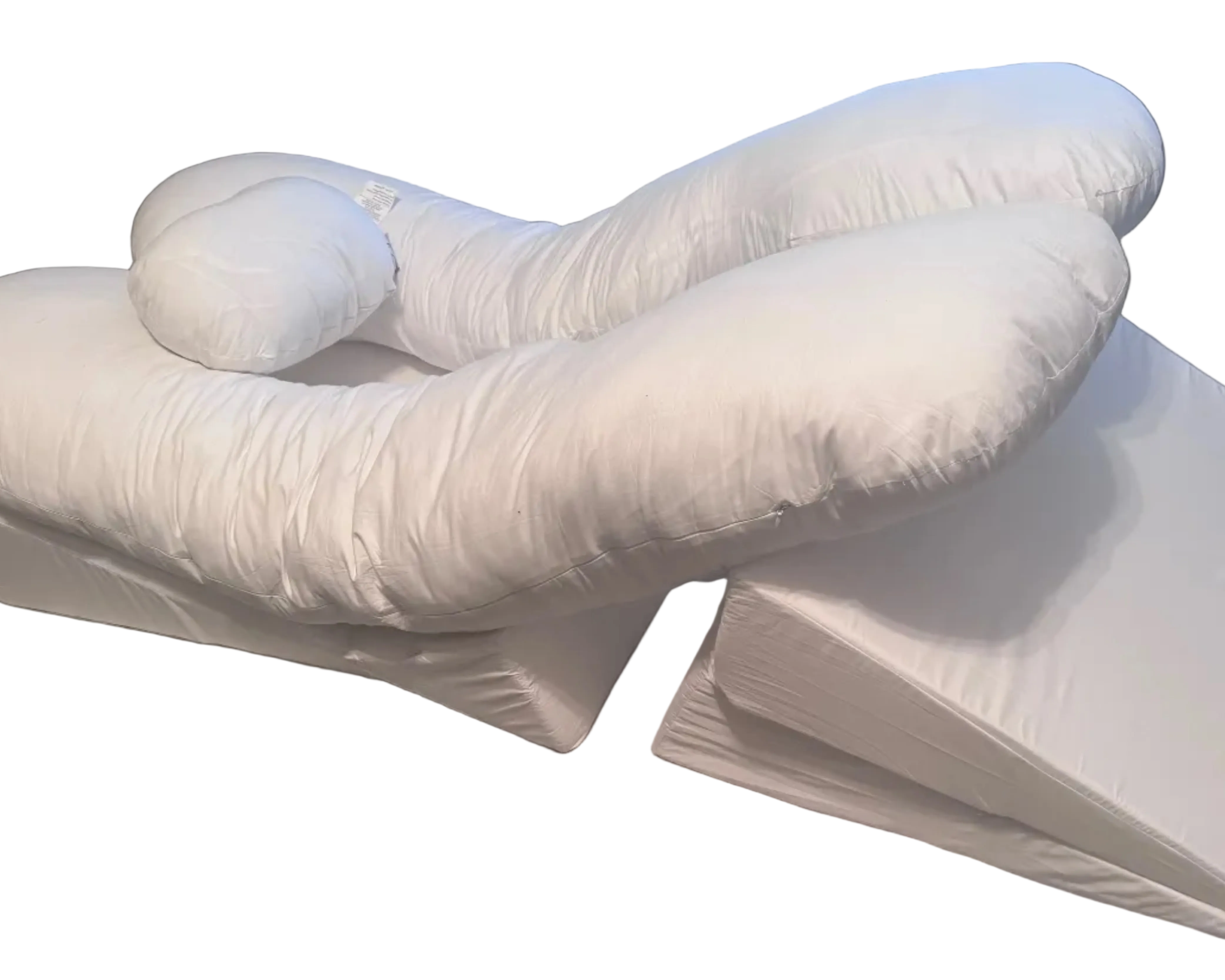
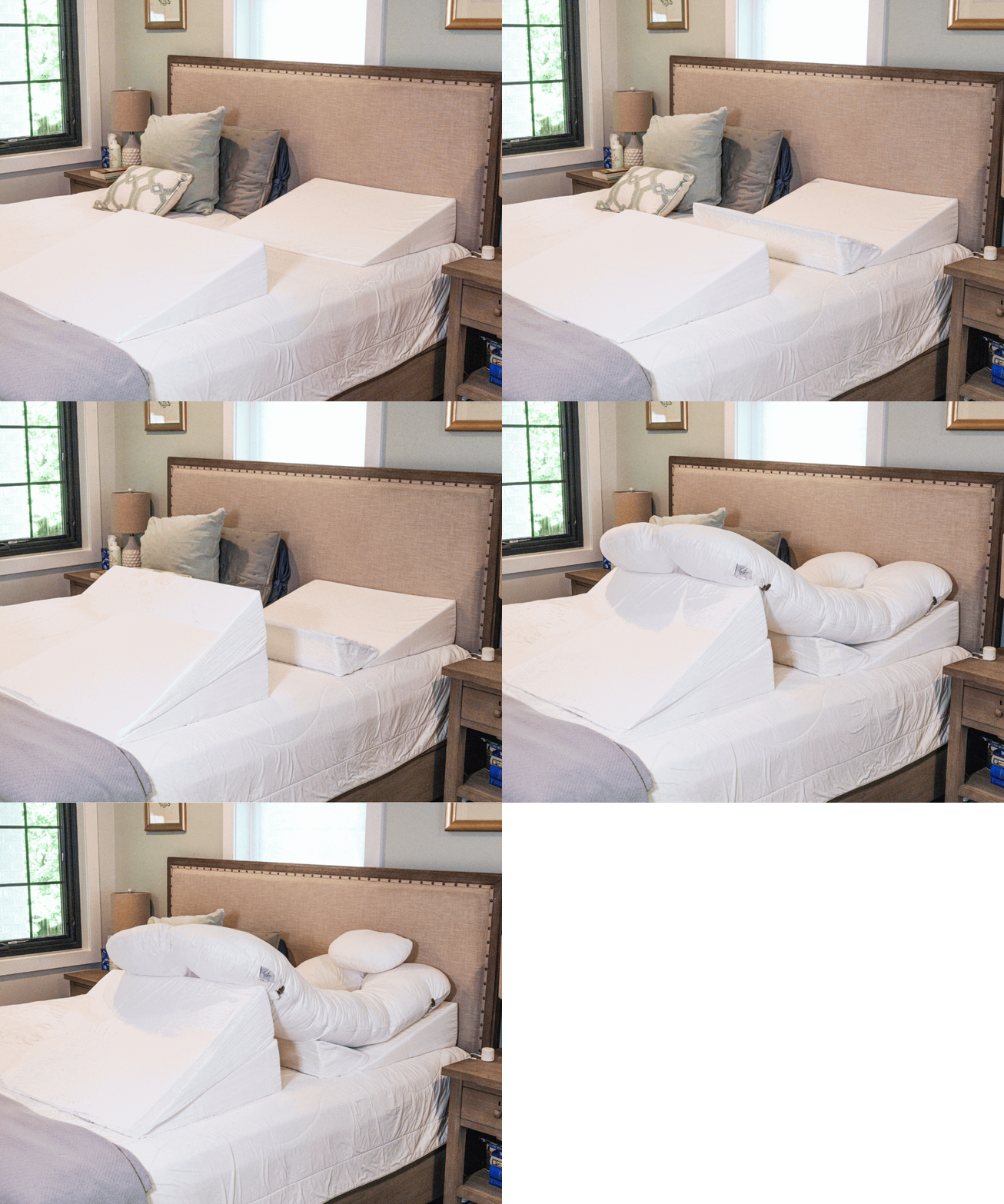
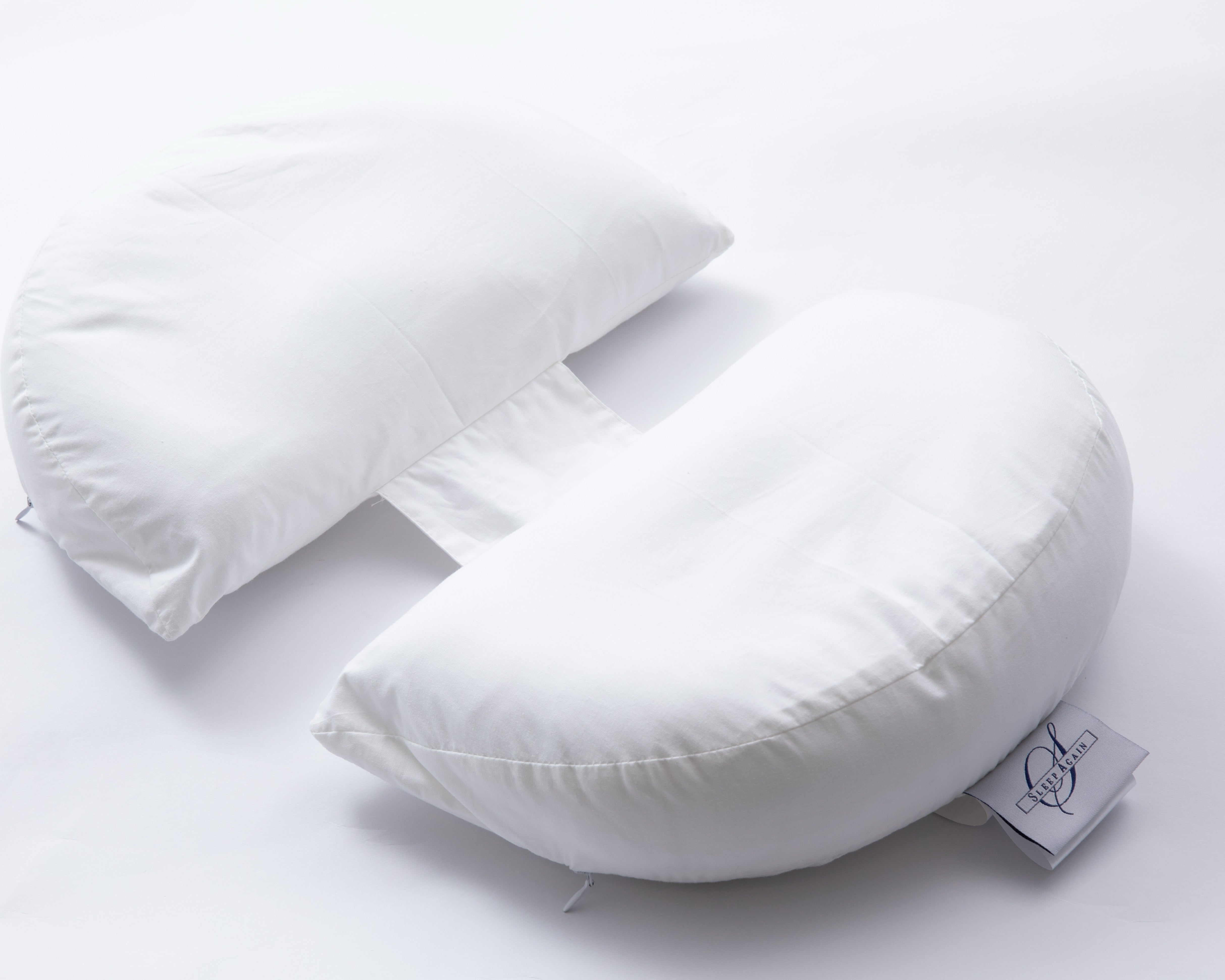
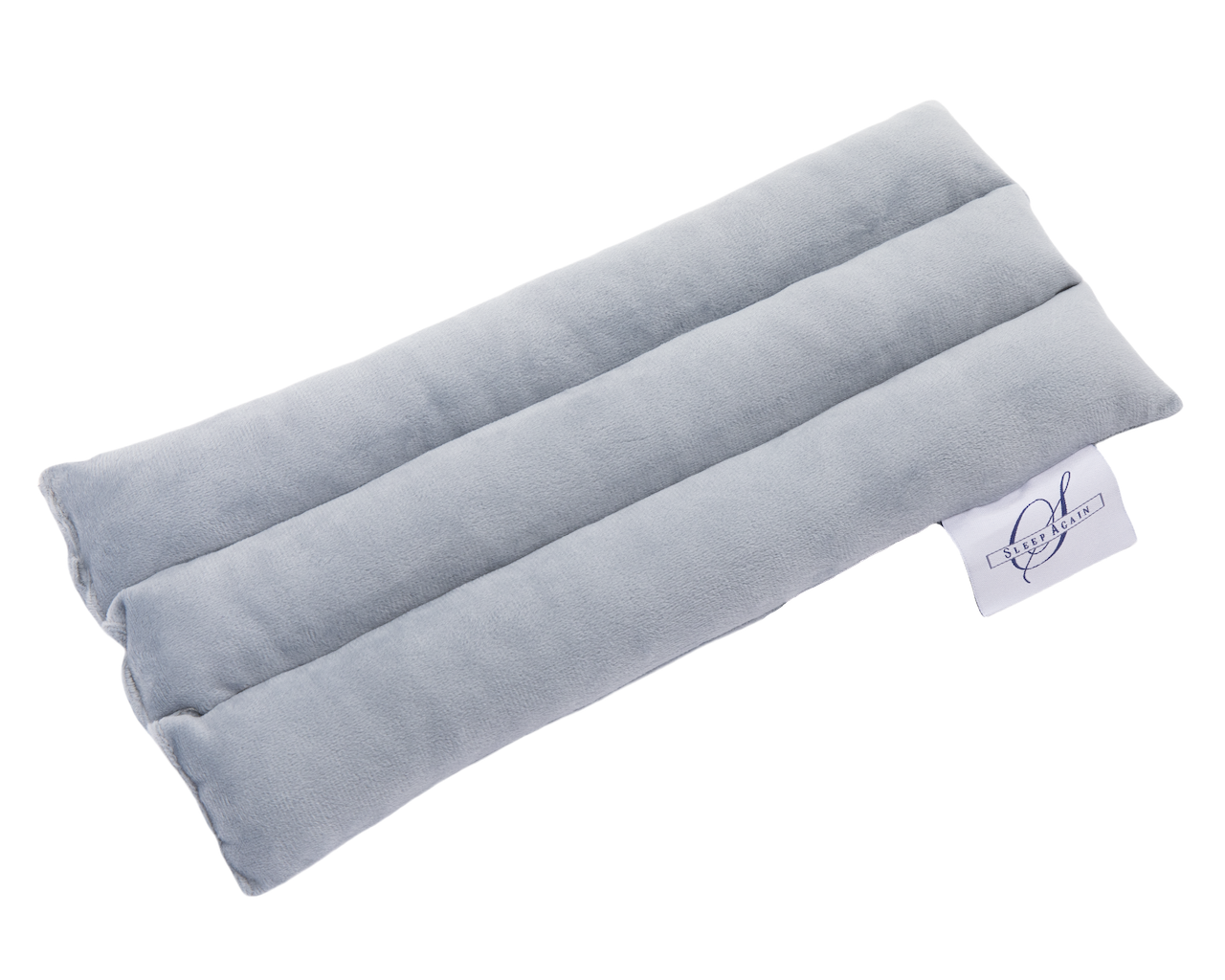
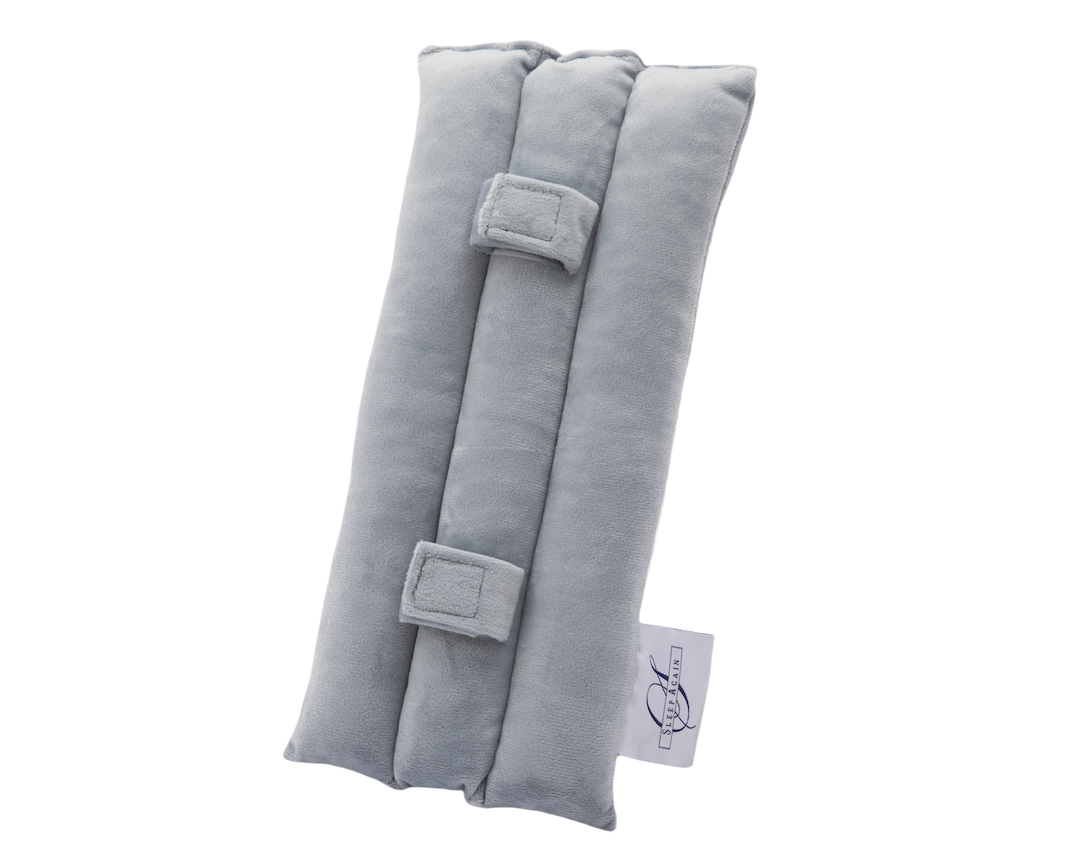
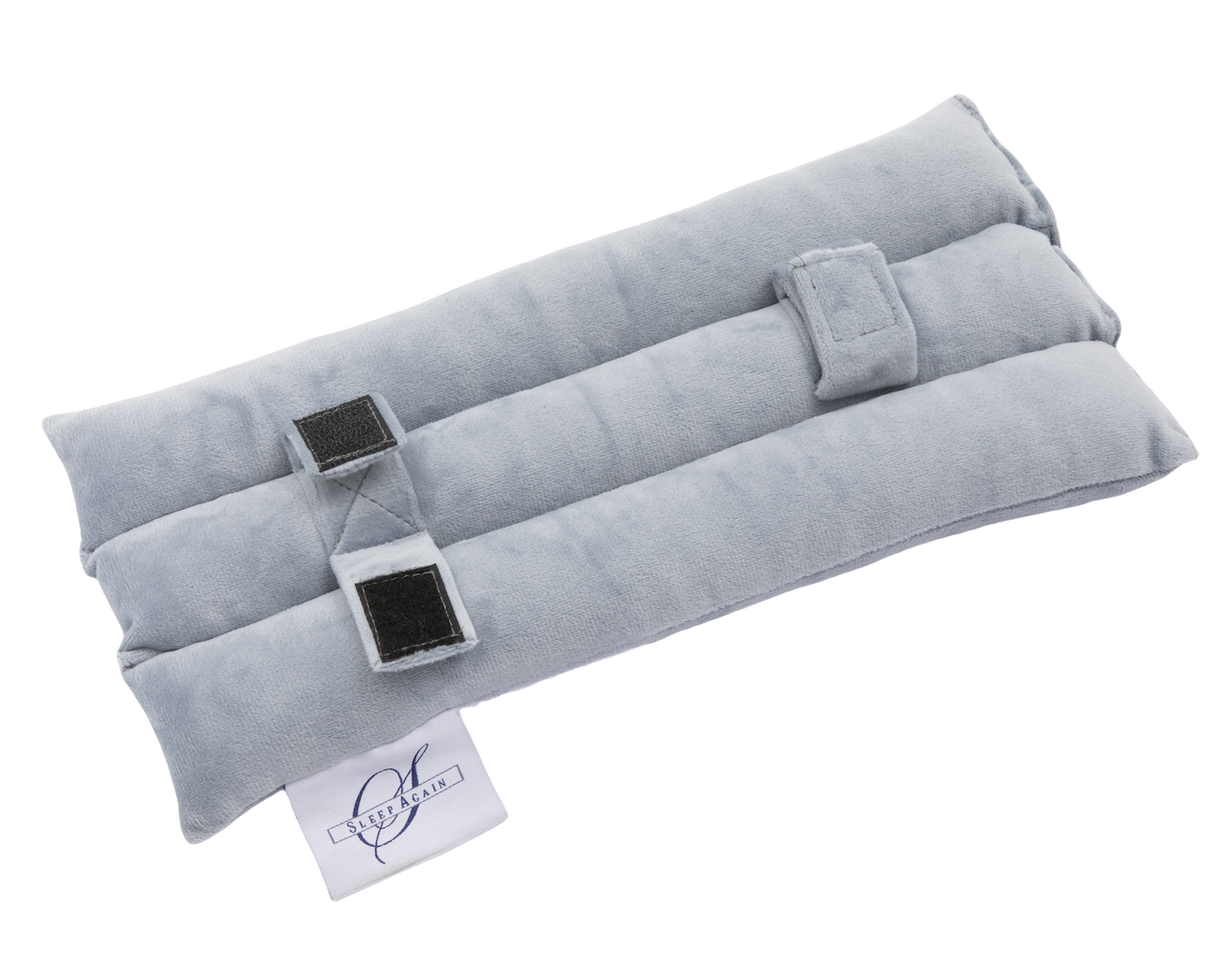
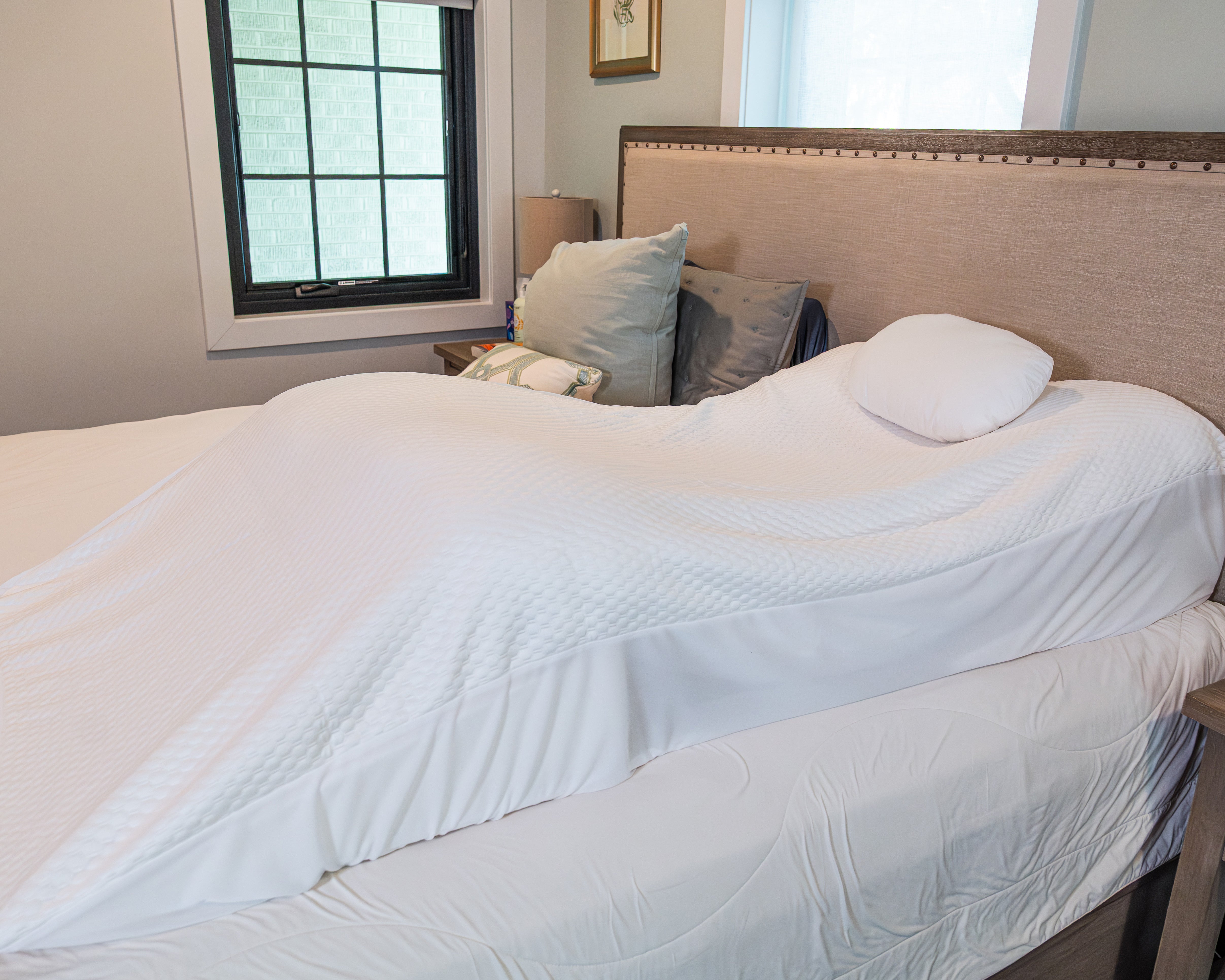
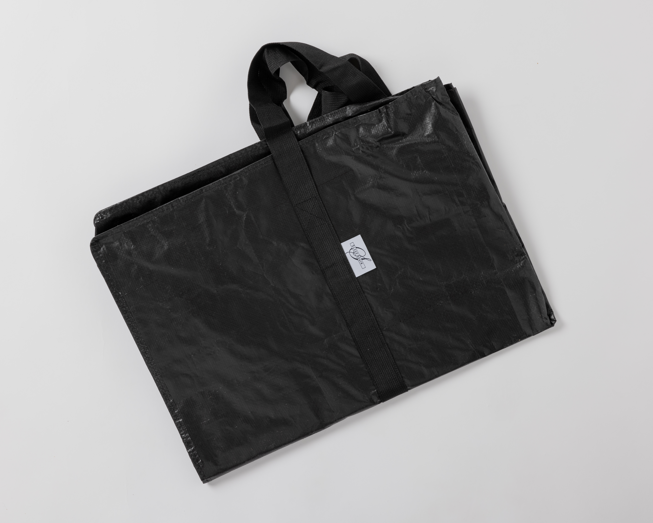
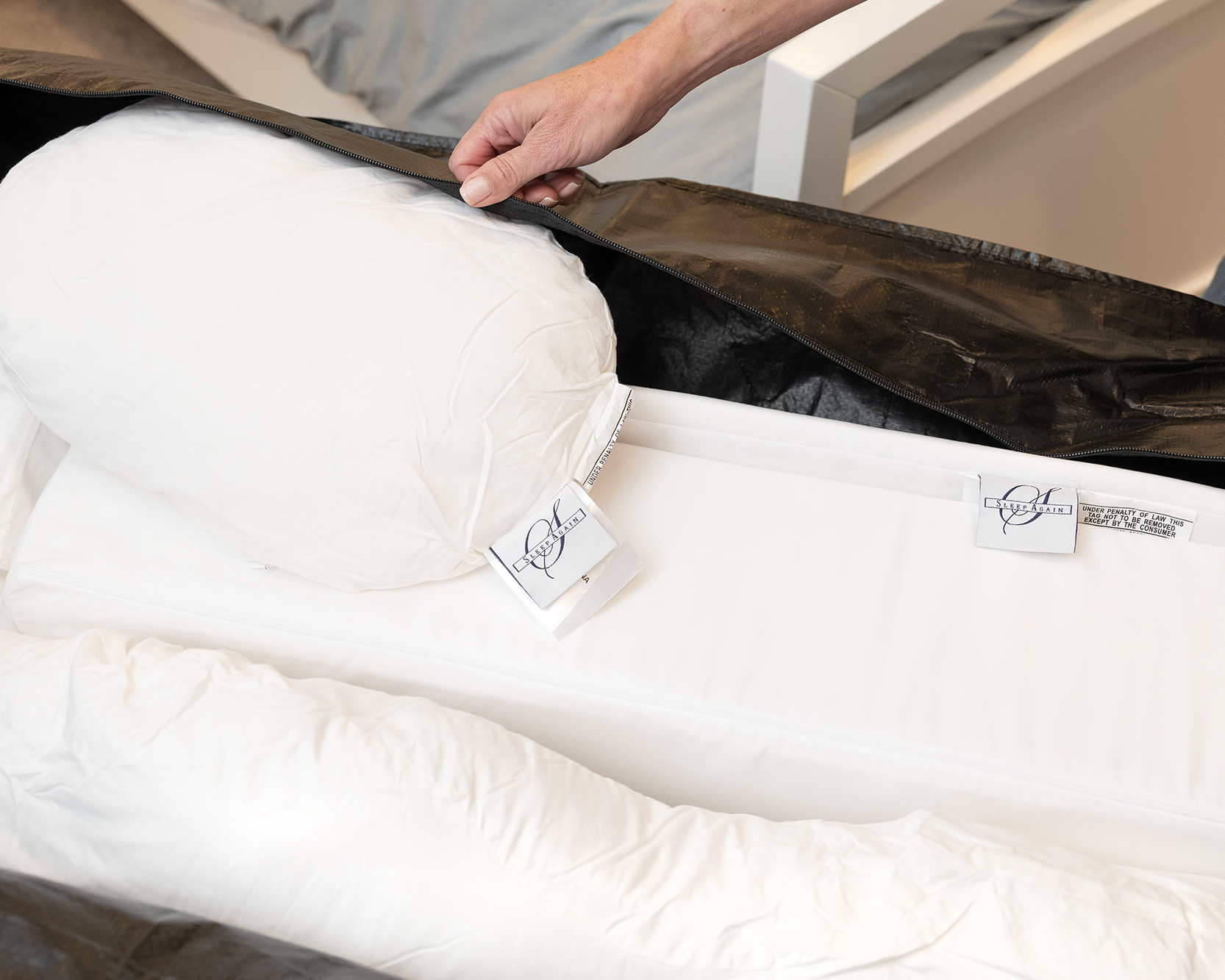
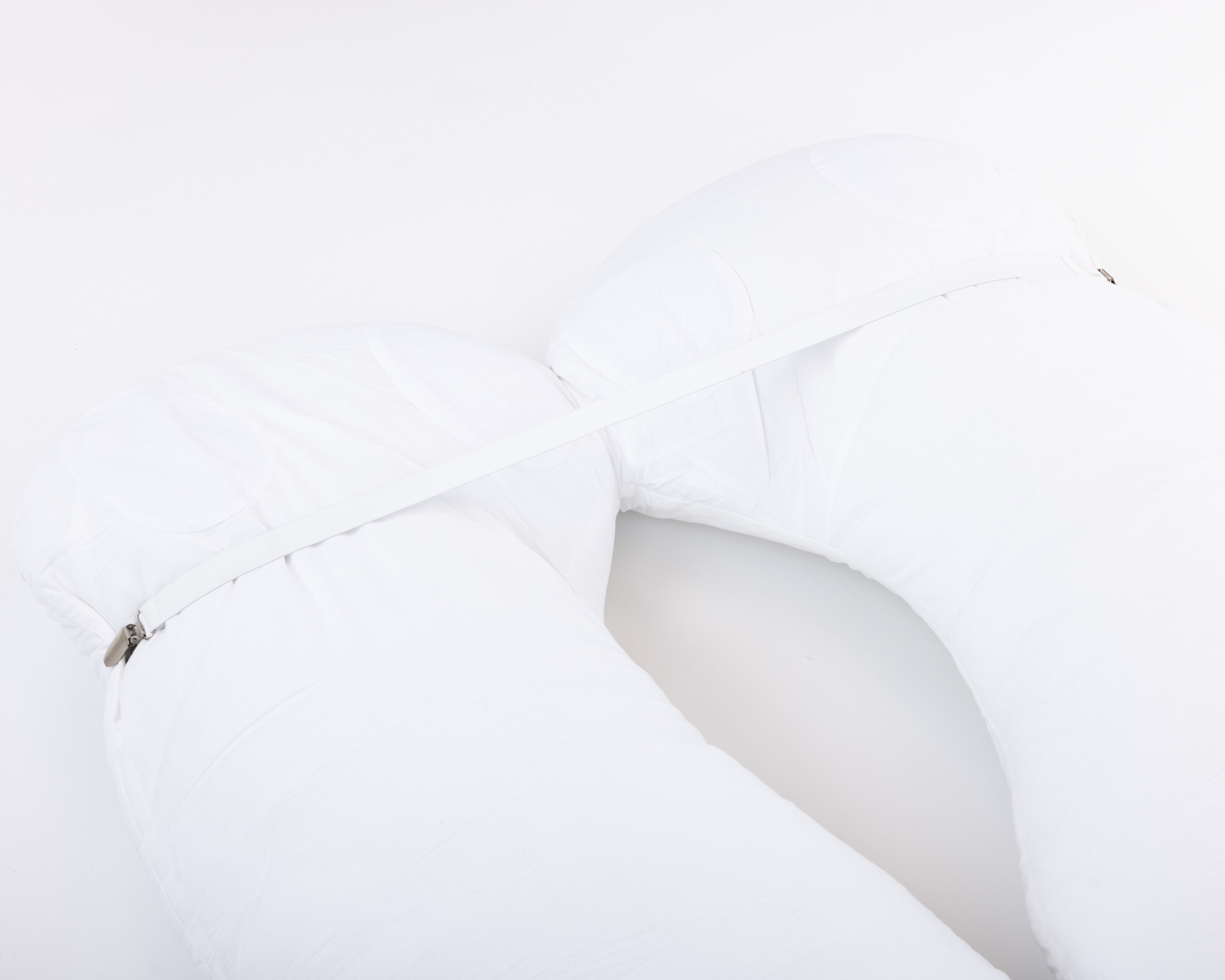
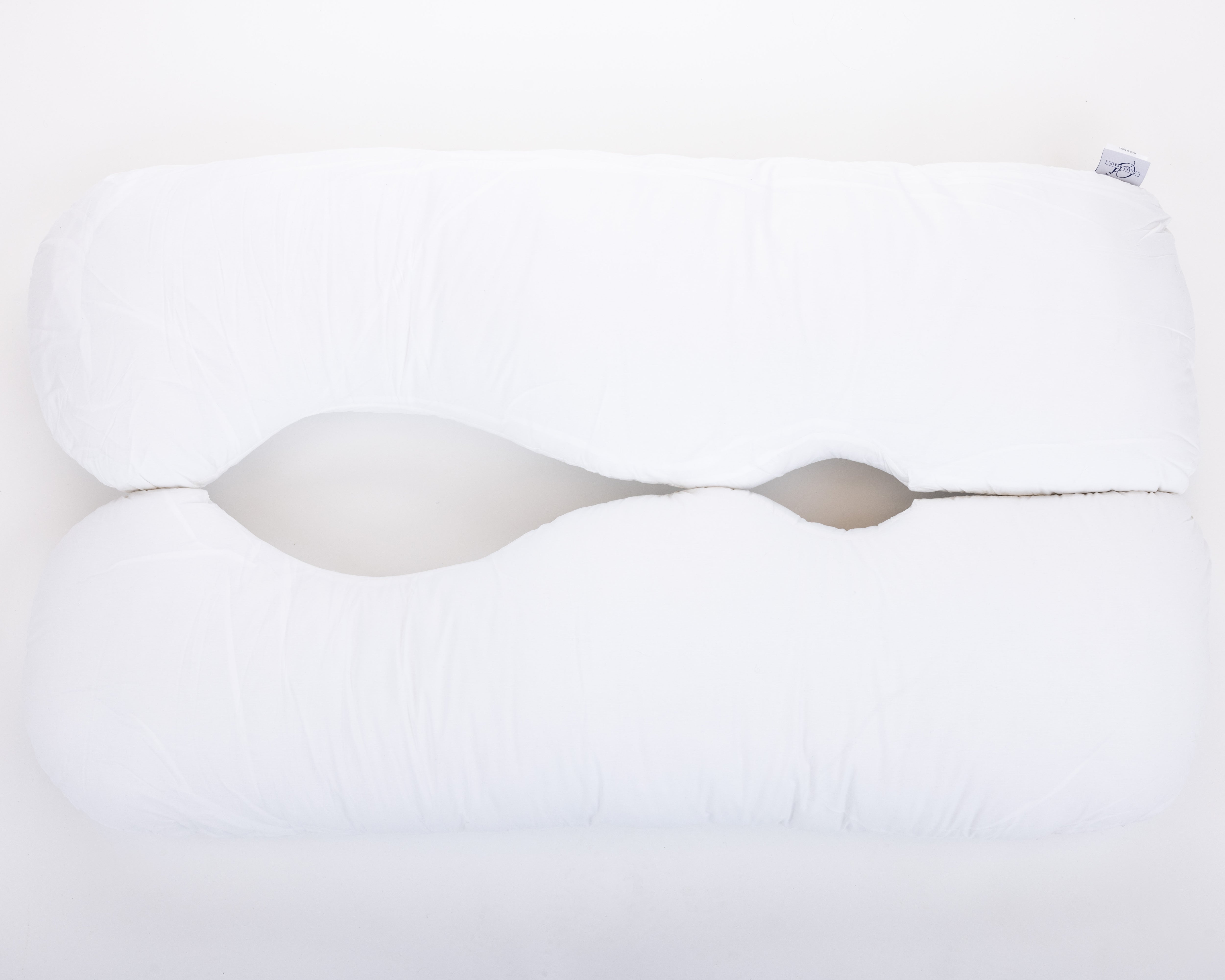
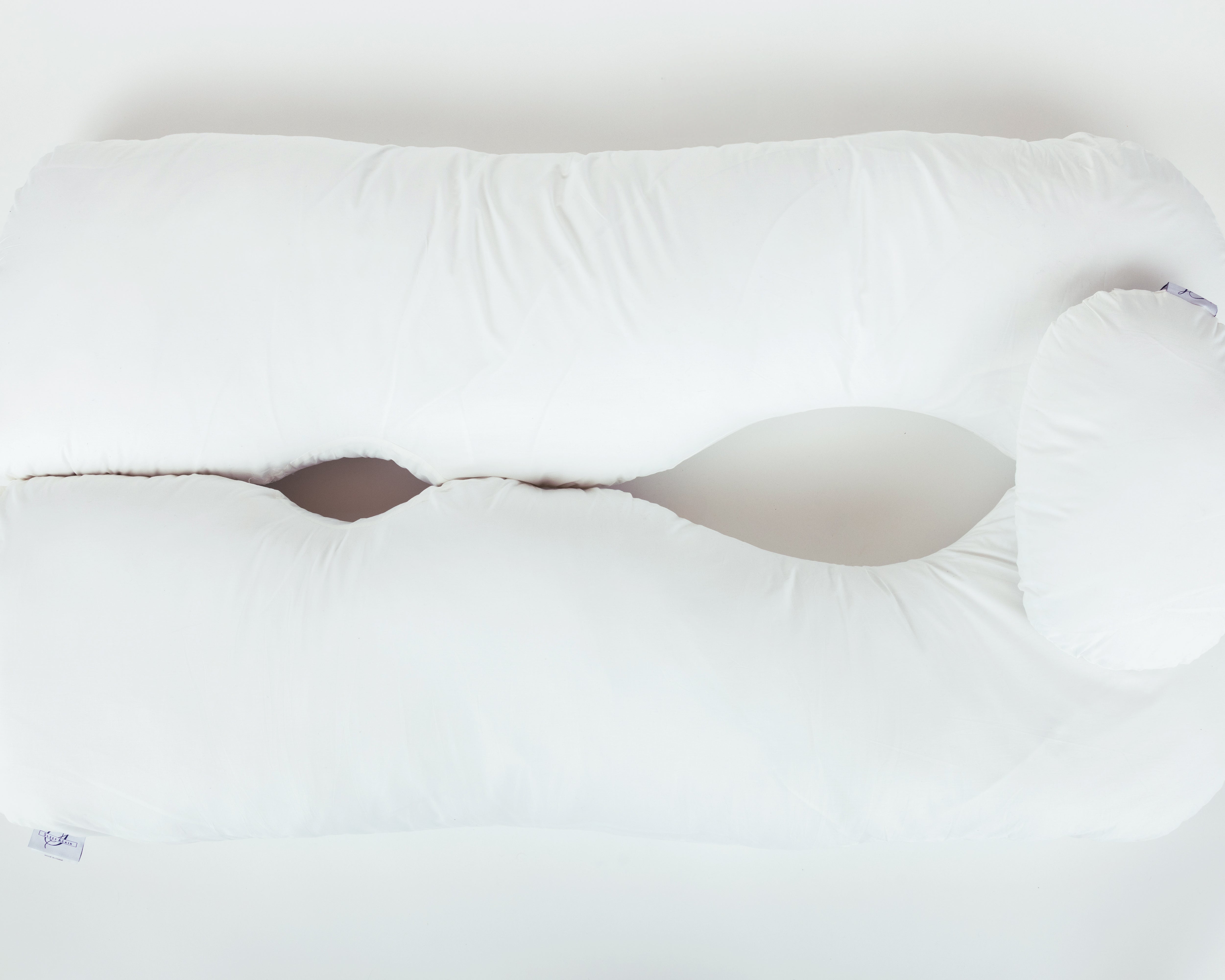
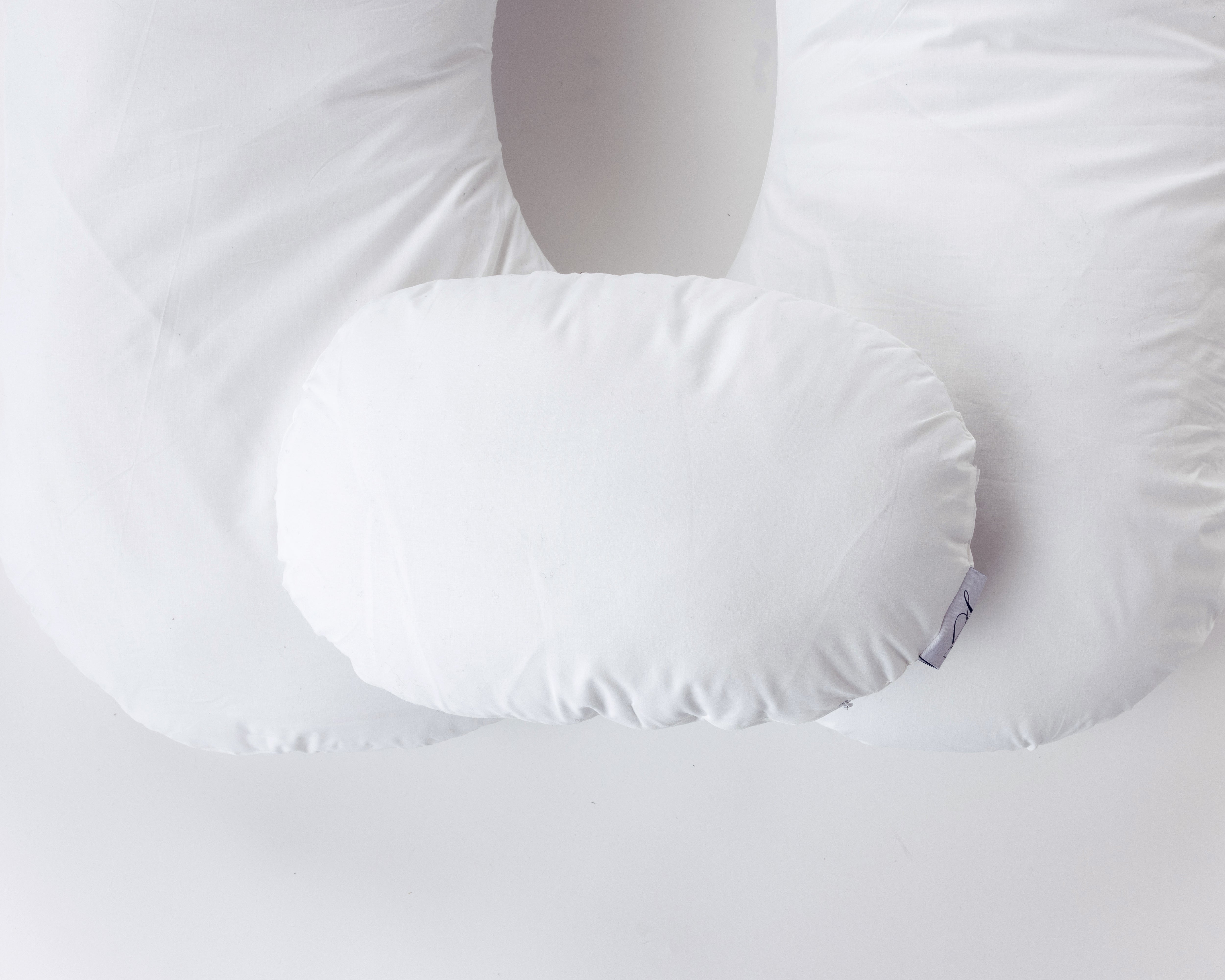
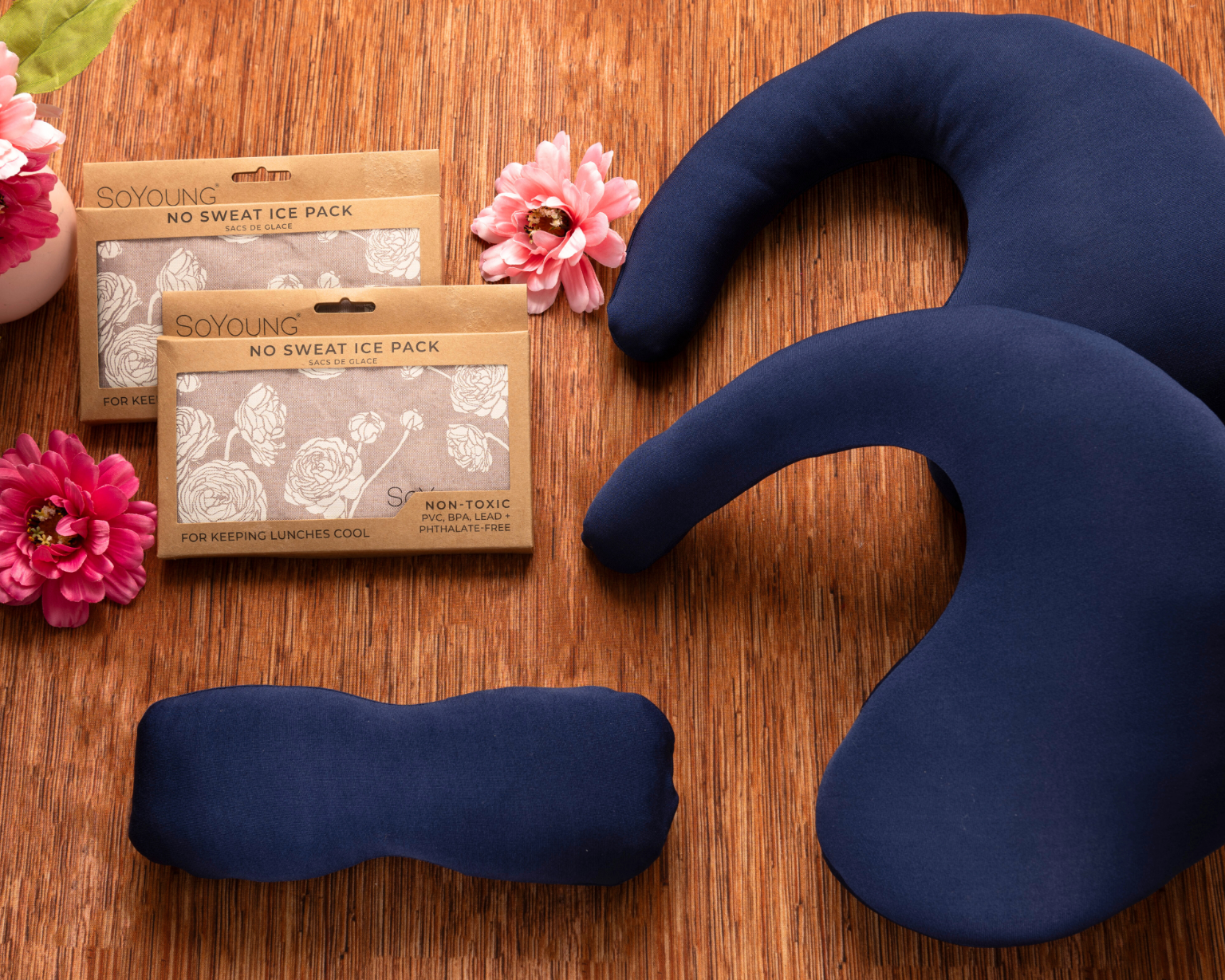
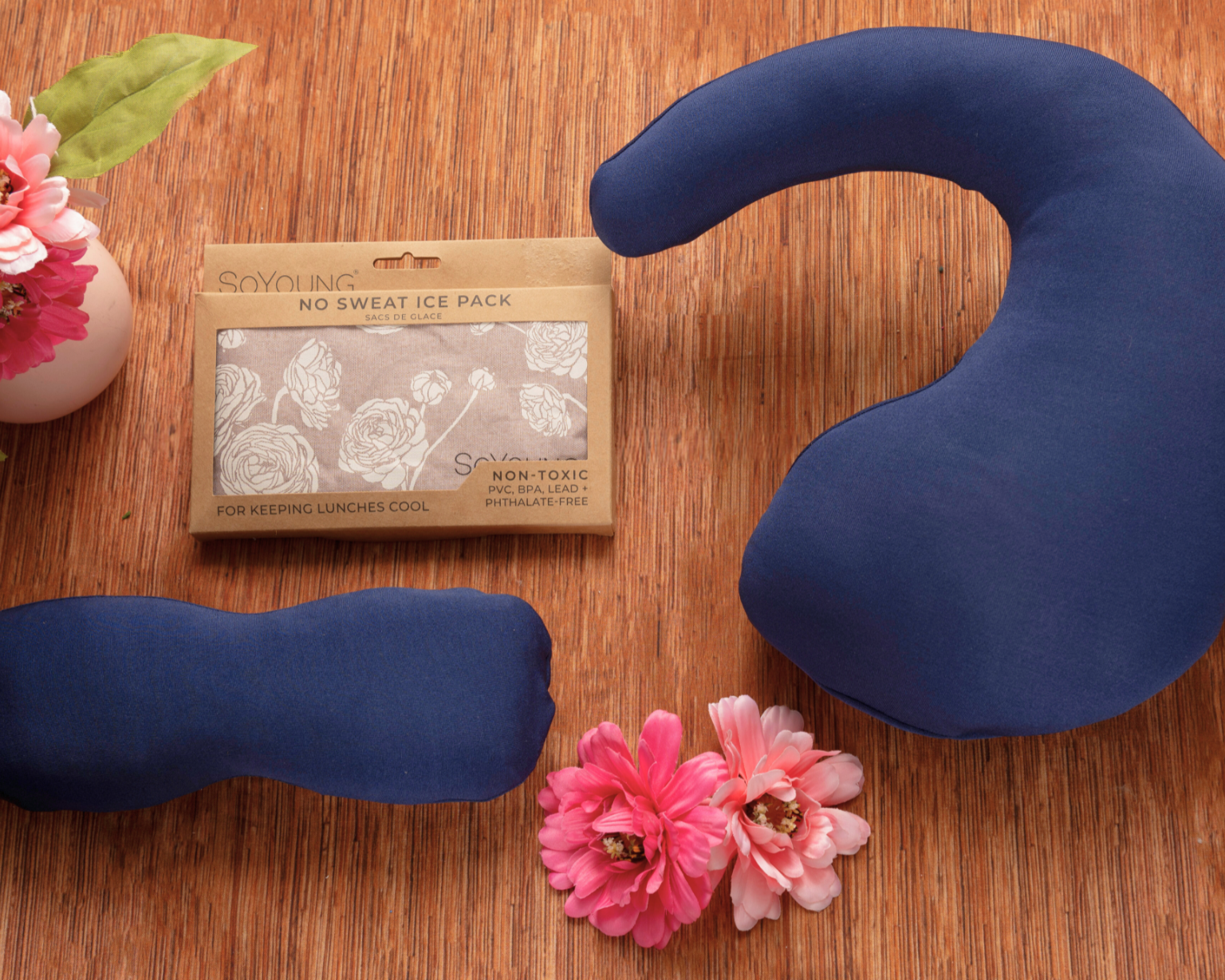
The Sleep Again Pillow System is a five-component full-body positioning system where every component serves a specific function in the post-surgical sleep setup:
-
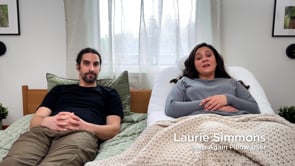
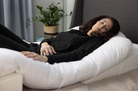
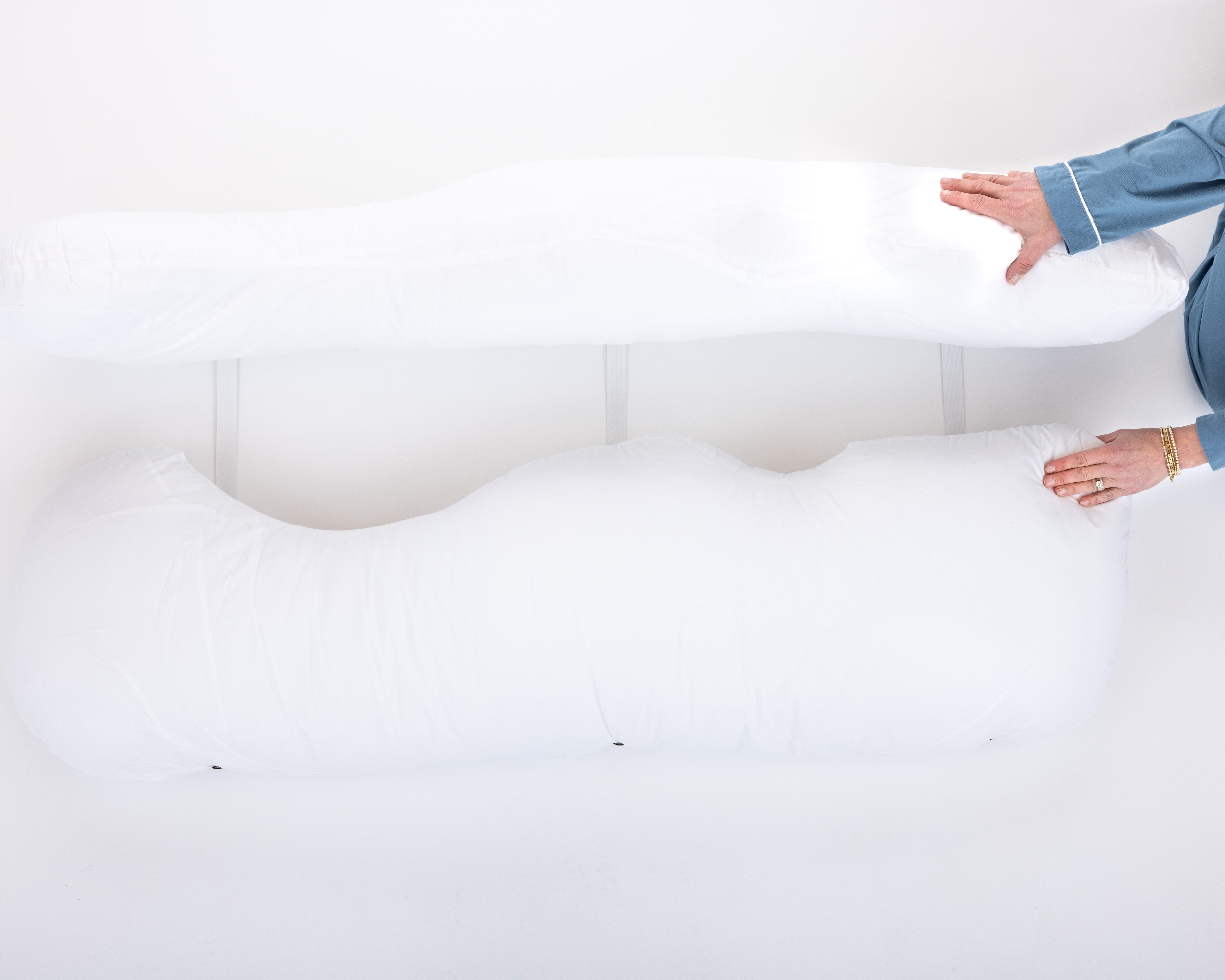
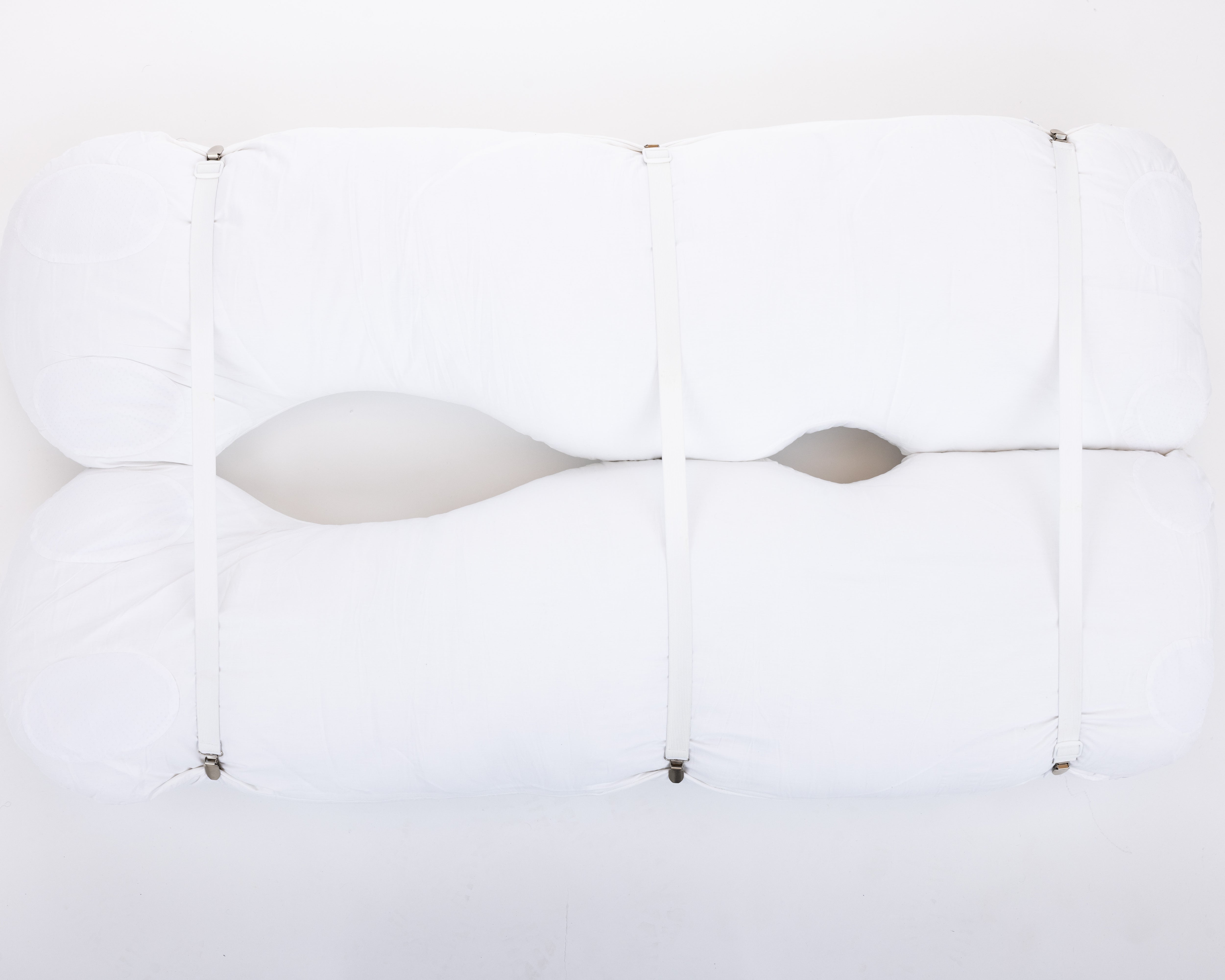
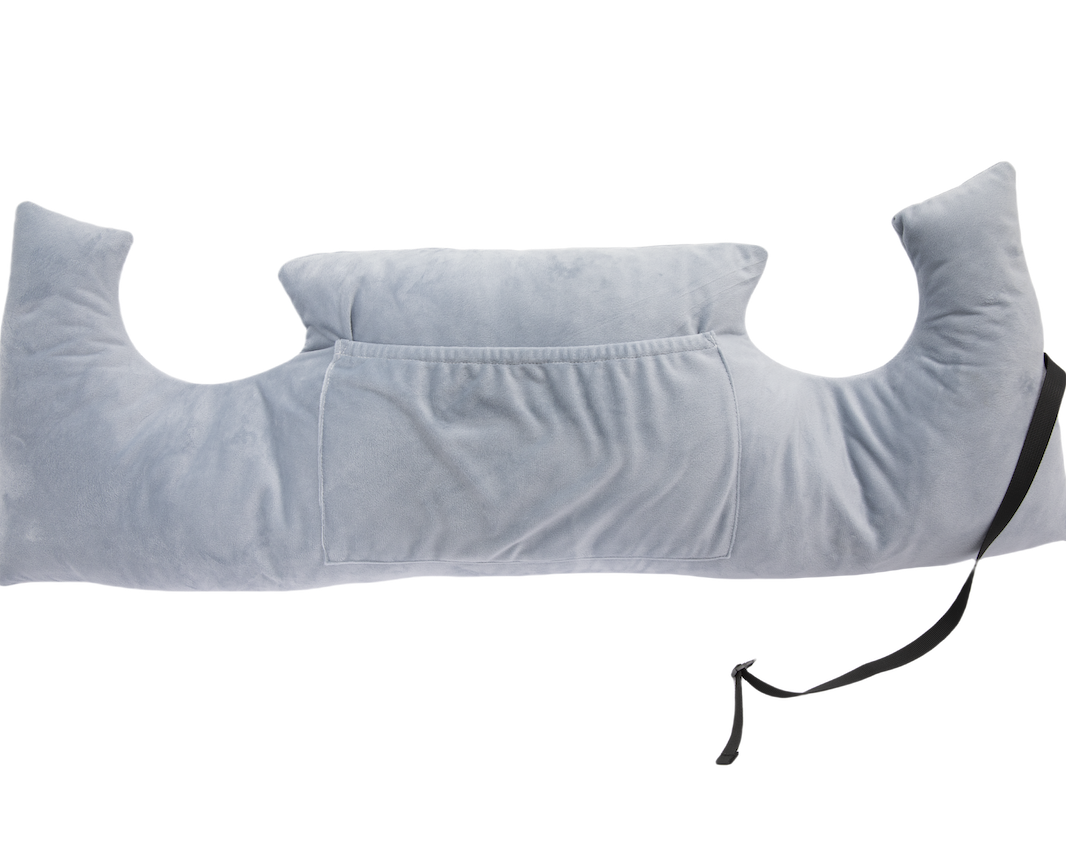
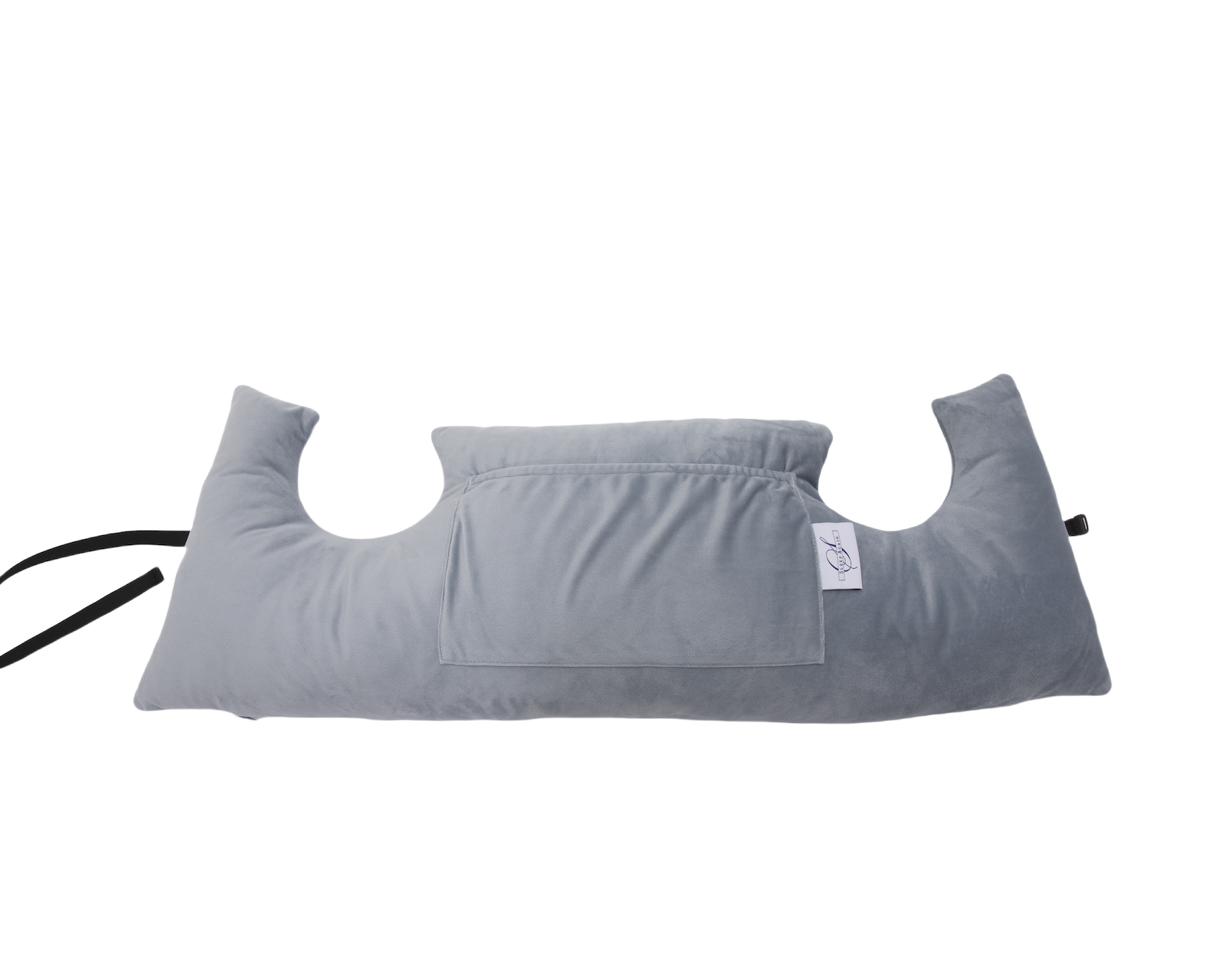
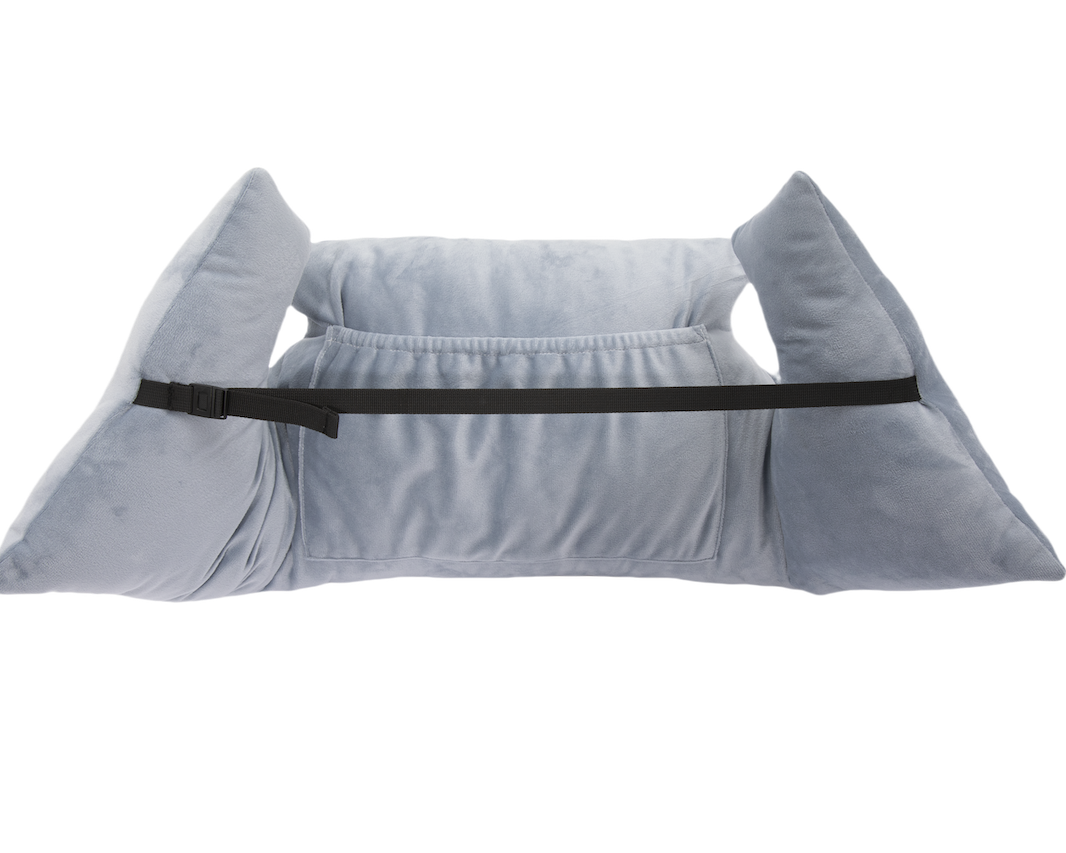
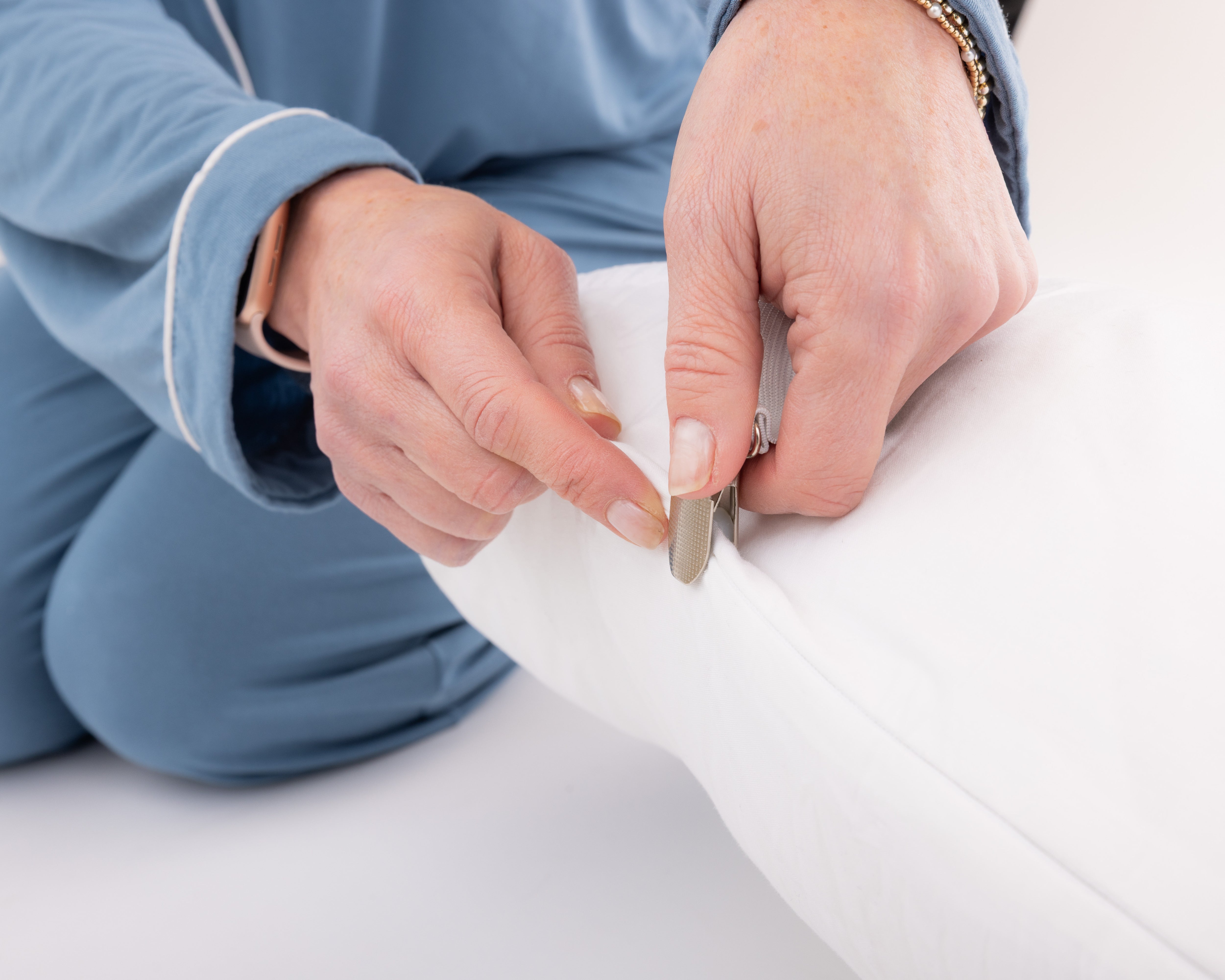
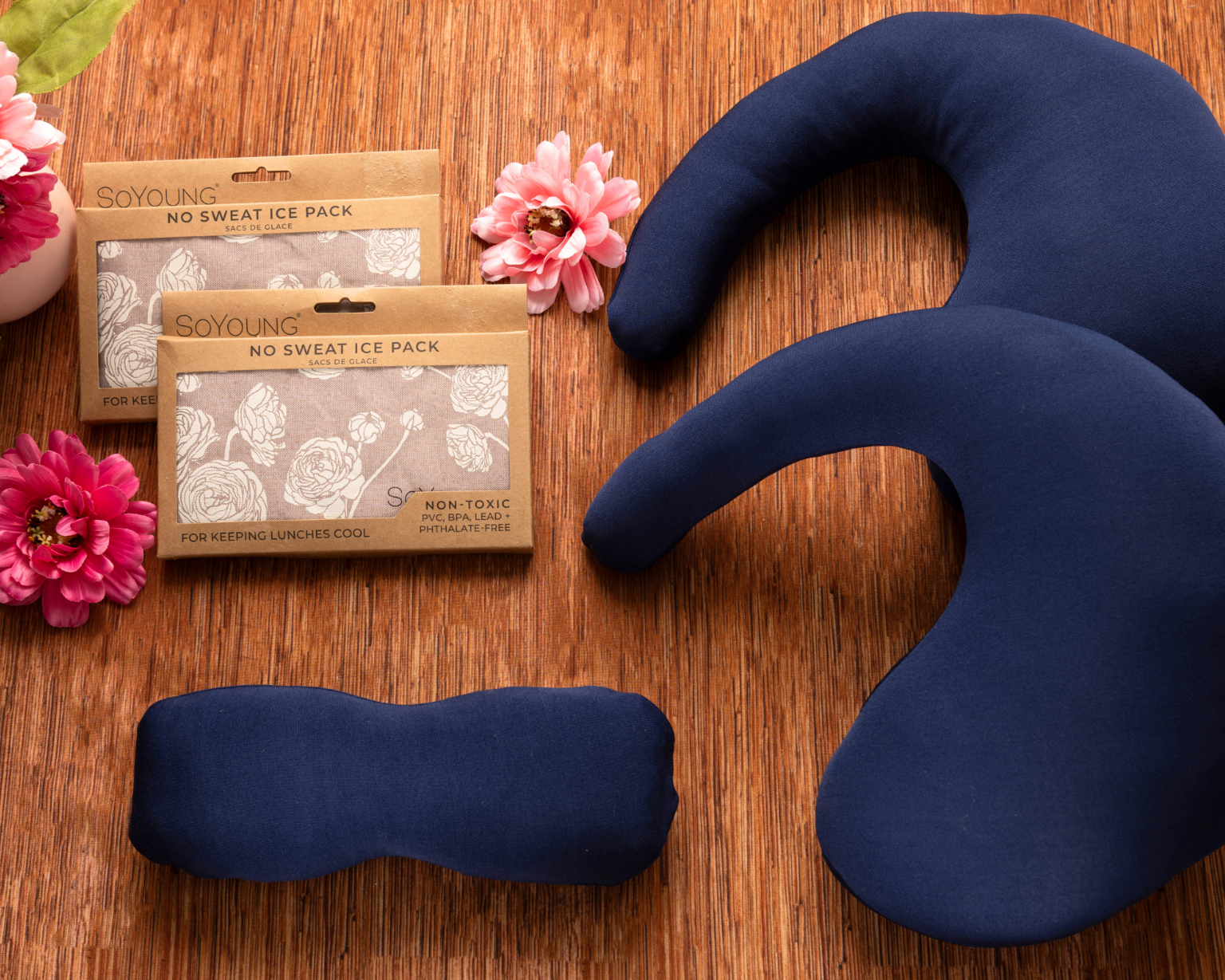
Two Contoured Side Pillows — positioned along both sides of the body to prevent unconscious rolling and provide stable lateral support throughout the night. For Lipo 360 patients, bilateral support is non-optional. Both sides of the midsection are treated areas that require protection
-
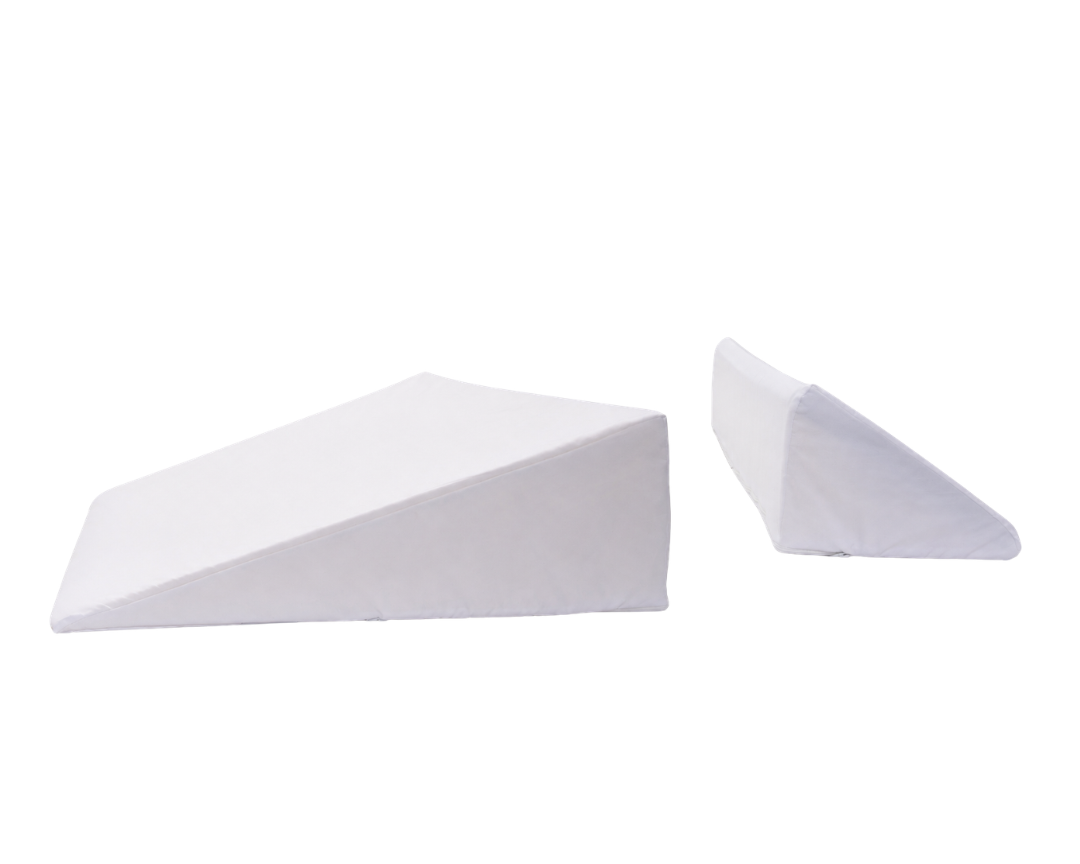
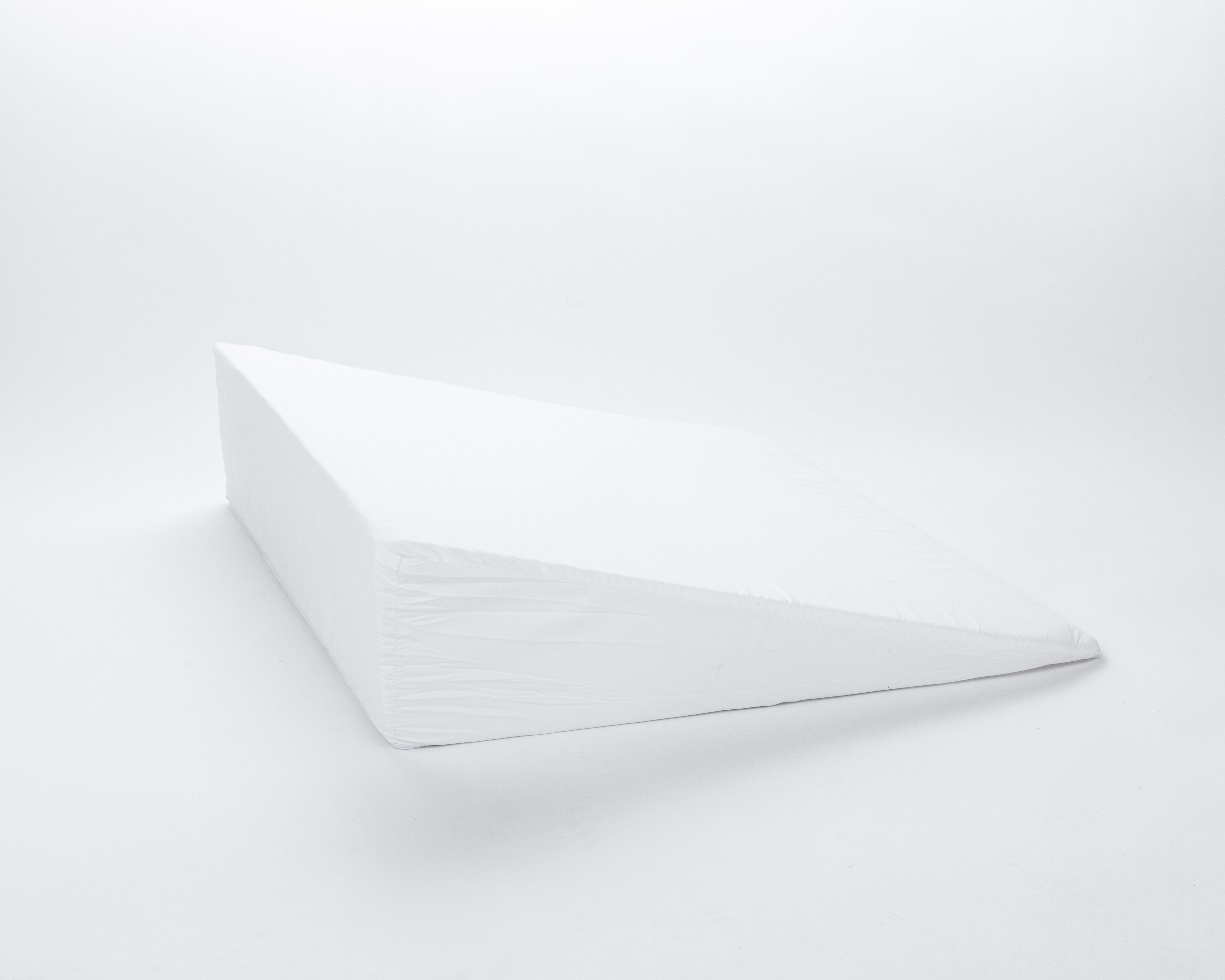
Upper Body Wedge — creates and holds the 30-to-45-degree upper body incline that supports fluid drainage, reduces post-liposuction swelling, and decompresses posterior treatment areas, including the lower back and flanks
-
Leg Support Wedge — placed under the knees to reduce tension across the lower abdominal region and provide consistent lower body support throughout extended recovery periods
-
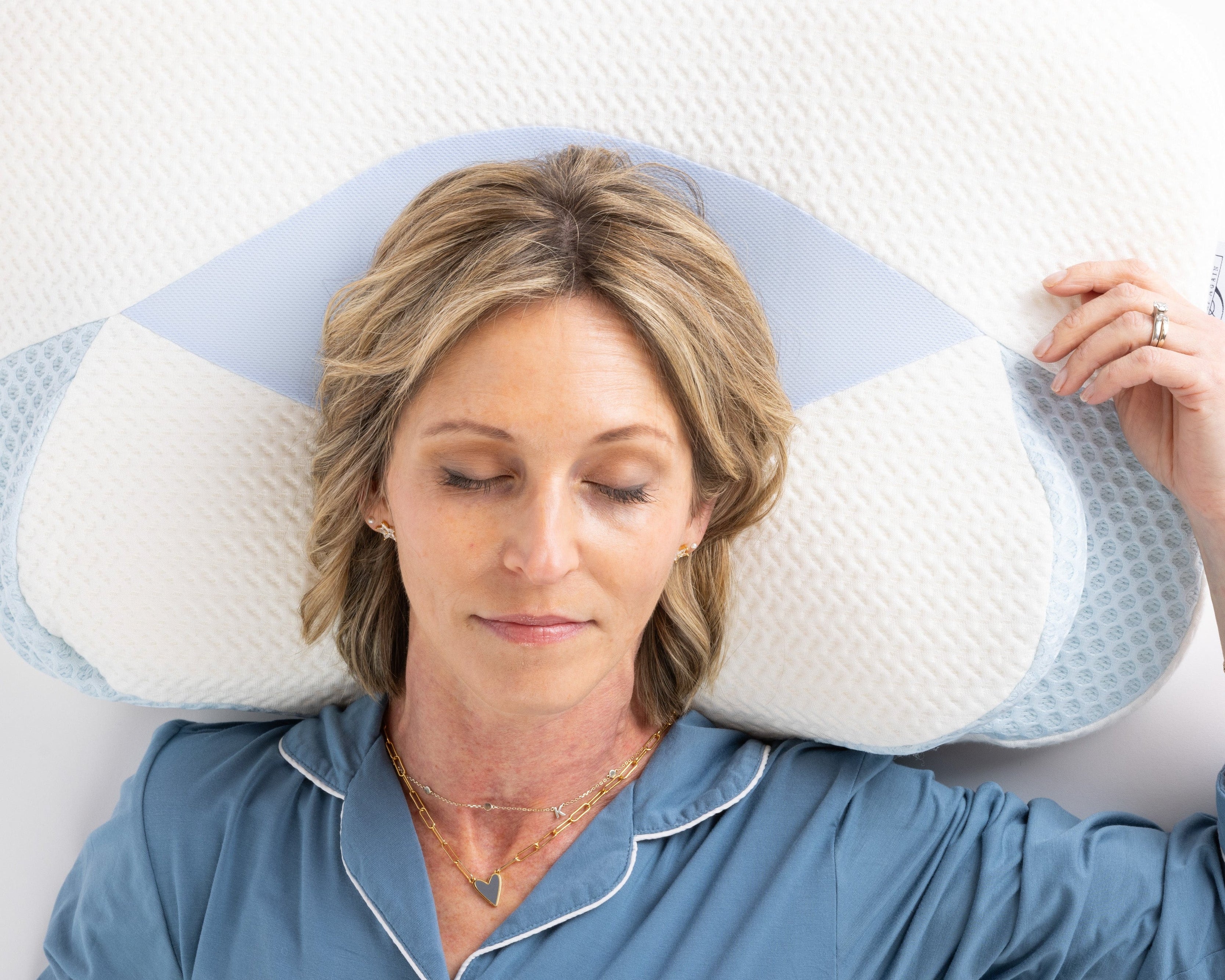
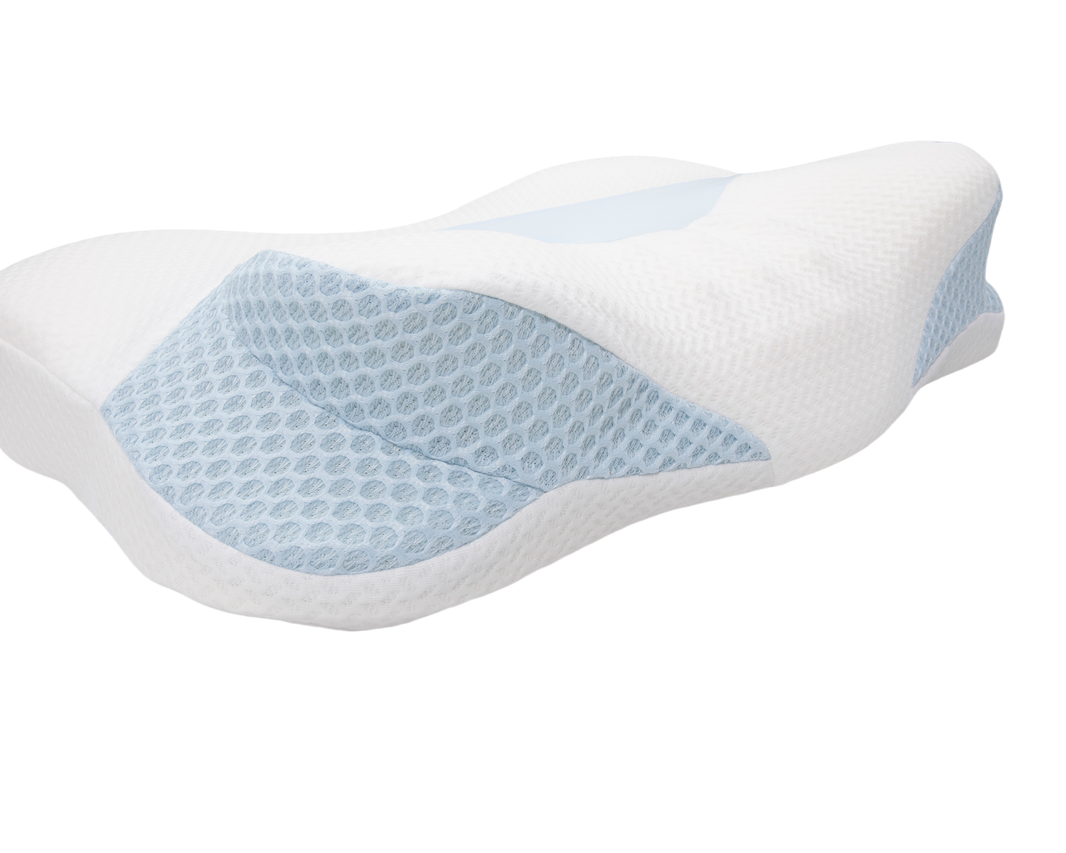
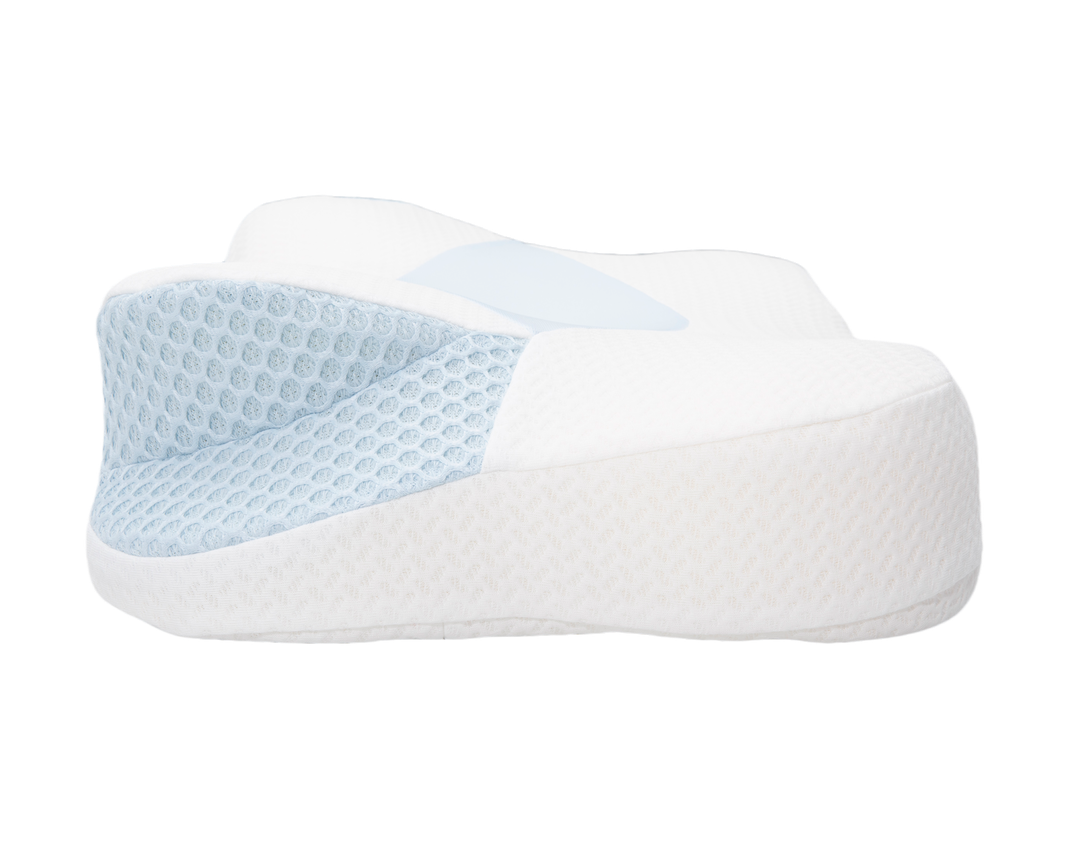
Head Pillow — calibrated for use with the elevated incline to maintain neutral neck alignment without adding height that compresses the cervical spine or creates forward head posture at the elevated angle
-
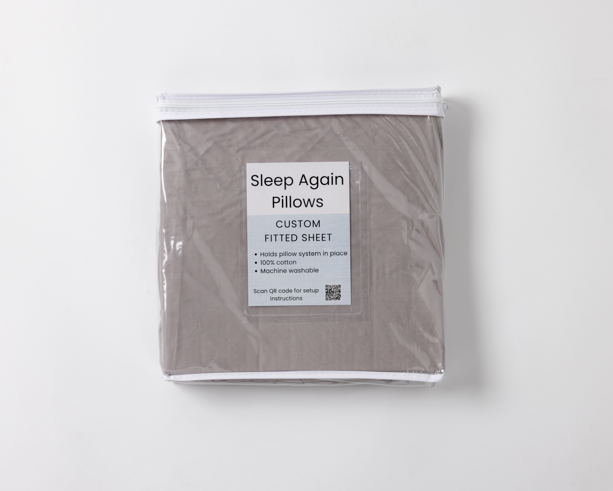
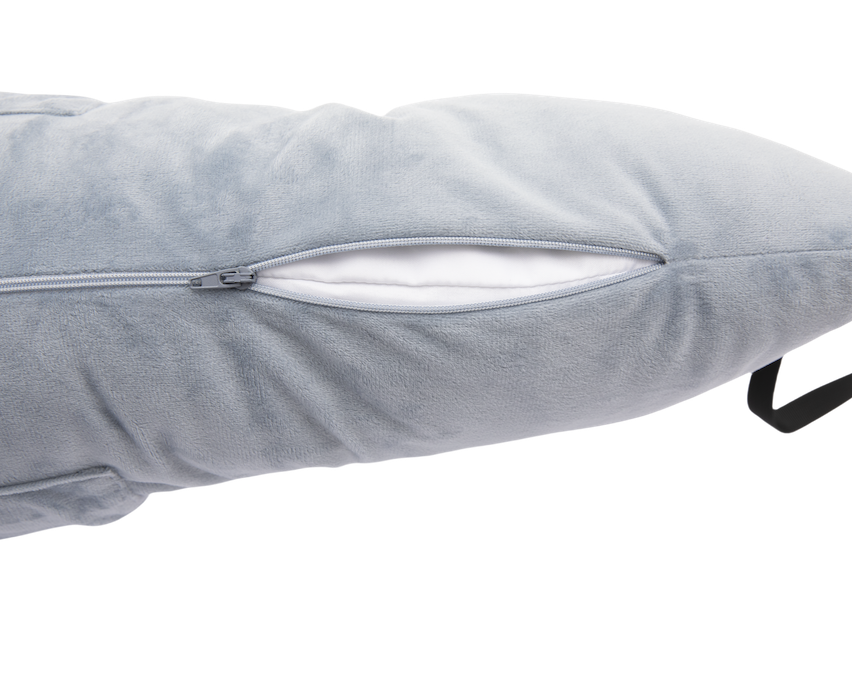
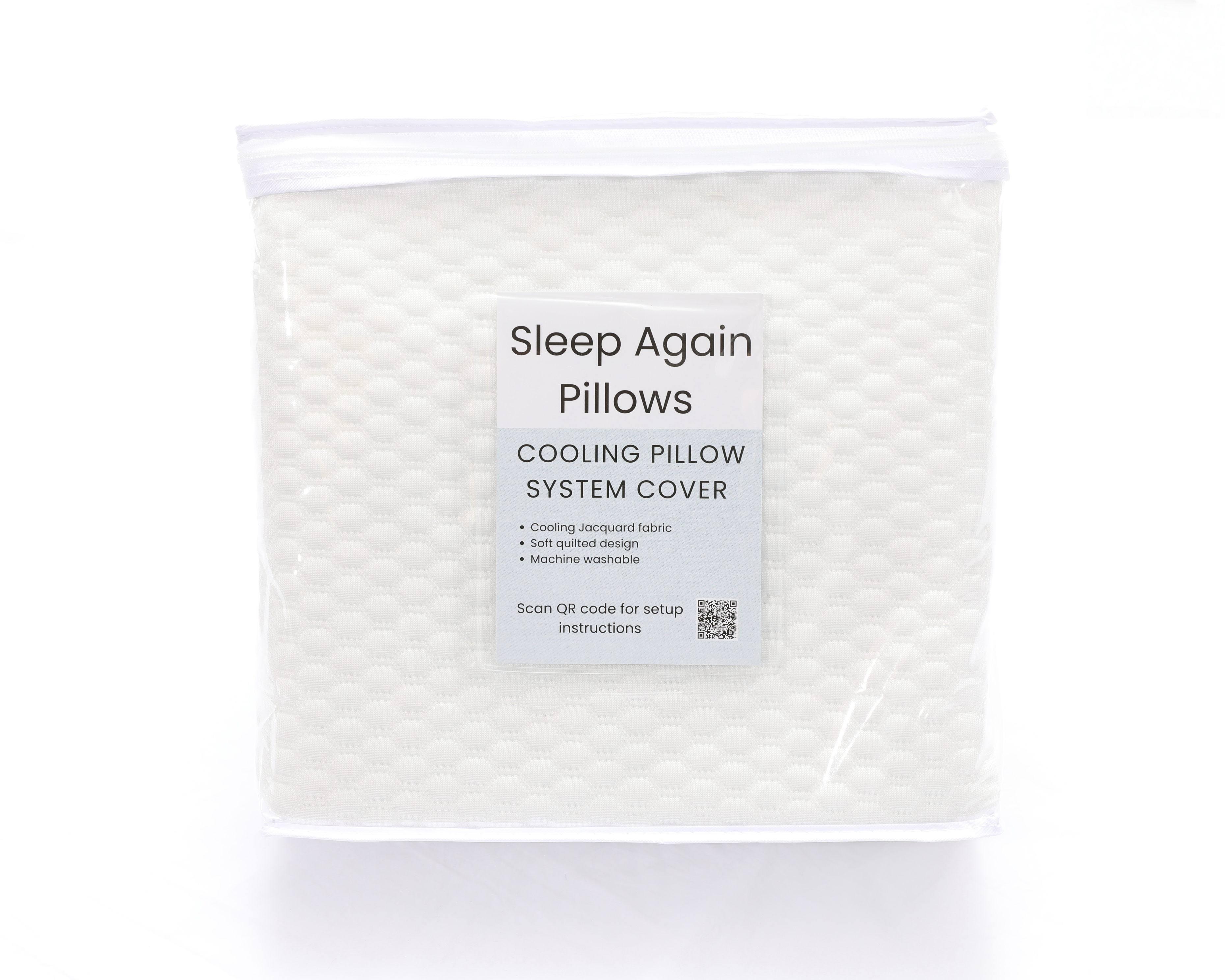
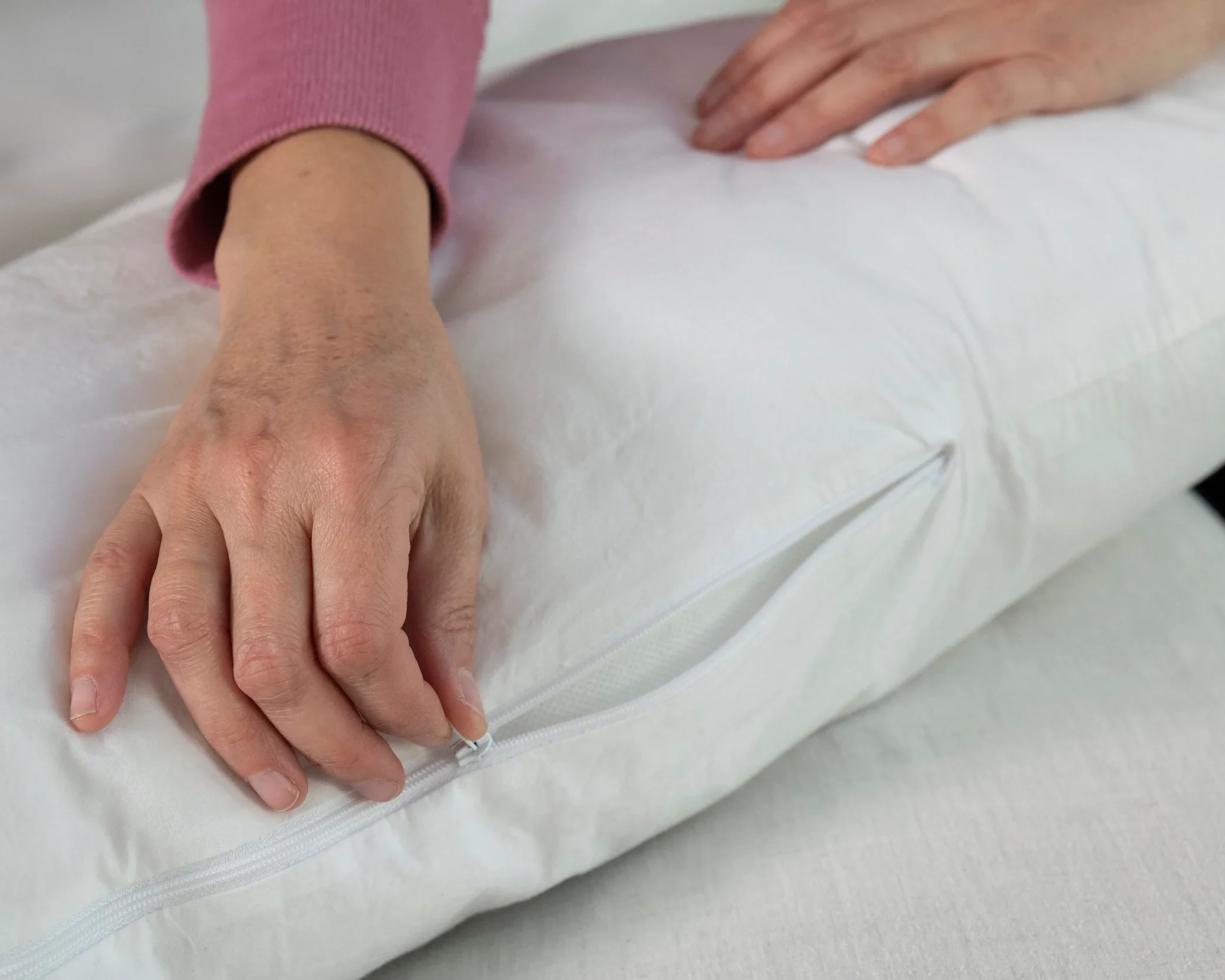
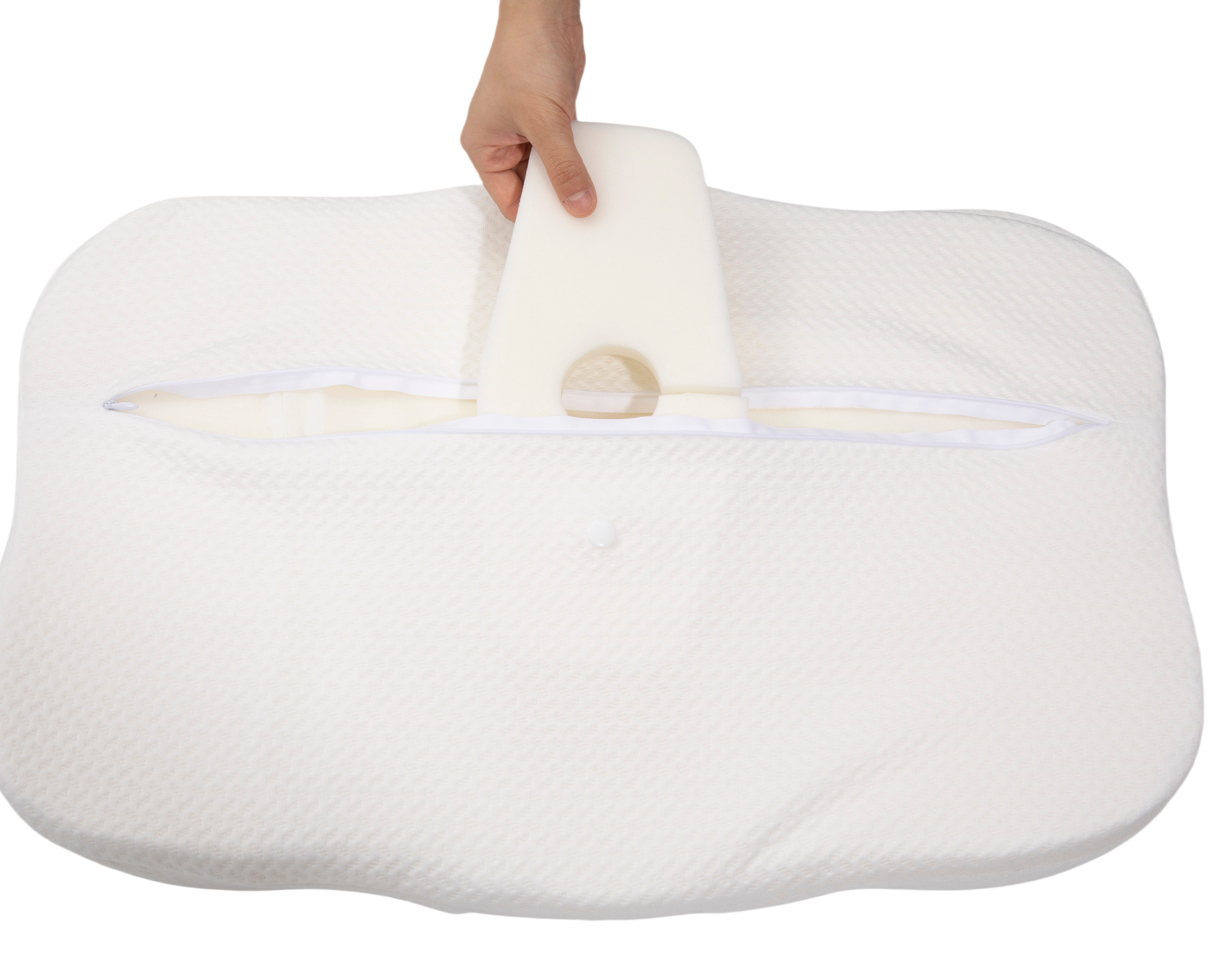
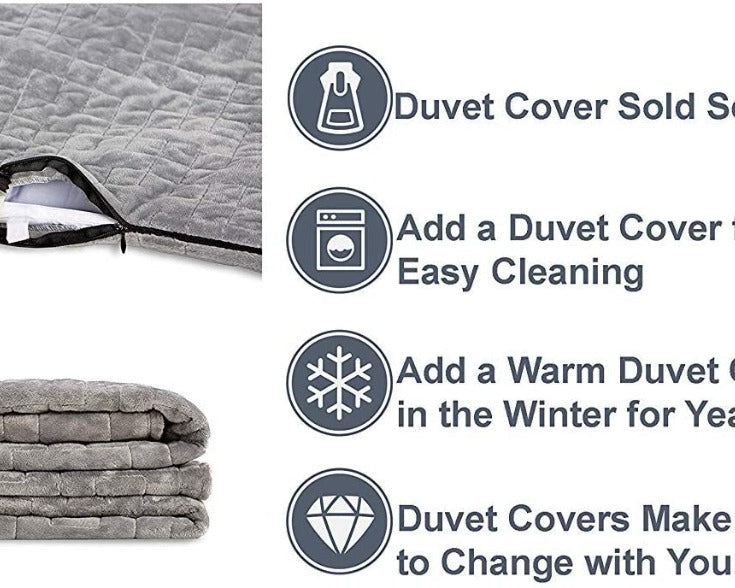
Removable, washable slipcovers for every piece — an important hygiene feature during recovery, when incision sites and compression garment use make bedding cleanliness a clinical priority
GET THE SLEEP SUPPORT YOU NEED AFTER LIPO 360

Why a Complete System Outperforms a DIY Approach for Lipo 360 Recovery
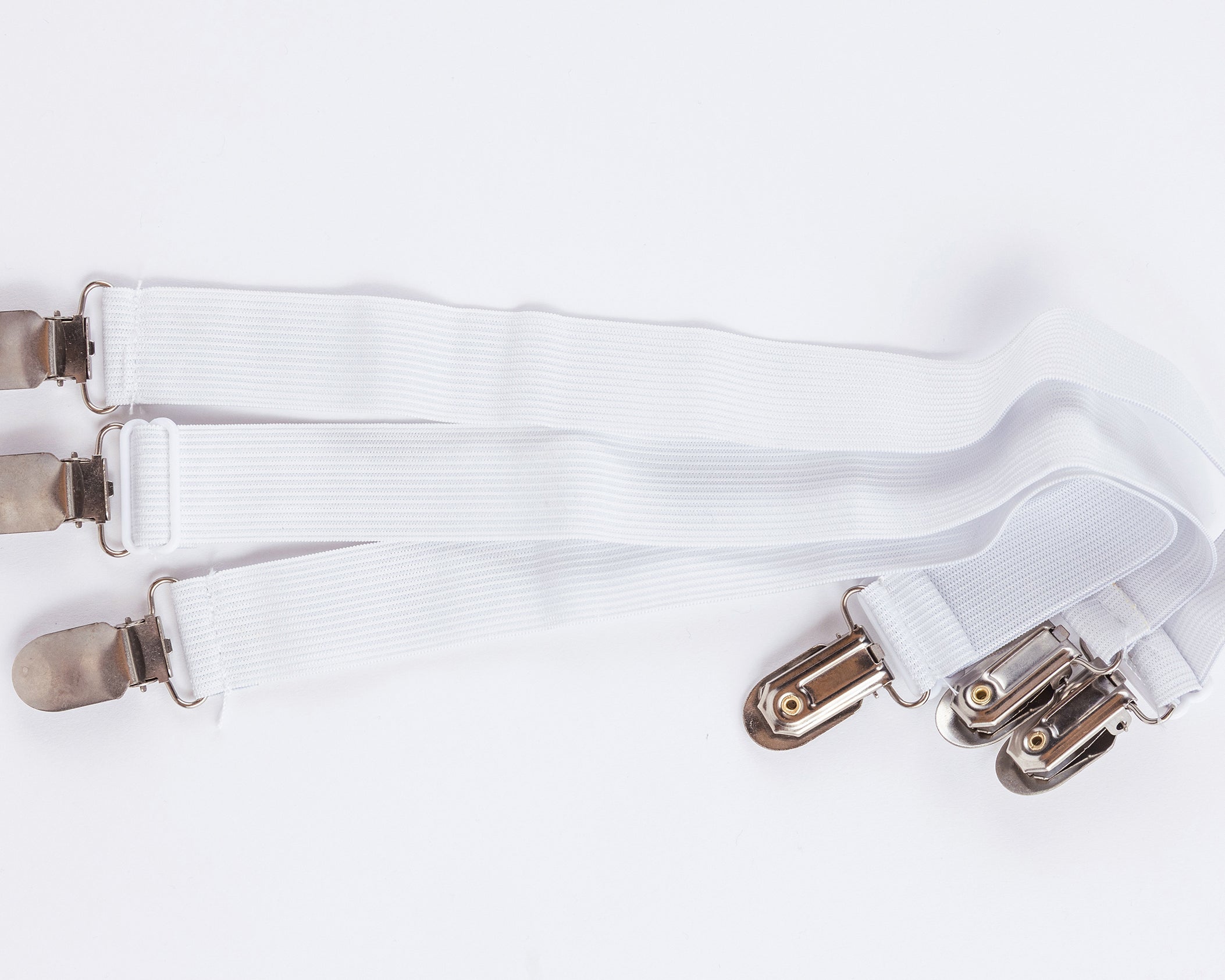
The DIY approach — stacked household pillows for elevation, a separate bolster under the knees, firm pillows along the sides — is the default for most patients. For Lipo 360 specifically, it presents a consistent and predictable set of problems.
Household pillows compress under body weight. Most lose between 30 and 50 percent of their height during a single night's sleep. When your elevation base flattens, the therapeutic incline disappears — along with the fluid drainage and tissue decompression benefits it provides. When lateral pillows shift during deep sleep, the rolling barrier that protects treated flanks is no longer in position.
For a procedure that treats the abdomen, flanks, waist, and lower back simultaneously, a positioning setup that degrades overnight is a clinical problem, not just a comfort inconvenience. Every hour spent in a flattened or misaligned position during the first weeks of recovery is time during which the body's drainage and decompression processes are not functioning at their intended capacity.
The Sleep Again Pillow System is engineered to hold its configuration from the first hour of sleep to the last. The Upper Body Wedge maintains the therapeutic incline without compression. The Contoured Side Pillows remain in position through normal sleep movement. The Leg Support Wedge holds its angle under sustained body weight. The system requires no readjustment during the night and no rebuilding each morning.
For Lipo 360 patients specifically, the integrated design addresses a positioning challenge that no single pillow can solve: simultaneous anterior protection, posterior decompression, and bilateral rolling prevention across a circumferential treatment area.
Compression Garment Compatibility
Lipo 360 patients wear compression garments 24 hours a day during early recovery, including during sleep. The Sleep Again Pillow System and its stable, smooth support surfaces accommodate compression garments without the bunching and shifting that standard pillow arrangements can cause. Garments remain properly positioned throughout the night, reducing one of the most common sources of sleep disruption in the early recovery window.
Order Before Your Procedure Date
Ideally, your pillow system should be ordered and fully set up before your Lipo 360 procedure. The first night home from surgery is not the time to source components or test configurations for the first time. Mobility is restricted, swelling is at its peak, and discomfort affects decision-making in a way that makes last-minute setup unnecessarily difficult.
Ordering in advance allows you to test the complete configuration in the week before surgery, identify any adjustments needed, and arrive home to a positioning system that is already in place, confirmed to work, and requiring no additional setup during your recovery. Start here to be fully prepared for your surgery recovery.
HSA and FSA Eligibility
The Sleep Again Pillow System is eligible for purchase with HSA and FSA funds. For patients who have already allocated healthcare spending toward their procedure and recovery supplies, this eligibility makes the system an accessible option within an existing budget.
Please note: Sleep Again Pillows are bedding products. In accordance with federal regulations, all sales are final, and bedding products are not returnable.
GET THE BEST SYSTEM FOR LIPO 360 RECOVERY
Can You Sleep on Your Side After Lipo 360?
Side sleeping after Lipo 360 requires patience. The flanks, from the lower ribs to the hips, are a primary treatment zone and cannot bear direct pressure during early healing.
Most surgeons advise against side sleeping for at least two weeks, with some extending this to four weeks for patients with significant flank treatment or combined procedures.
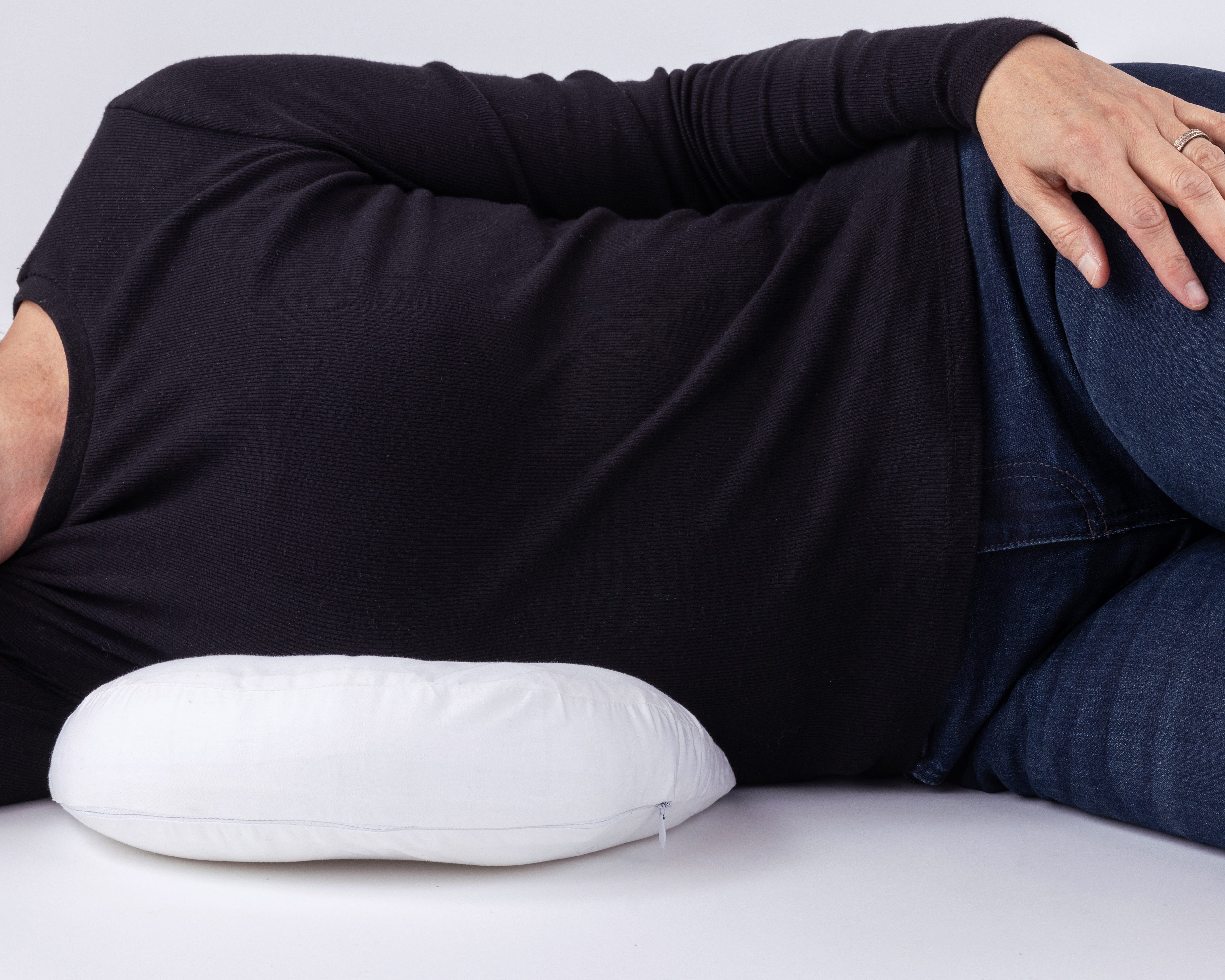
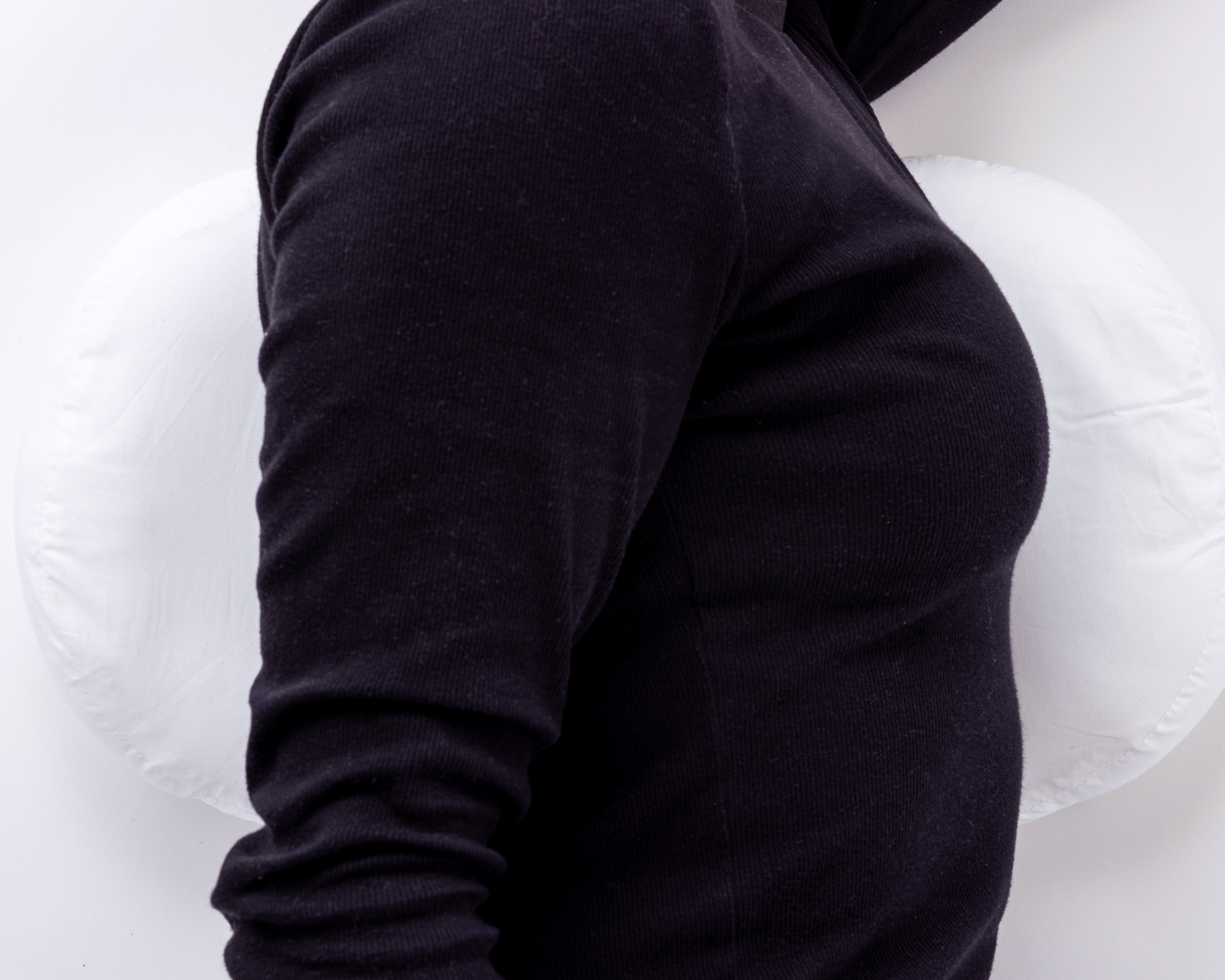
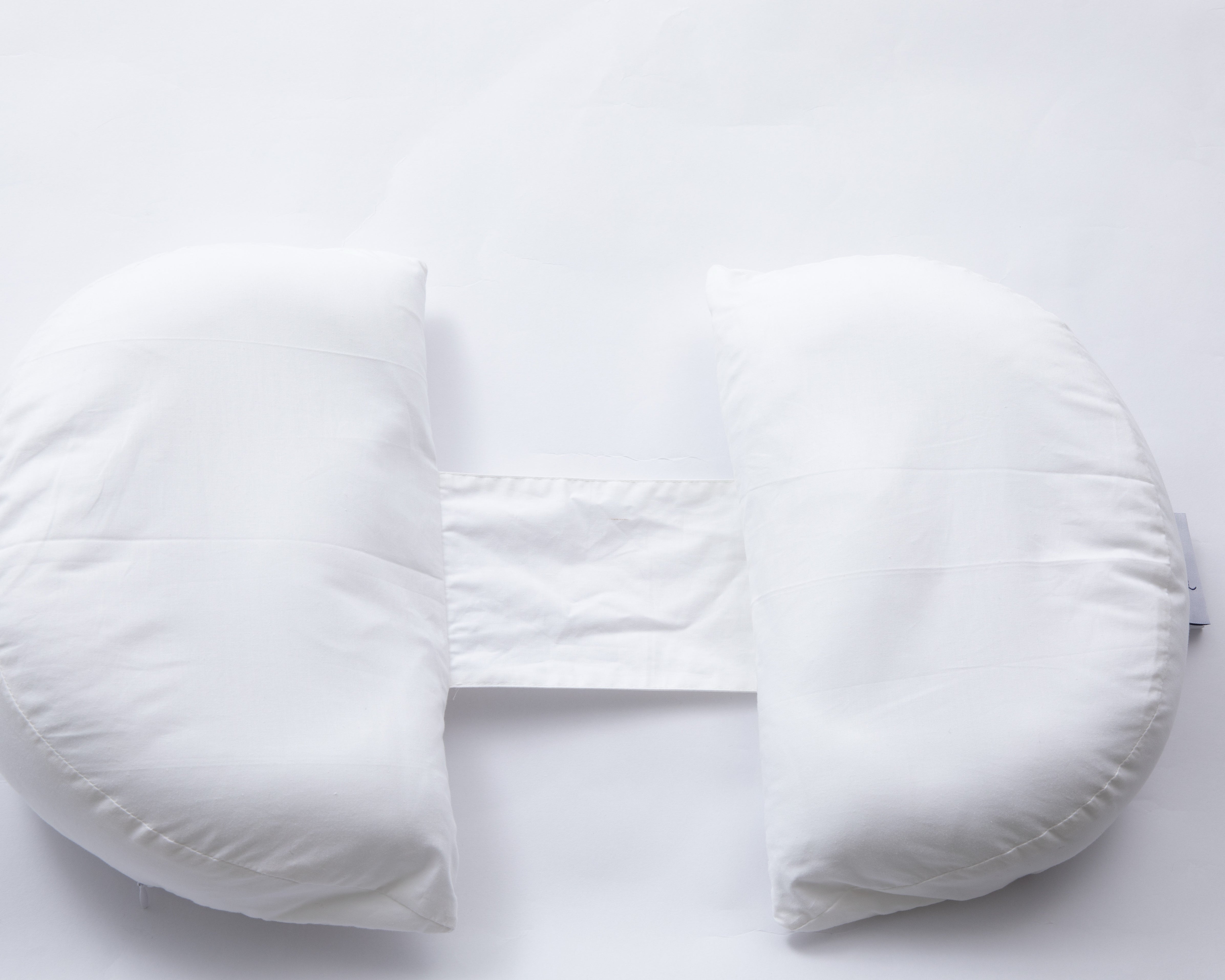
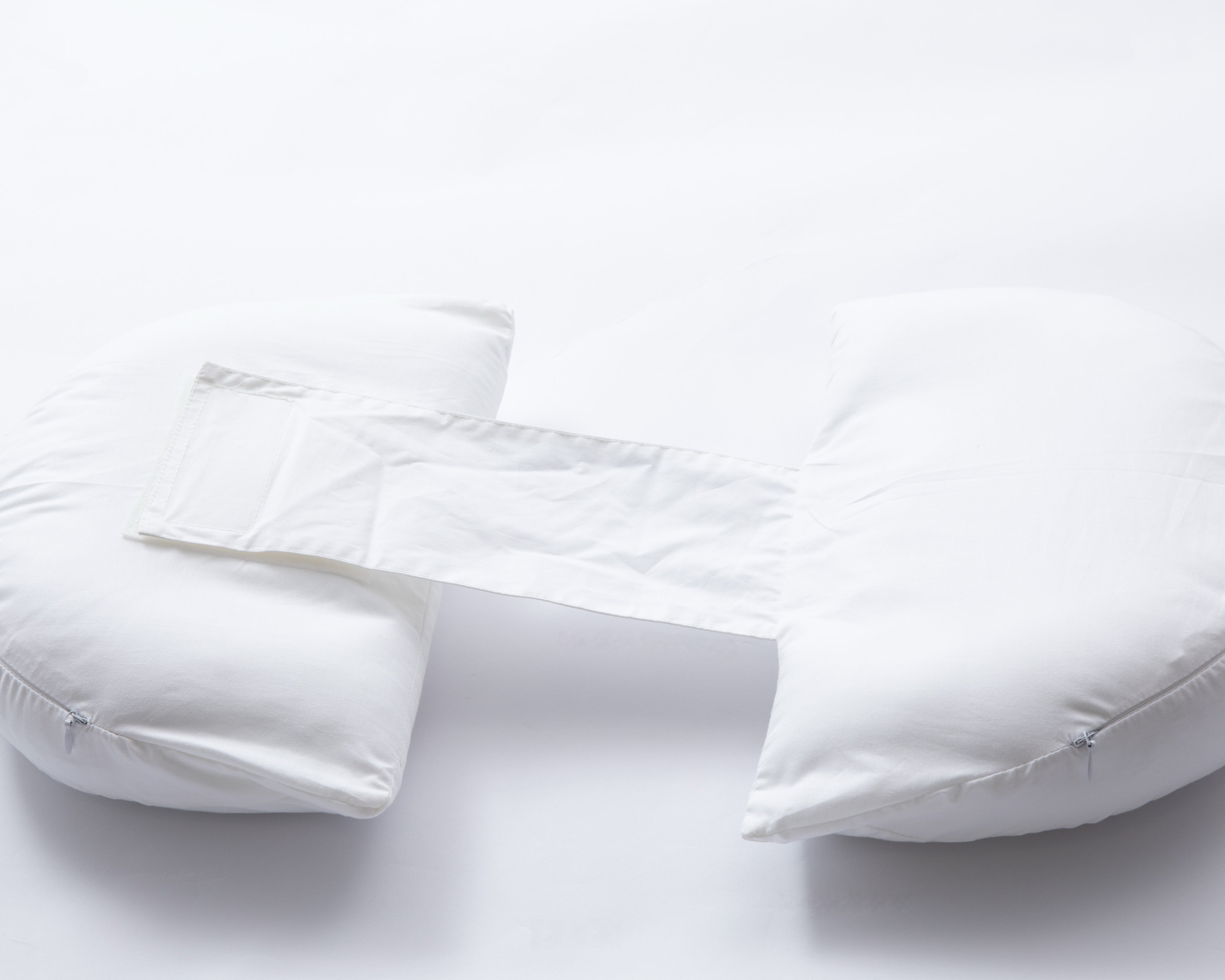
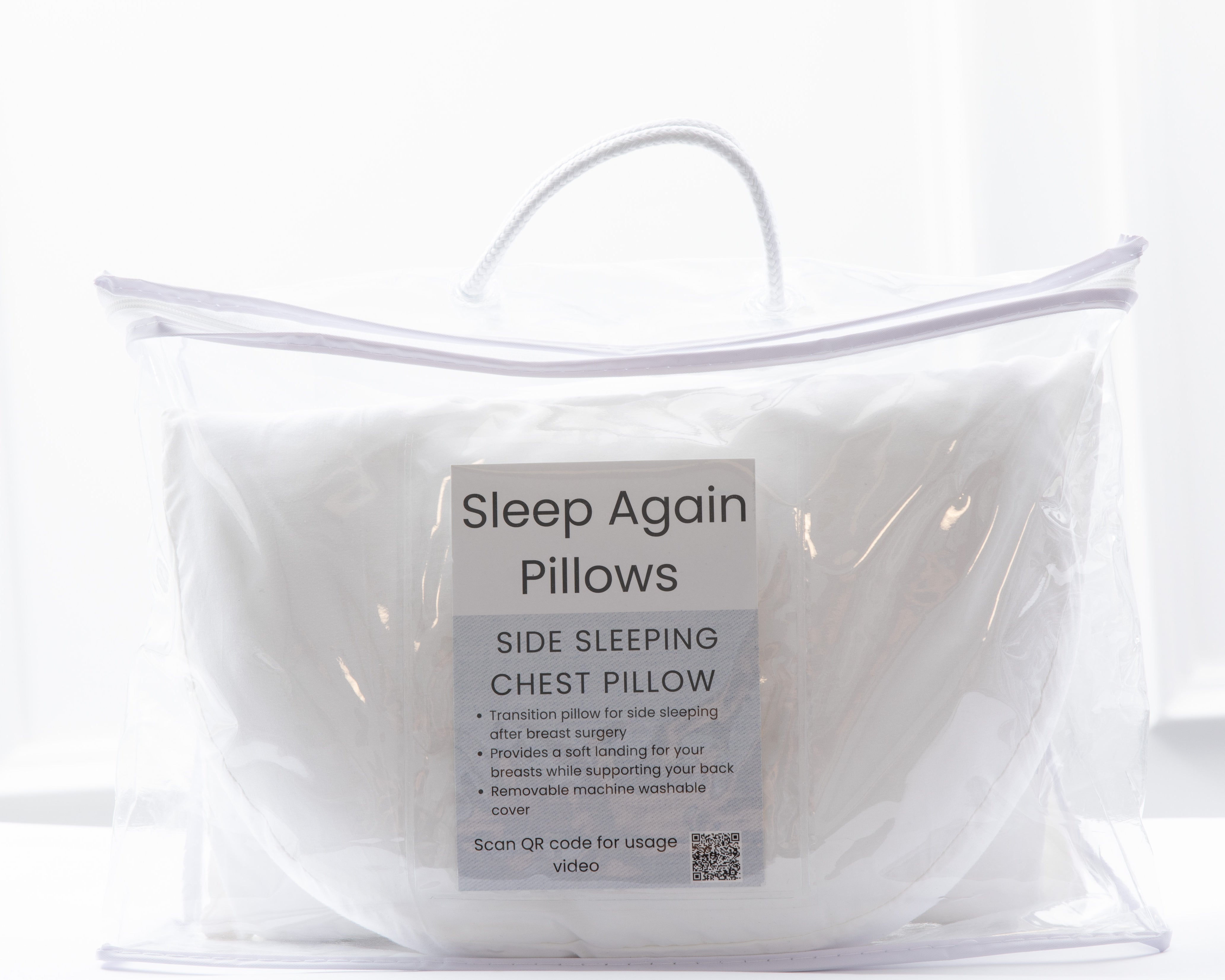
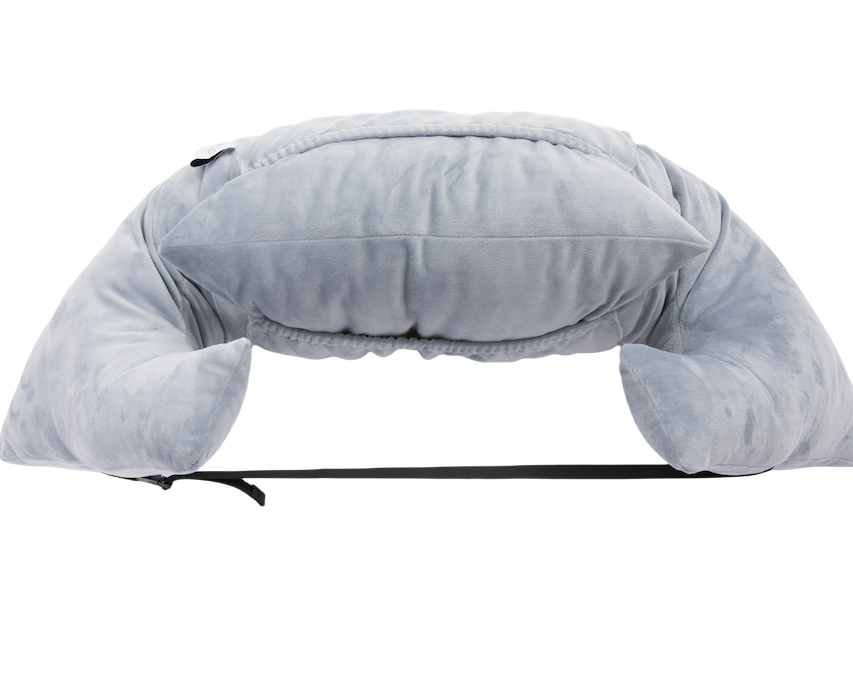
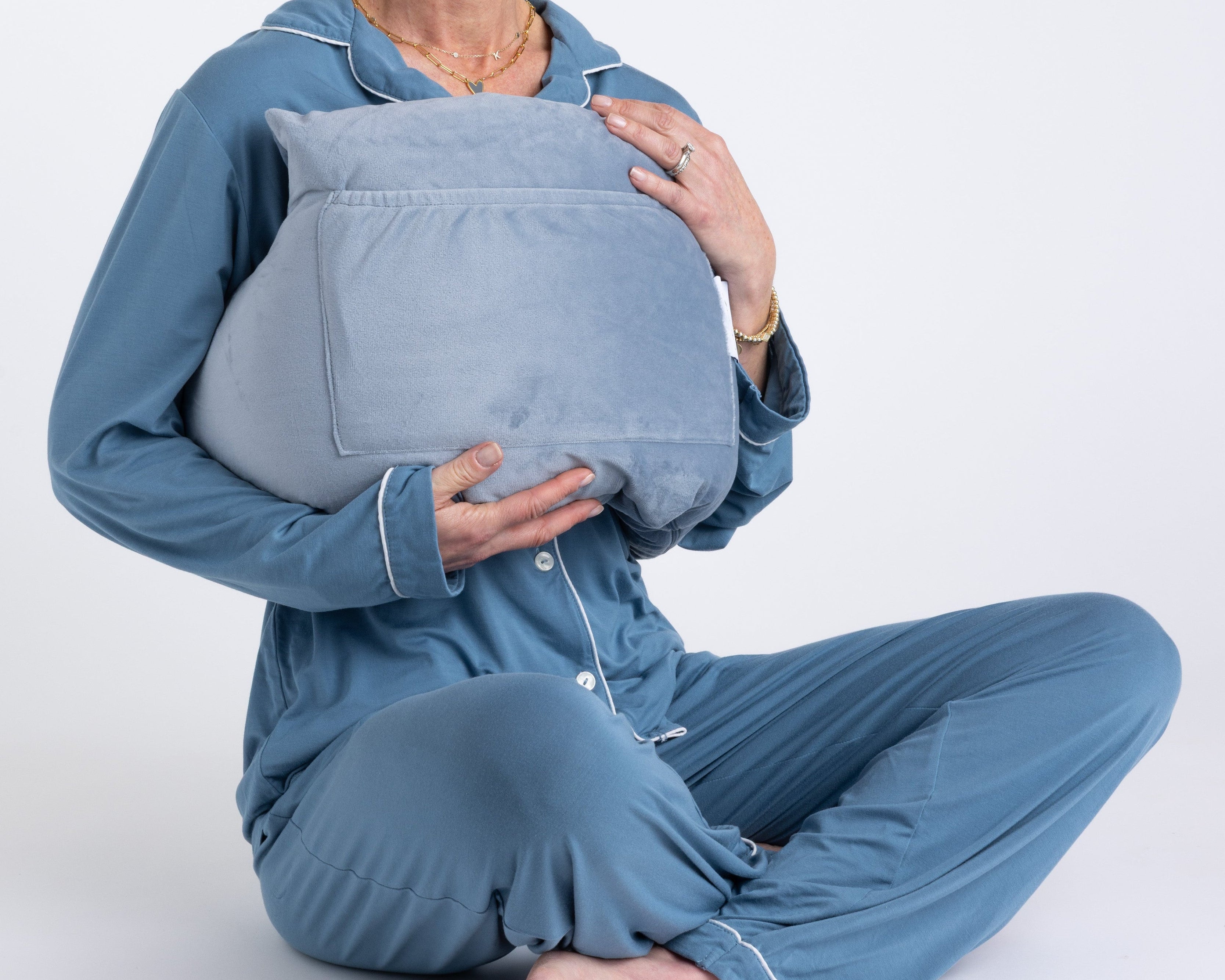
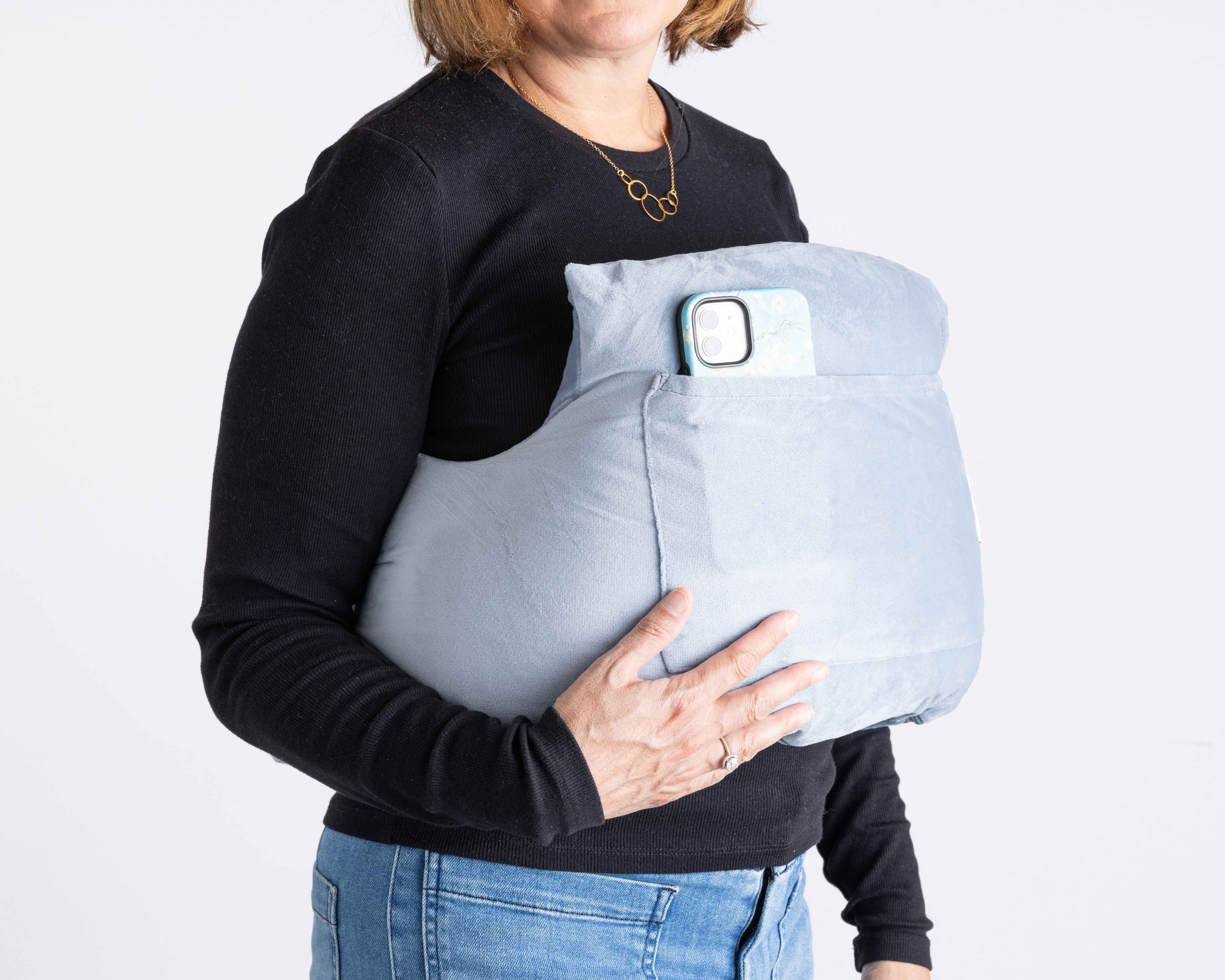
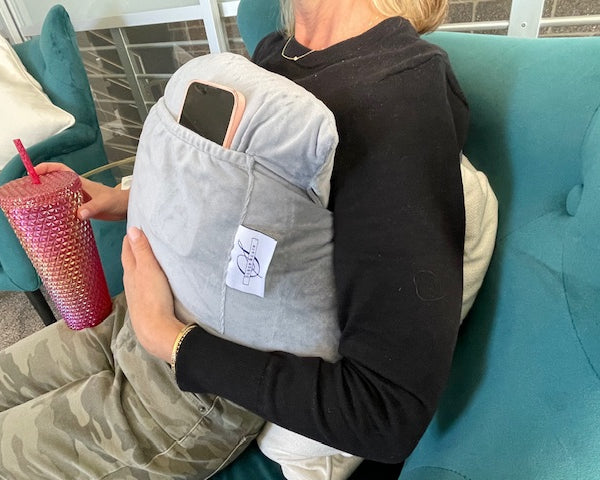
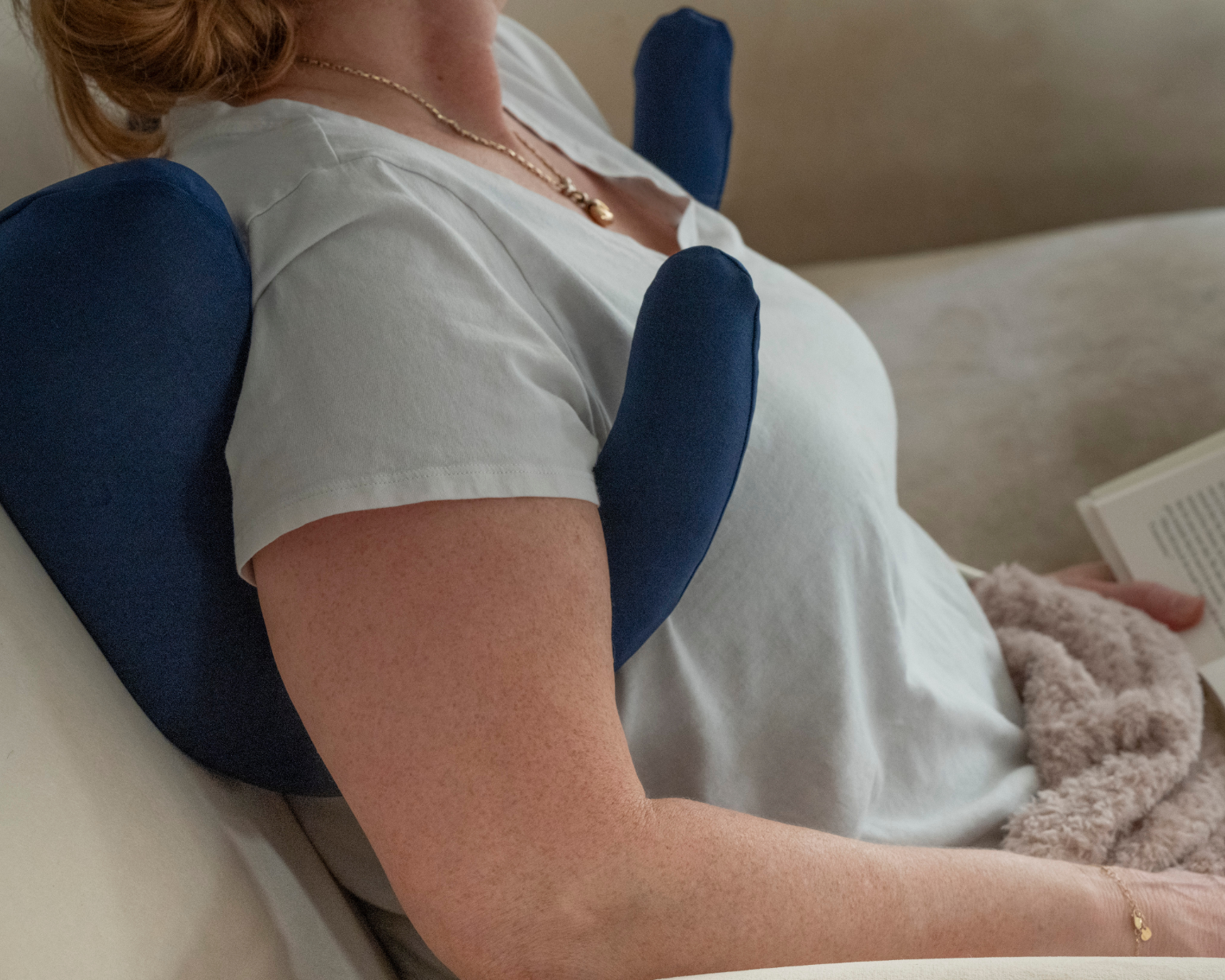
When side sleeping is reintroduced, it should be gradual and supported. A pillow under the waist and torso reduces direct pressure on the treated flank. Sleep Again's Side Sleeping Chest Pillow was originally created for transitioning back to side sleeping following breast surgery recovery, but many have been using it to support other parts of the body in returning to side sleeping, namely the abdomen.
Any increase in swelling, pain, or asymmetry warrants a return to back sleeping and a conversation with your surgical team. Stomach sleeping is typically the last position cleared, often not before four to six weeks post-procedure.
What Should You Avoid When Sleeping After Lipo 360?
Sleeping flat on your back. Flat back sleeping is not the same as elevated back sleeping. A completely horizontal position does not support fluid drainage, does not reduce pressure on posterior treatment areas, and is frequently less comfortable than the elevated position for post-surgical patients.
Using soft pillows as your elevation base. Stacked soft household pillows create the appearance of elevation that disappears as they compress under body weight overnight.
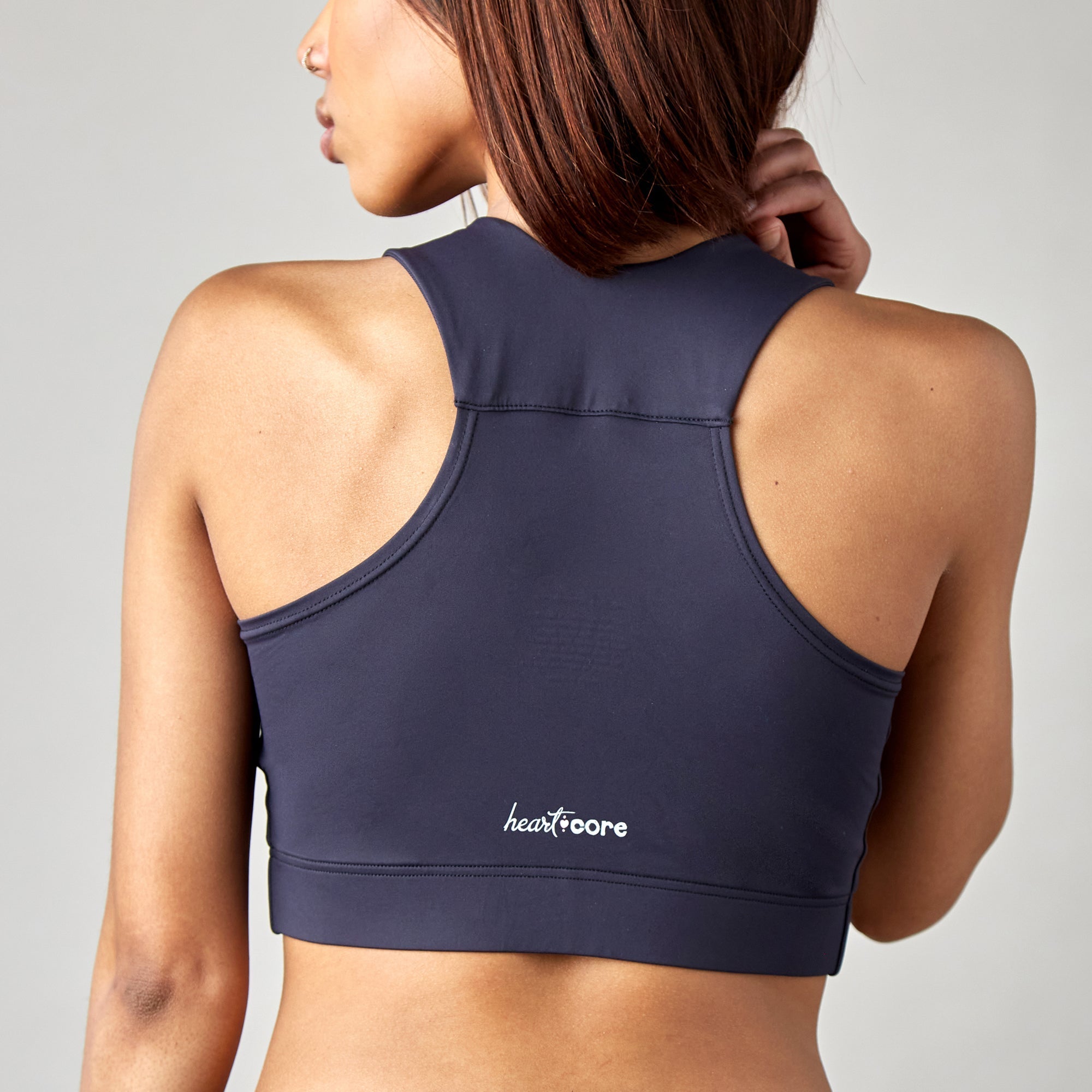
Discontinuing compression garments during sleep. Most surgeons require compression garments 24 hours a day, including during sleep, for the first several weeks. These garments support treated areas, manage swelling, and help skin adhere to underlying tissue. Removing them overnight is a common error with real healing consequences.
Advancing sleep positions before surgical clearance. Feeling better and being fully healed are not the same state. Do not change positions ahead of explicit clearance from your surgeon.
Skipping pre-surgery setup preparation. Not planning the sleep environment in advance is the single most preventable cause of poor recovery sleep.
Frequently Asked Questions About Sleep After Lipo 360
Do I have to stay in the elevated position throughout the entire night?
The goal is to maintain the elevated back-sleeping position throughout the night. In practice, some patients shift slightly during deep sleep. A stable upper body wedge combined with lateral support pillows on both sides minimizes unintentional repositioning. If you wake up having shifted, returning to the correct position is the appropriate response.
Is it normal to have trouble sleeping after Lipo 360?
Yes. Sleep disruption in the first one to two weeks after Lipo 360 is common and expected. Swelling, surgical discomfort, compression garment adjustment, and unfamiliar positioning all contribute to reduced sleep quality. Establishing a consistent positioning setup and following your surgeon's pain management guidance are the two most effective steps for improving sleep in early recovery.
What if I'm a habitual side sleeper or stomach sleeper?
Transitioning to back sleeping for recovery is challenging for habitual non-back sleepers, but manageable with the right preparation. Lateral support pillows reduce unconscious drift toward preferred positions during deep sleep. Practicing the elevated back position in the week before surgery helps establish physical familiarity before the procedure.
Can I use a recliner for sleeping after Lipo 360?
Surgeons sometimes recommend a recliner as an option for Lipo 360 recovery, though sleeping in a recliner isn't usually the same as your own bed, resulting in a potentially poor quality of sleep. In addition, if you don't already own a medical recliner, renting one can be costly and unwieldy to maneuver into your home.
When can I return to sleeping normally?
Most patients receive clearance to gradually return to preferred sleep positions between four and six weeks post-procedure. Stomach sleeping is typically the last position cleared. Follow your surgeon's specific guidance rather than any general timeline.
How does sleep quality affect Lipo 360 results?
Sleep quality has a direct and measurable impact on surgical recovery outcomes. Deep sleep is the primary window during which the body releases growth hormone, the central driver of tissue repair and healing. Poor or fragmented sleep reduces growth hormone output, impairs immune function, and can prolong swelling. Positioning that supports comfortable, uninterrupted sleep is a genuine medical contribution to optimal results — not simply a comfort preference.
Why Is Pre-Surgery Preparation the Most Important Step in Lipo 360 Recovery Sleep?
Everything in this guide can be acted on before your procedure date. Pre-surgical preparation for recovery sleep is significantly more effective than improvising a solution after Lipo 360, when swelling is high, mobility is limited, and discomfort is real.
The patients who experience the smoothest recovery sleep are those who built their positioning setup before surgery, tested it, and arrived at their recovery period with a functional plan in place. Elevated back sleeping after Lipo 360 is an active contributor to reduced swelling, protected healing tissue, and long-term results. Treat it as the medical priority it is — and plan accordingly.
PROTECT YOUR LIPO 360 RESULTS TODAY
Important Medical Disclaimer
The information provided on this page is for educational purposes only and should not replace professional medical advice from your healthcare provider. Sleep Again Pillows are positioning support products designed to help maintain sleep positions recommended by medical professionals during recovery and for therapeutic use.
Always follow your surgeon's or physician's specific post-operative instructions and positioning requirements. Medical guidance from your healthcare team takes precedence over any general information provided here. Recovery timelines, positioning angles, and product suitability vary based on individual surgical procedures, medical conditions, and patient-specific factors.
Consult your healthcare provider before purchasing positioning equipment if you have specific medical concerns or questions about whether these products are appropriate for your recovery or medical condition(s). Your medical team can provide personalized recommendations based on your unique situation.
Sleep Again Pillows do not diagnose, treat, cure, or prevent any medical condition. These products provide positioning support to help maintain sleep angles and positions as directed by your healthcare provider.