
You rolled over this morning, opened your eyes, and immediately felt it—that deep, grinding ache between your shoulder blades that tells you last night's sleep did more damage than good. Your upper back feels like someone spent eight hours using it as a trampoline, and the stiffness radiating up to your neck suggests today's going to be a long one.
If waking up with upper back pain has become your unfortunate morning routine, you're dealing with a positioning problem that's been quietly sabotaging your sleep quality for weeks, months, or even years. The frustrating part? You were unconscious the entire time the damage was happening, which makes it nearly impossible to "just fix it" through willpower alone.
This isn't about learning to live with morning stiffness or accepting that waking up in pain is just part of getting older. It's about understanding exactly why your current sleep setup is creating upper back problems and what you can do to fix it starting tonight.
Ready to wake up without feeling like your upper back spent the night in combat with your mattress? Let's break down what's actually happening and how to solve it.
Why Does Your Upper Back Hurt After Sleeping?
Upper back pain after sleeping isn't random bad luck—it's your body's way of telling you that something about your sleep positioning is creating stress, strain, or compression in your thoracic region. Unlike lower back pain, which often stems from spinal compression or disc issues, upper back pain typically develops from muscular strain, poor postural alignment, or sustained positions that force your muscles to work when they should be resting.
What's Actually Happening While You Sleep
Your muscles never fully relax. When you sleep in positions that don't support your spine's natural curves, your postural muscles have to maintain some level of engagement throughout the night to keep you stable. Over 7-8 hours, even minor positioning problems compound into significant morning pain.
Your shoulder blades get stuck in problematic positions. Side sleeping can cause one shoulder blade to wing out, stomach sleeping forces them into awkward angles, and even back sleeping can be problematic if your upper body isn't properly supported. This constant muscular tension creates the knots and trigger points you feel when you wake.
Your neck position affects everything. If your head is tilted at an angle that doesn't maintain neutral cervical alignment, the stress travels down into your upper back muscles. Your trapezius and upper back muscles work overtime trying to stabilize a poorly positioned head, leading to pain that radiates between your shoulder blades.
Pressure points develop where you contact the mattress. Without proper distribution of your body weight, certain areas of your upper back bear excessive pressure throughout the night, restricting blood flow and creating soreness that takes hours to fade after waking.
The Muscle Groups That Matter
Your trapezius muscles run from your neck down between your shoulder blades and out to your shoulders. When positioned with inadequate support, these muscles engage to maintain stability, creating tension and fatigue that manifests as morning pain.
Your rhomboid muscles connect your shoulder blades to your spine. Poor positioning that allows your shoulders to roll forward overstretches these muscles for hours, creating the characteristic sensation between your shoulder blades that many people experience.
Your levator scapulae muscles connect your neck to your shoulder blades. When your head positioning isn't quite right, these muscles work overtime and create pain that radiates from your neck into your upper back.
The 5 Sleep Positions Causing Your Upper Back Pain
Understanding which positions trigger your upper back pain is the first step toward fixing the problem. Here are the common culprits:
Position #1: The Stomach Sleeper
Stomach sleeping requires you to turn your head to one side for breathing, creating a twisted position throughout your spine. Your shoulders roll forward, your upper back muscles stretch abnormally, and your thoracic spine rotates in ways it was never designed to sustain for hours. Your shoulder blades are forced into protraction, overstretching the rhomboid muscles between them and creating that knife-between-the-shoulder-blades sensation by morning.
Position #2: The Unsupported Back Sleeper
Back sleeping can be excellent for your upper back—but only if you're doing it correctly. Flat back sleeping without proper upper body support creates a position where your shoulders roll forward and your upper back flattens against the mattress in ways that stress the natural curves of your spine. Your thoracic spine has a natural curve that needs support—lying completely flat often flattens this curve unnaturally, creating tension in the muscles that support your posture.
Position #3: The Forward-Shoulder Side Sleeper
Side sleeping with your top shoulder rolling forward is one of the most common causes of upper back pain. Without proper support, your shoulder blade wings away from your rib cage, overstretching the muscles of your mid-back for hours at a time. Your rhomboids are stretched while simultaneously trying to maintain stability, creating trigger points and muscle knots that feel like deep aching pain between your shoulder blades.
Position #4: The Pillow-Hoarder
Using too many pillows—especially under your head—can create upper back pain. When your head is propped too high, it pushes your neck and upper back into flexion, forcing your upper trapezius and cervical muscles to work throughout the night. The awkward angle creates sustained tension in your upper back muscles as they try to stabilize your poorly positioned head and neck.
Position #5: The Arm-Under-Pillow Side Sleeper
Sleeping on your side with your arm tucked under your pillow feels natural but creates significant upper back problems. This position elevates your shoulder into your neck, compresses nerves, and forces your upper back muscles into awkward angles for extended periods. Your shoulder is effectively shrugged toward your ear for hours, creating sustained tension in your upper trapezius and levator scapulae muscles.

The Solution: Elevated Back Sleeping
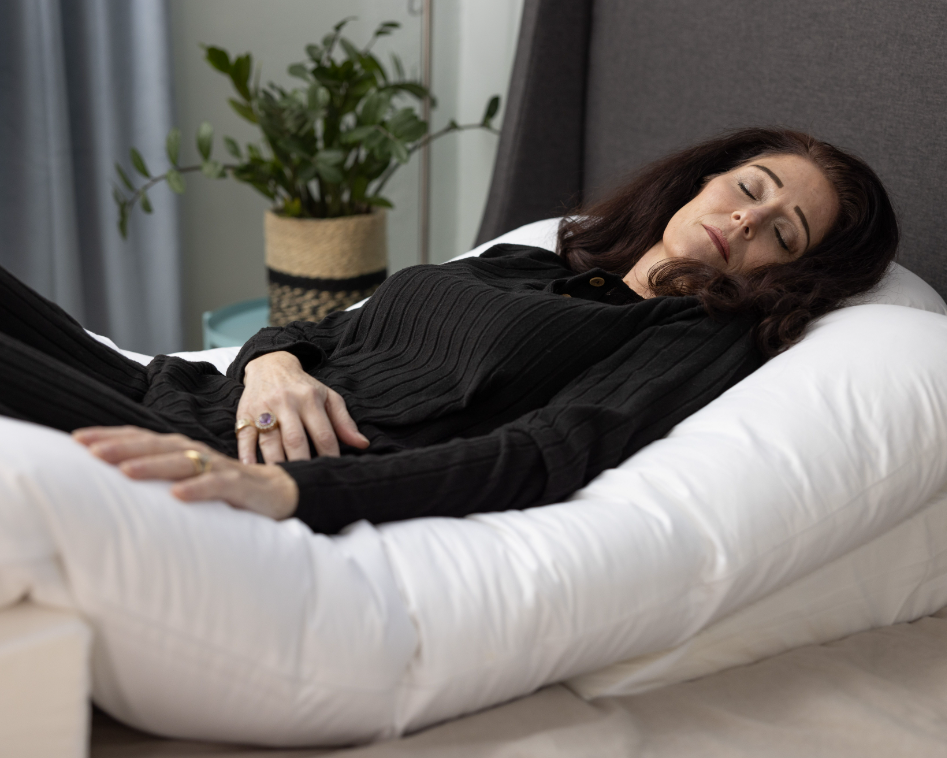
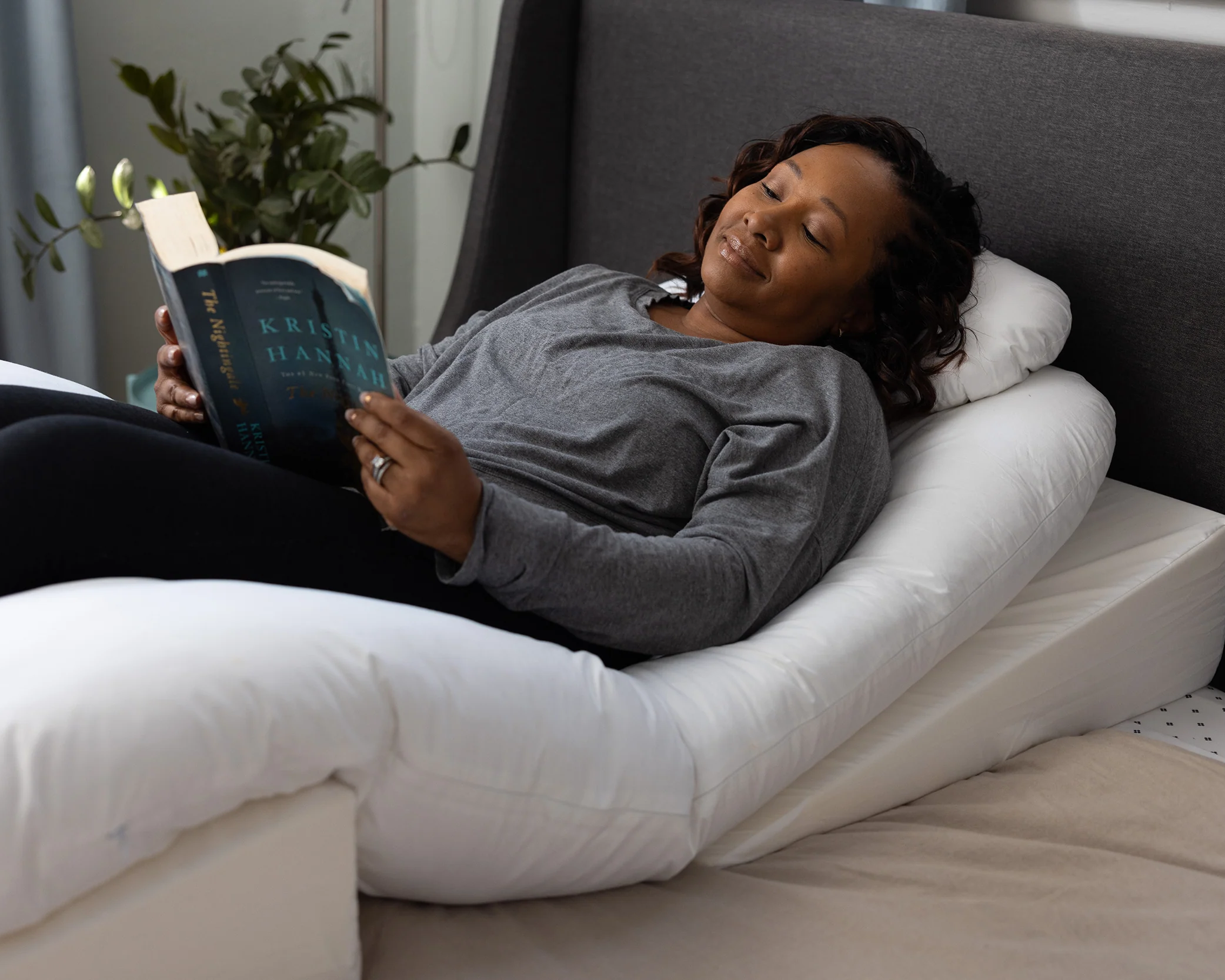
Elevated back sleeping at a 15-30 degree angle is the most effective position for preventing and relieving upper back pain. This position provides comprehensive benefits that address virtually all the common causes of morning upper back discomfort.
Why Elevated Back Sleeping Eliminates Upper Back Pain
Maintains natural spinal curves: The gentle incline supports your thoracic spine's natural kyphotic curve without flattening it against the mattress or forcing it into excessive flexion. Your spine rests in its optimal alignment, allowing all supporting muscles to fully relax.
Prevents shoulder protraction: With proper elevation and side support, your shoulders rest in a neutral position rather than rolling forward. This eliminates the stretched feeling in your rhomboid muscles that creates characteristic pain between your shoulder blades.
Distributes weight evenly: Elevation reduces pressure points by distributing your body weight across a larger surface area. You won't have concentrated pressure developing between your shoulder blades throughout the night, which means better circulation and less morning soreness.
Allows complete muscle relaxation: When your spine is properly aligned in elevated back sleeping, your postural muscles can actually rest instead of working to maintain stability in poor positions. This is the key difference between waking up refreshed versus waking up with muscle fatigue and pain.
Optimizes circulation and breathing: The elevated angle improves blood flow throughout your upper back muscles and enhances respiratory function. Better oxygenation means better overnight recovery and less accumulated tension.
Works with gravity: The elevation creates natural stability that reduces unconscious position-seeking movements during sleep, allowing you to maintain optimal positioning throughout the night without constantly readjusting.
Why Other Positions Fall Short
Flat back sleeping often flattens your natural thoracic curve and allows your shoulders to roll forward slightly. Side sleeping creates asymmetric loading where one shoulder bears weight while the other may fall forward, creating uneven upper back muscle tension. Stomach sleeping requires head rotation that creates spinal twisting and forces the shoulders into forward positions. Elevated back sleeping provides bilateral support that prevents all these imbalances.
Why Standard Pillows Keep Failing You
Most people experiencing chronic upper back pain after sleeping are using standard household pillows that simply weren't designed for therapeutic positioning. Understanding why they fail helps explain why proper positioning systems are worth the investment.
The compression problem: Standard household pillows lose 30-40% of their height under body weight throughout the night. Your carefully constructed 30-degree elevation at bedtime becomes 15-20 degrees by morning, changing the angles and support your upper back needs. This gradual compression means your shoulder blades end up in different positions than where you started, creating accumulated strain that you feel as morning pain.
The migration issue: Regular pillows shift and separate during sleep, especially when you're making the small unconscious movements that happen throughout the night. Your side support moves, your upper body wedge slides down, and suddenly your upper back is working to stabilize a compromised position instead of resting.
The gap creation: Multiple separate pillows inevitably create spaces where your upper back isn't fully supported. These gaps force your upper back muscles to engage to maintain stability—exactly what you're trying to avoid. Your muscles never get the complete rest they need for recovery.
The inconsistency challenge: Different pillows have different firmness levels, compression rates, and shapes. Creating a consistent support system that maintains integrity throughout the night is nearly impossible with standard household pillows, which is why most people experiencing upper back pain try pillow after pillow without finding lasting relief.

The Sleep Again Pillow System: Engineered to Eliminate Upper Back Pain
The Sleep Again Pillow System is the only full-body pillow system specifically designed to address the positioning challenges that create upper back pain after sleeping.
Why It Works When Everything Else Hasn't
Maintains therapeutic angles all night: High-density construction doesn't compress like household pillows. Your 30-degree elevation at bedtime remains 30 degrees at wake-up, ensuring consistent upper back support throughout your entire sleep without any midnight adjustments. This consistent positioning is what allows your upper back muscles to truly rest and recover.
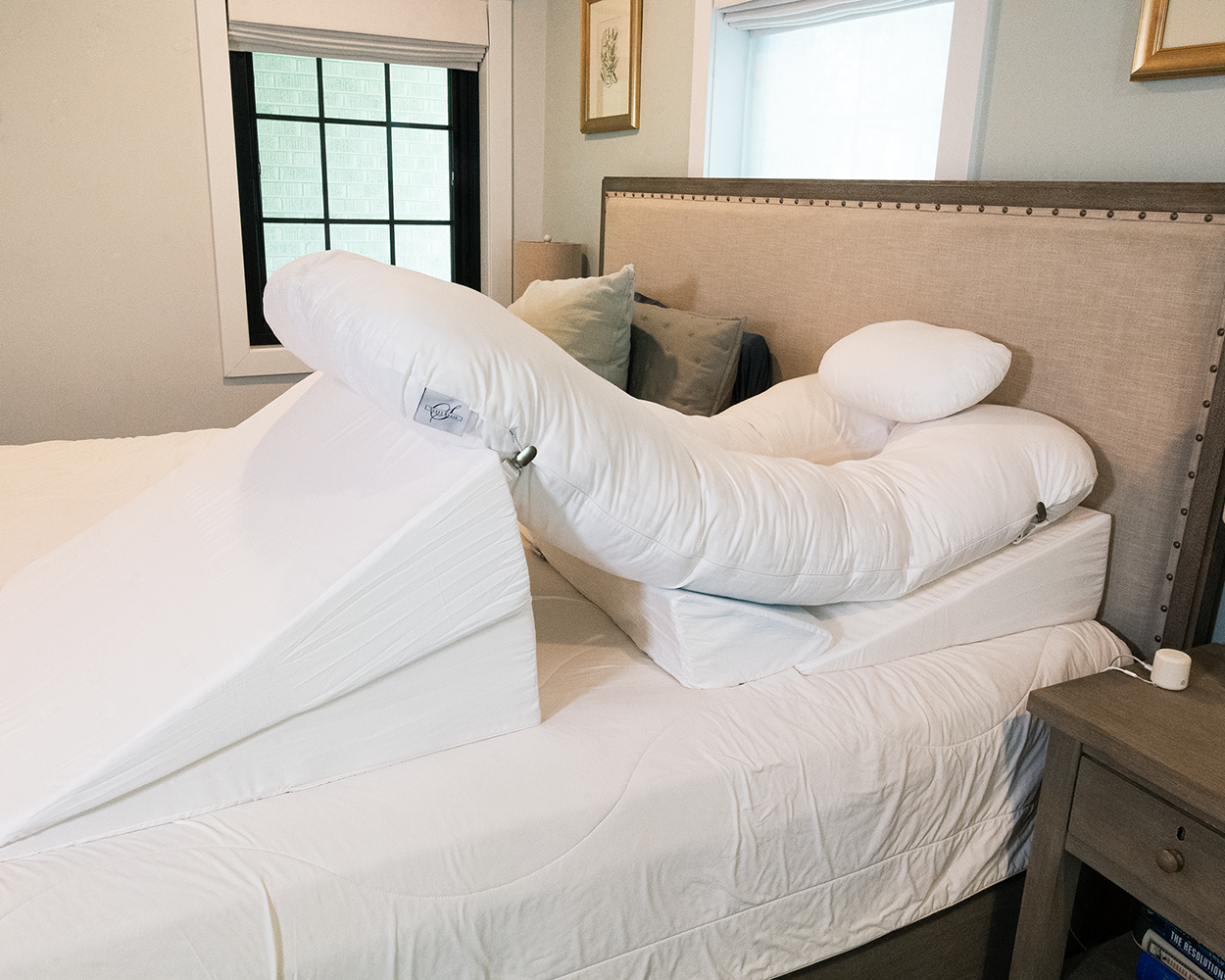
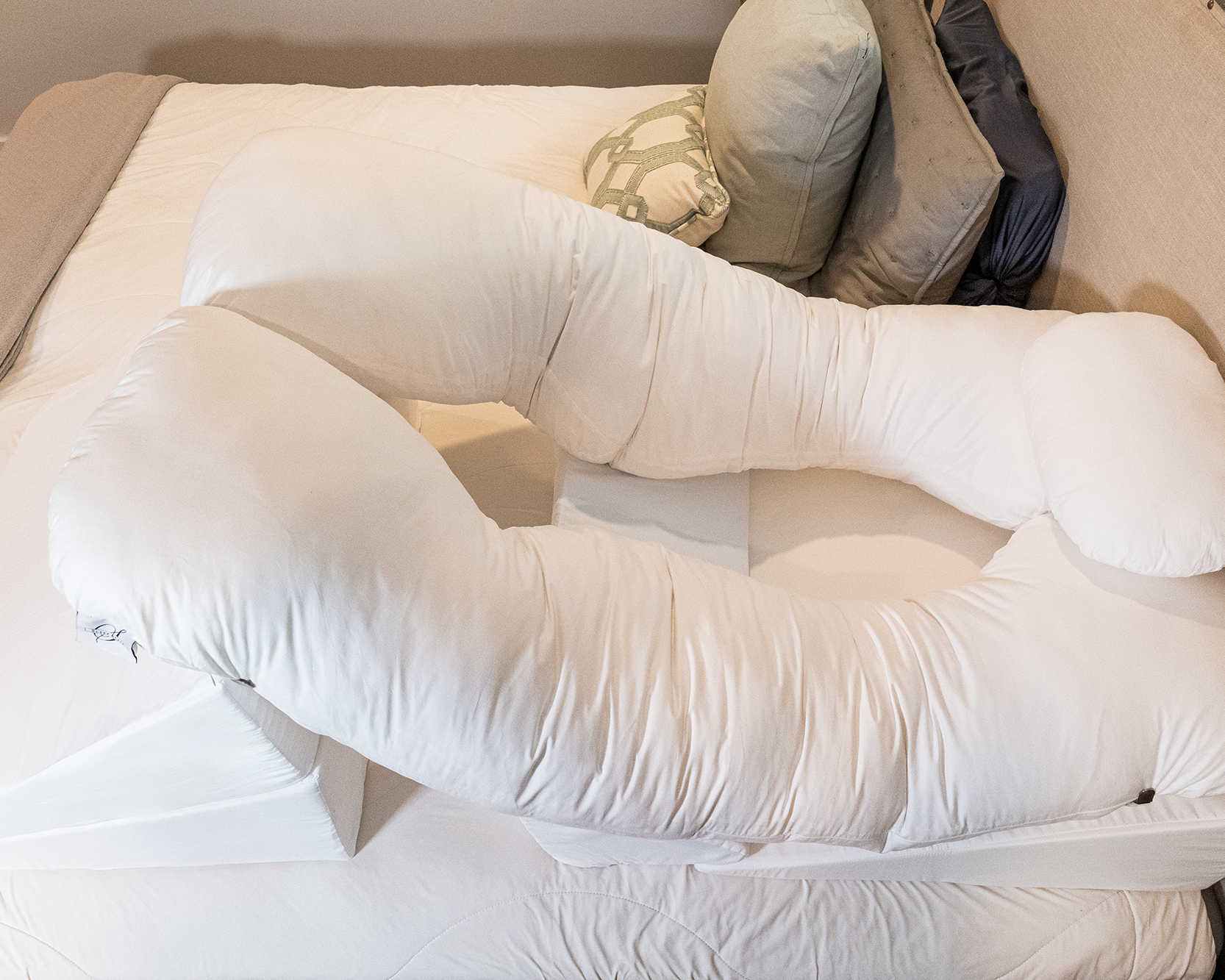
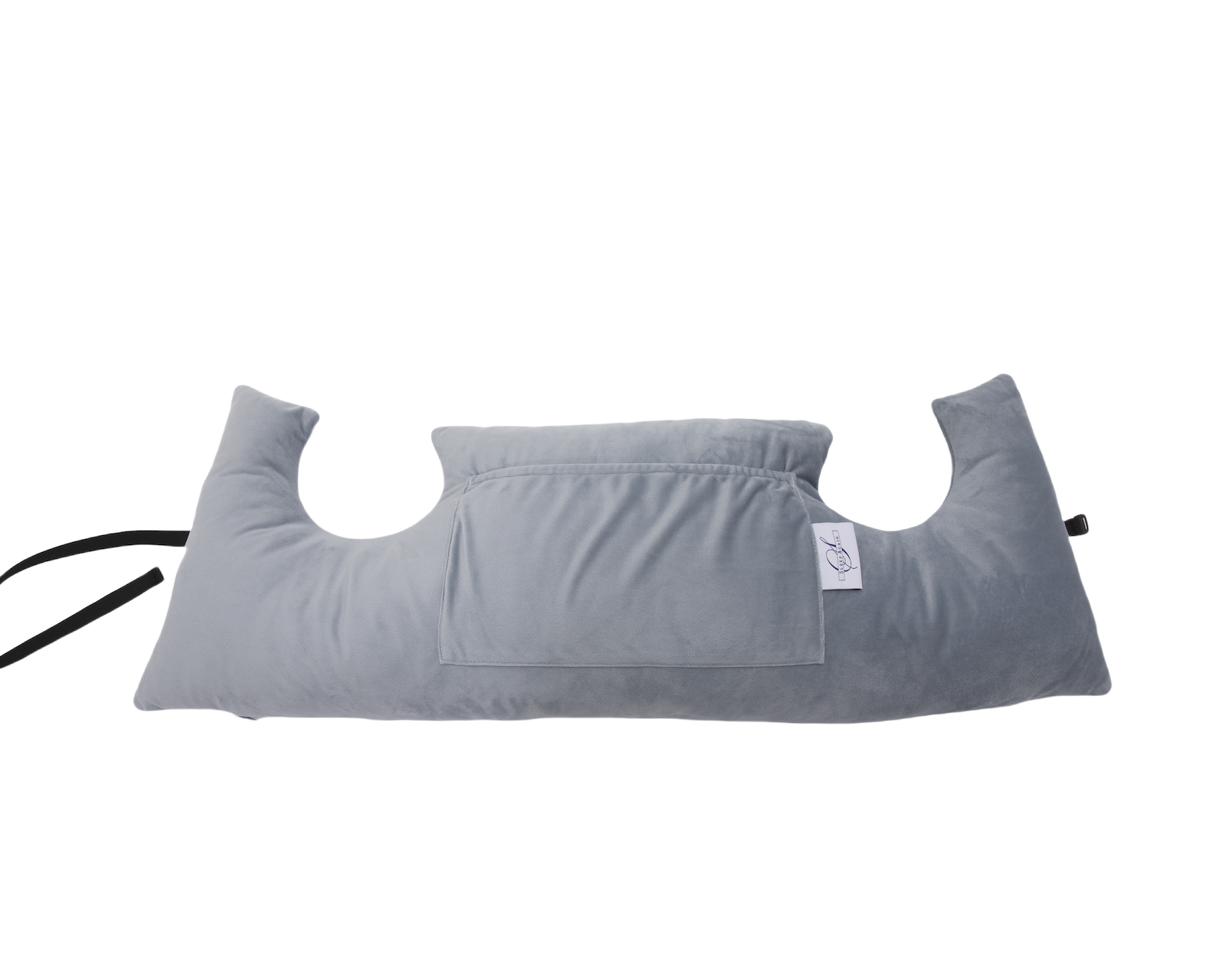
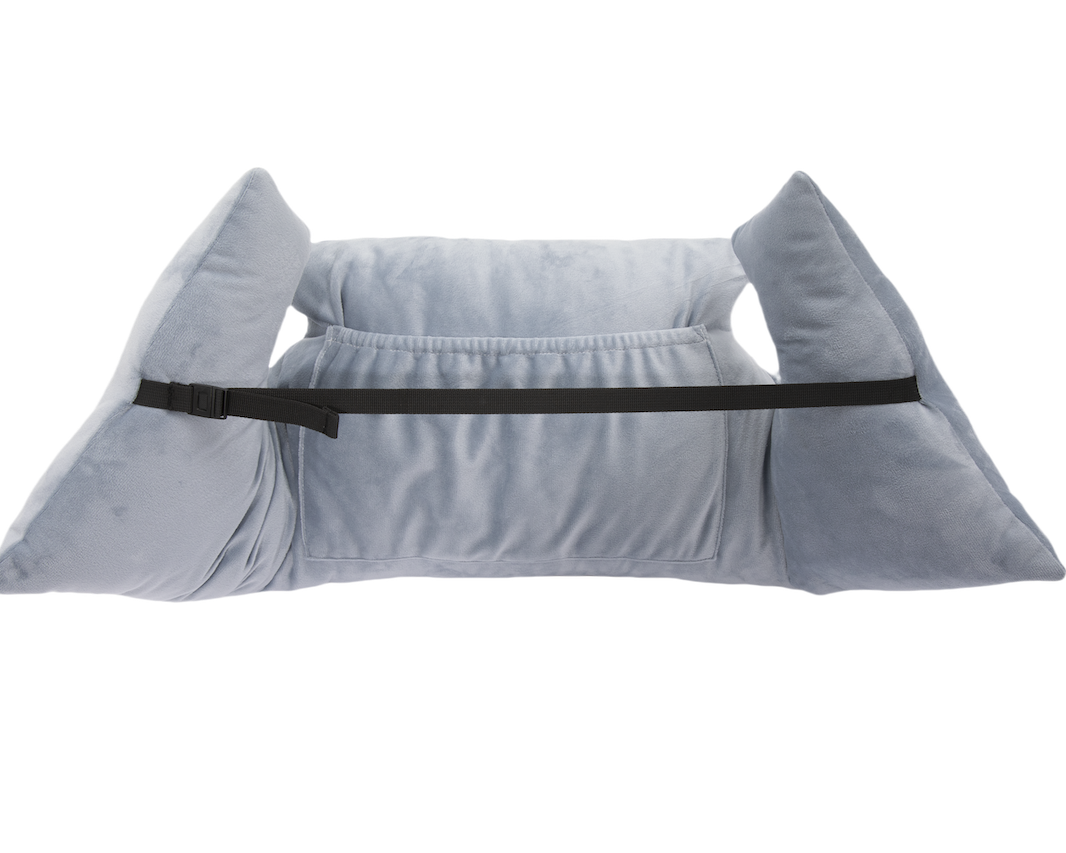
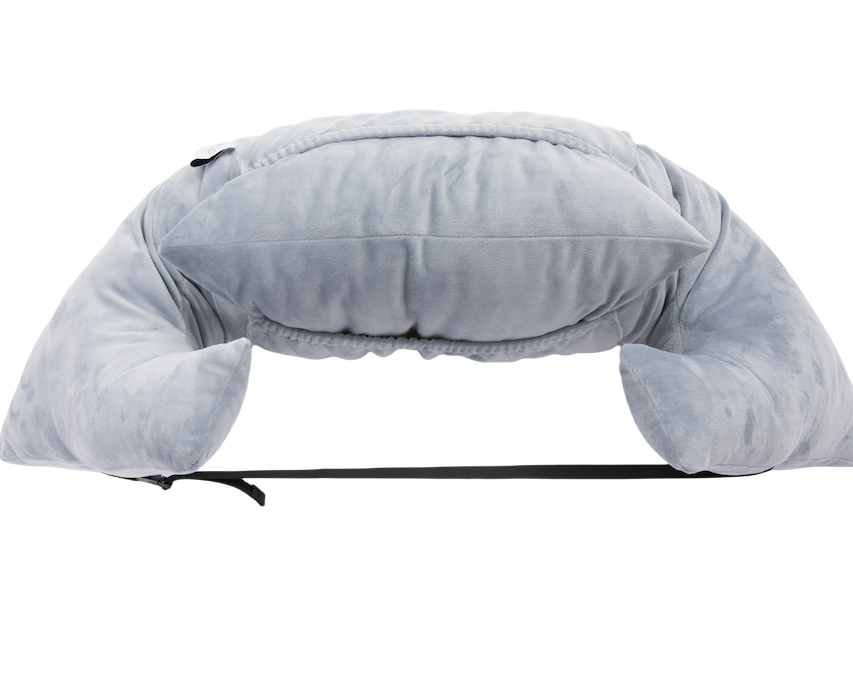
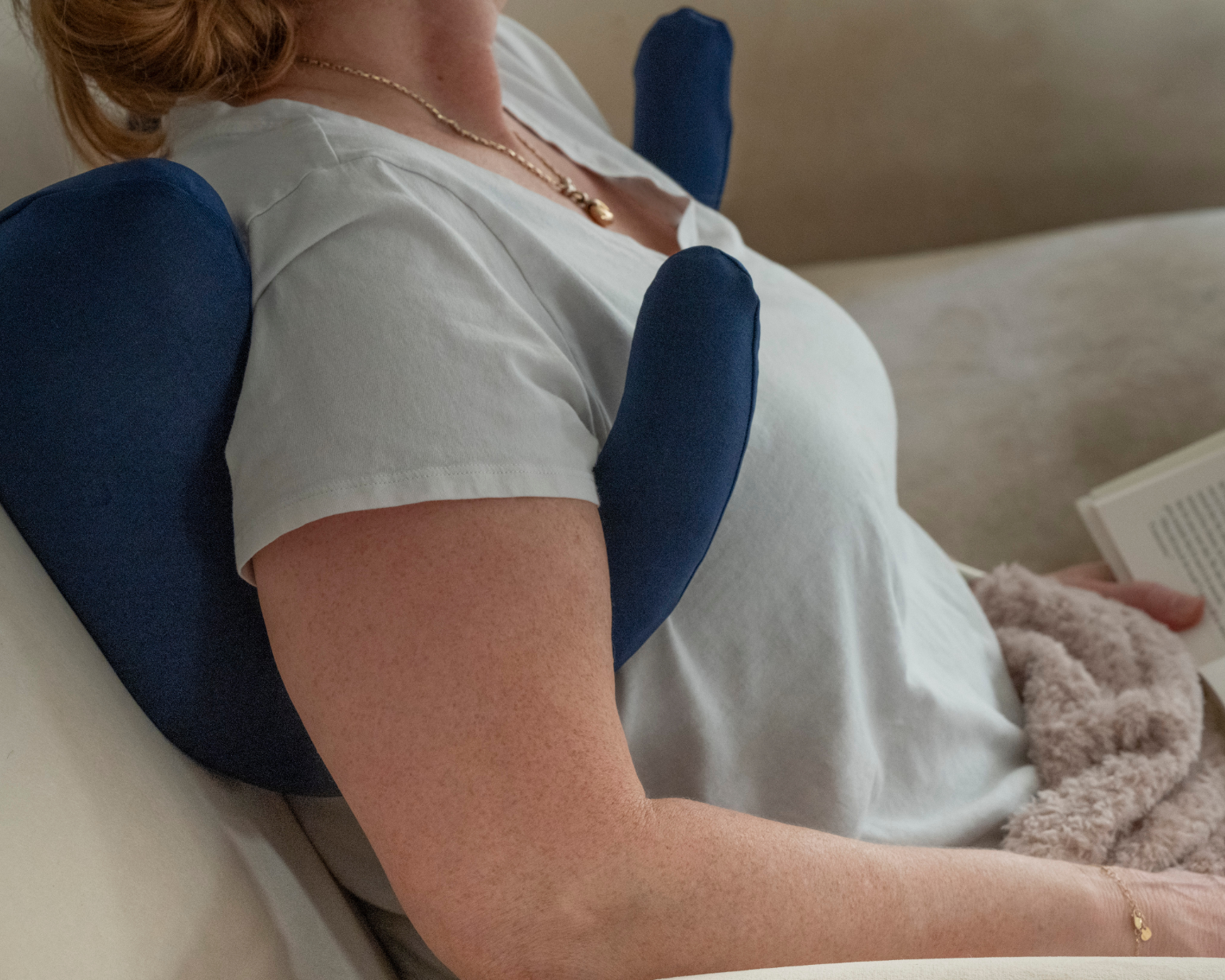
Prevents shoulder protraction automatically: The integrated Upper Body Wedge and Contoured Side Pillows work together to keep your shoulders in neutral positioning all night, eliminating the forward roll that overstretches your rhomboid muscles and creates that characteristic pain between your shoulder blades.
Eliminates all support gaps: The system's components work together cohesively to provide continuous support from your mid-back through your shoulders with no spaces, forcing muscle engagement. Every part of your upper back is fully supported, allowing complete muscle relaxation.
Stays exactly where positioned: No waking up at 2 AM to reconstruct your pillow arrangement. The Sleep Again Pillow System maintains position throughout the night, giving your upper back uninterrupted support while you sleep. This consistency is crucial for breaking the cycle of accumulated tension.
SHOP THE BEST PILLOW FOR UPPER BACK PAIN RELIEF

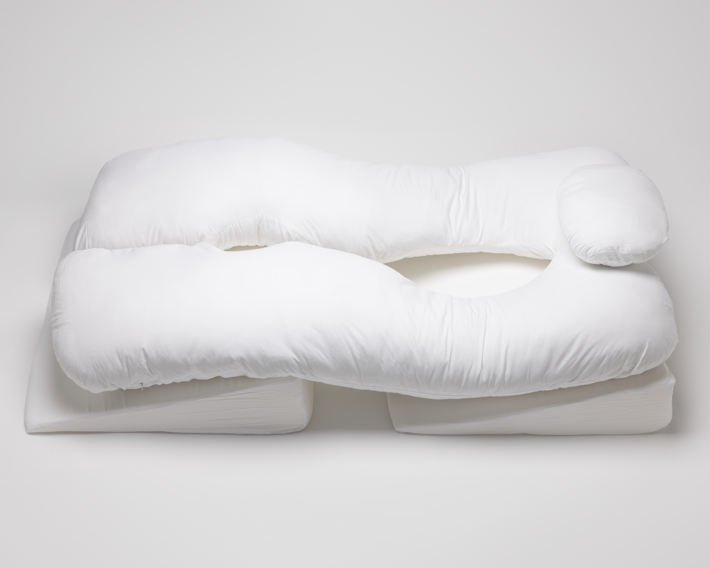
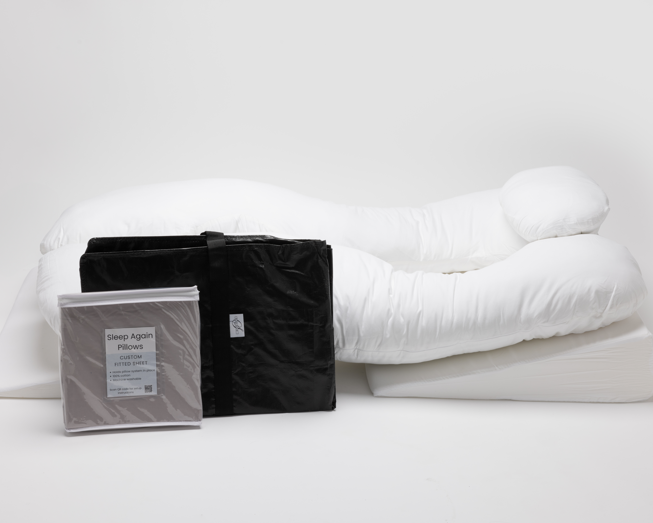
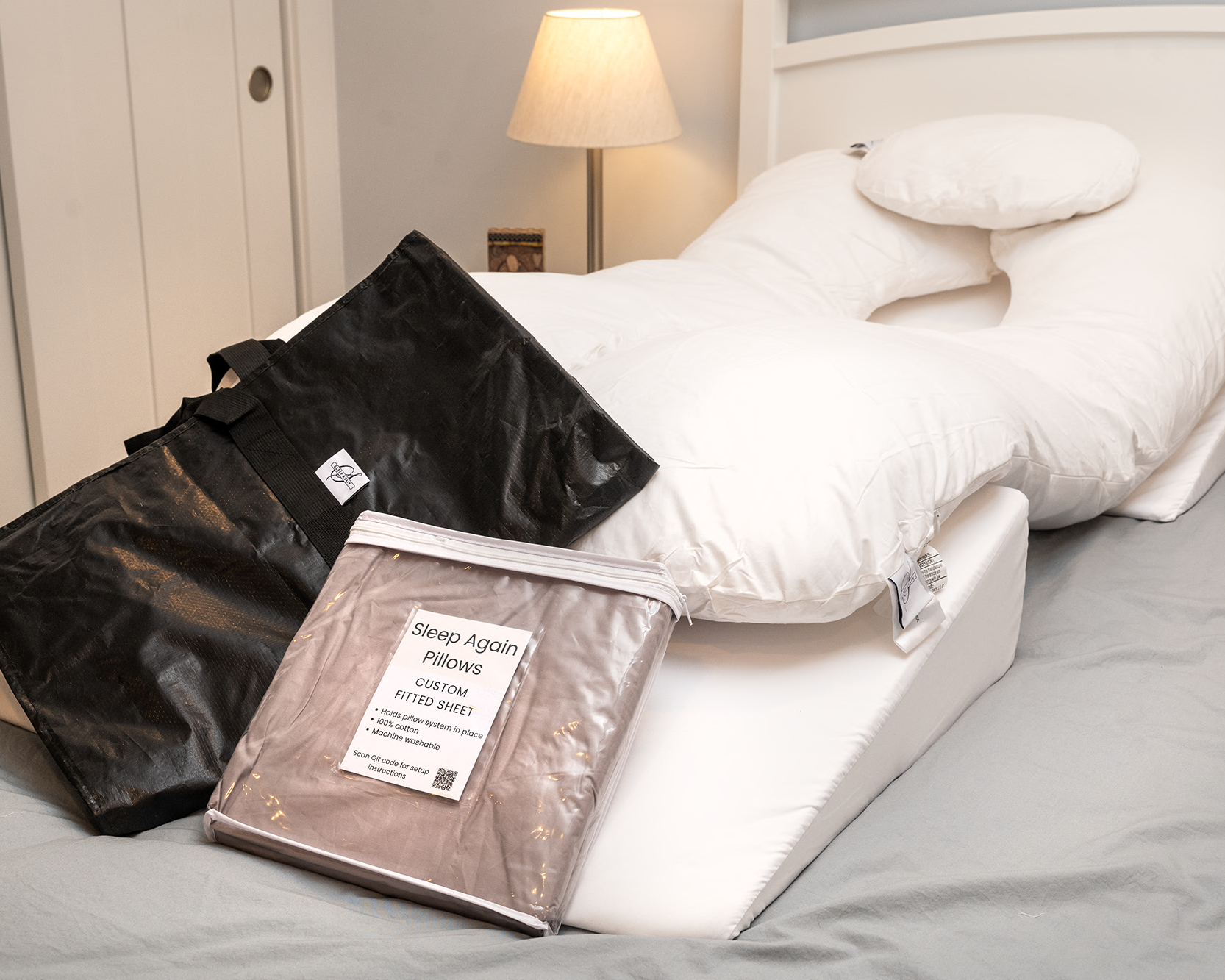
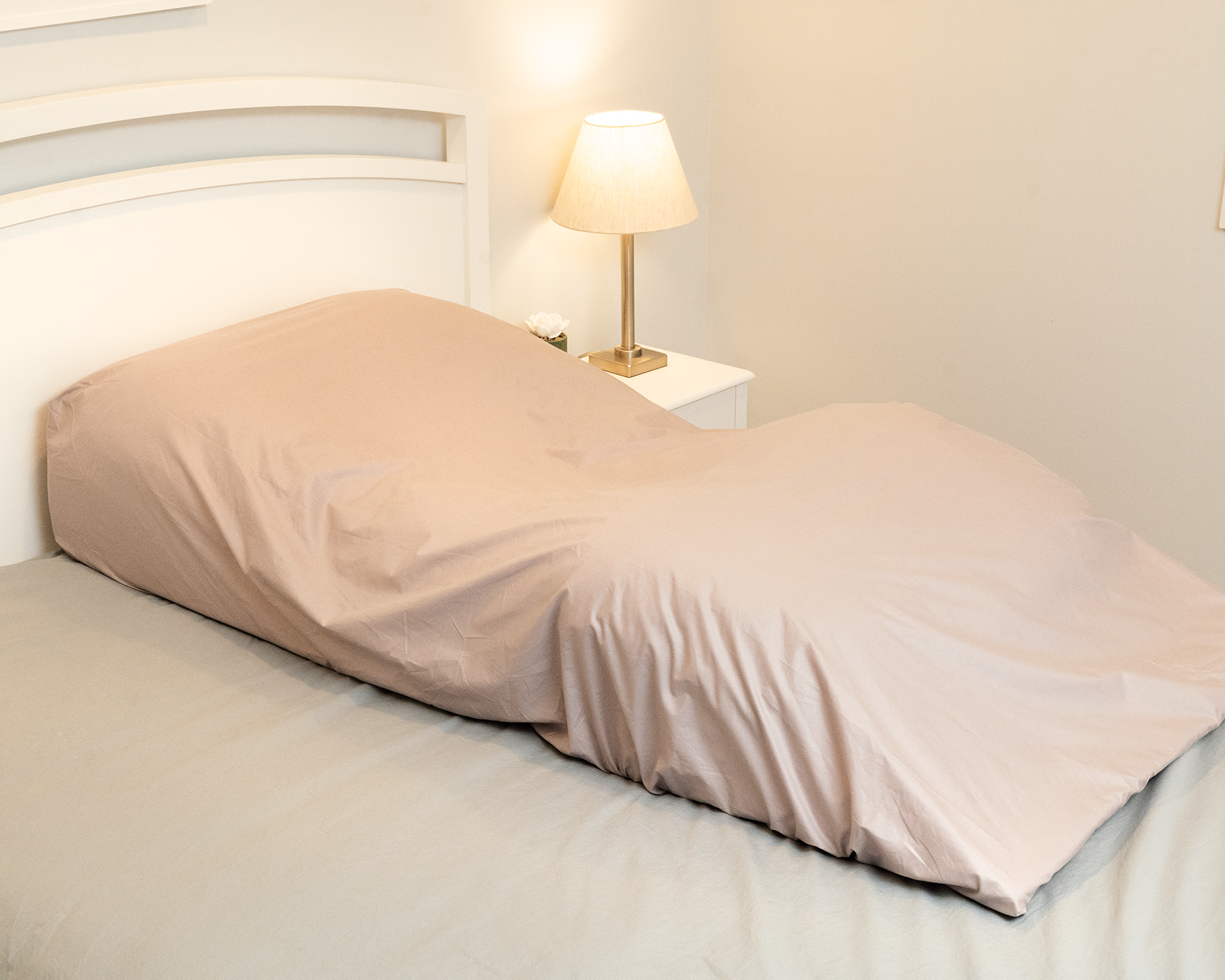
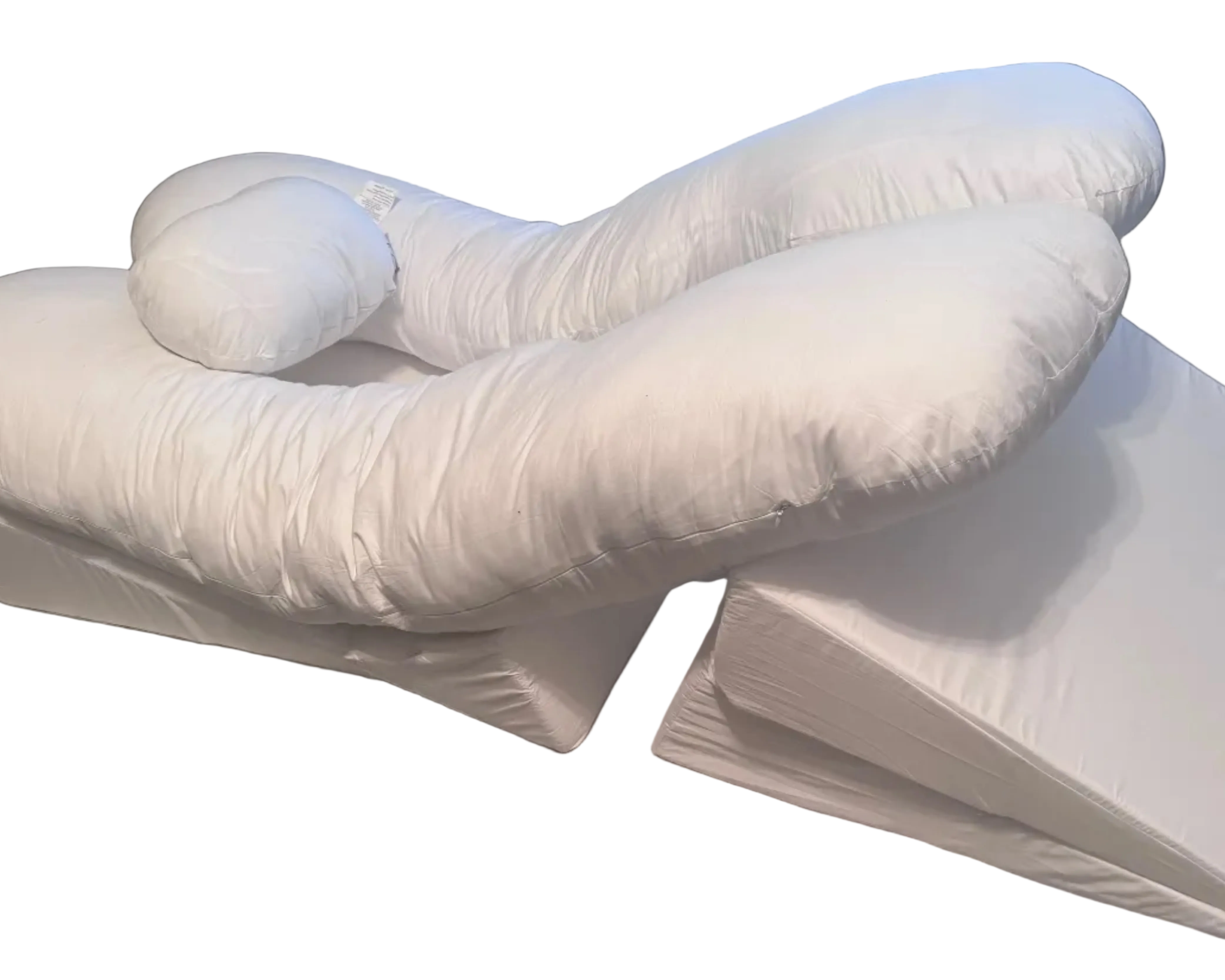
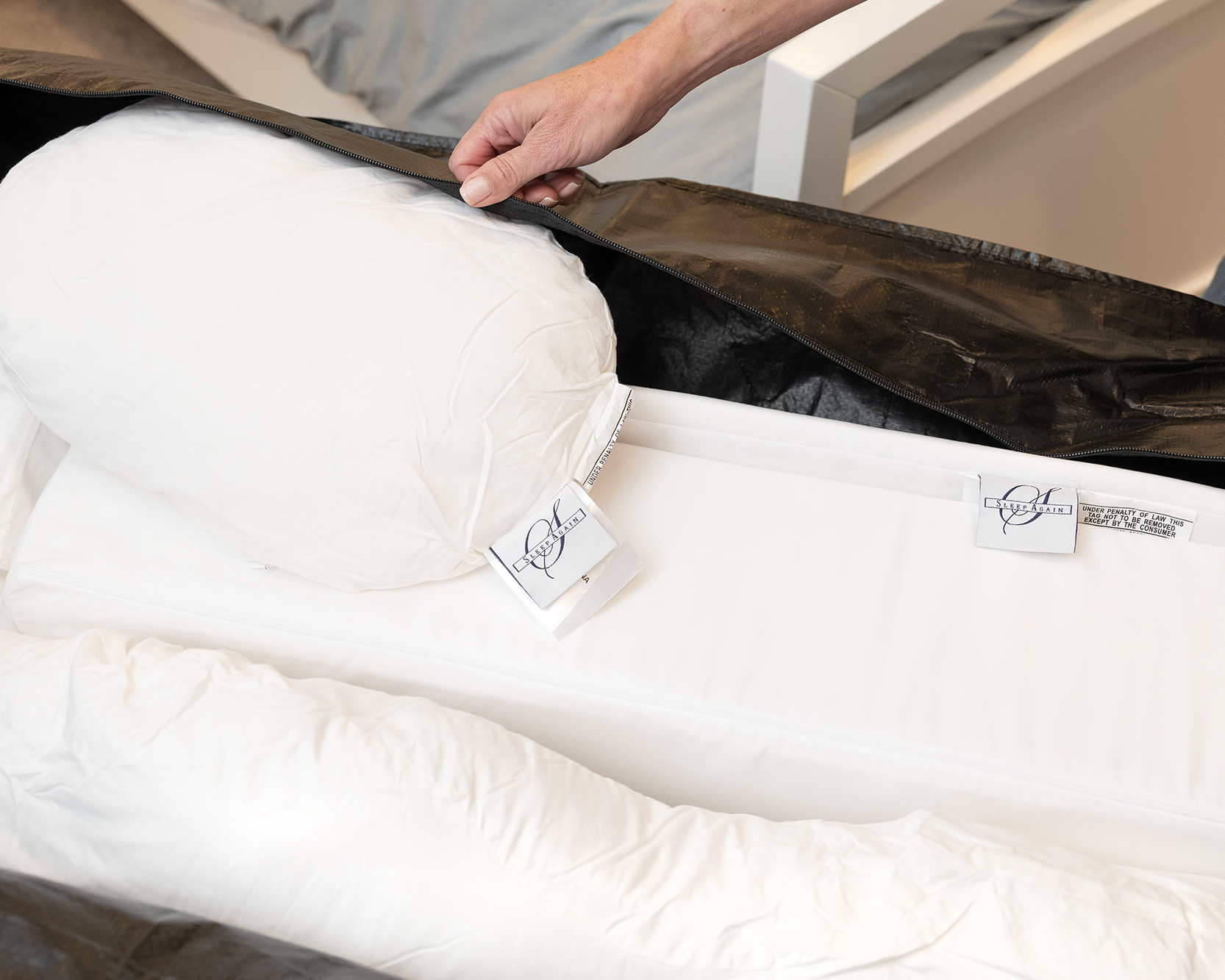
The Complete Pillow System for Upper Back Relief
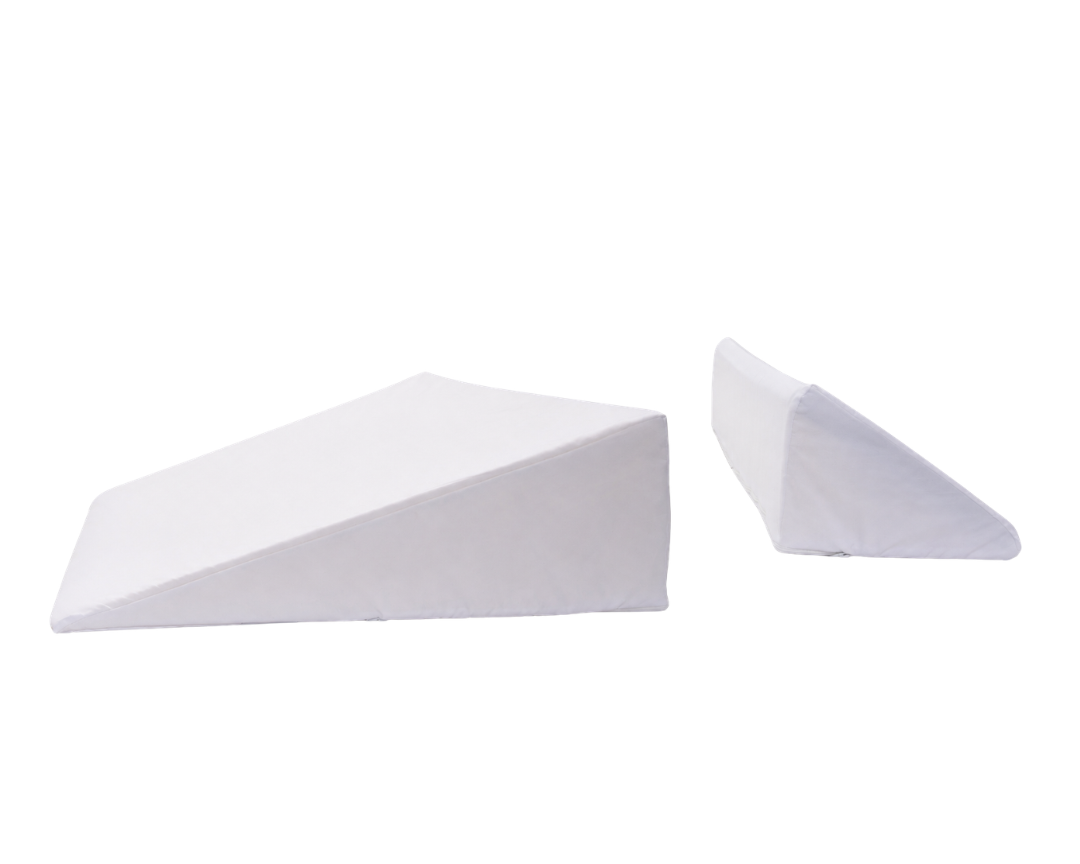
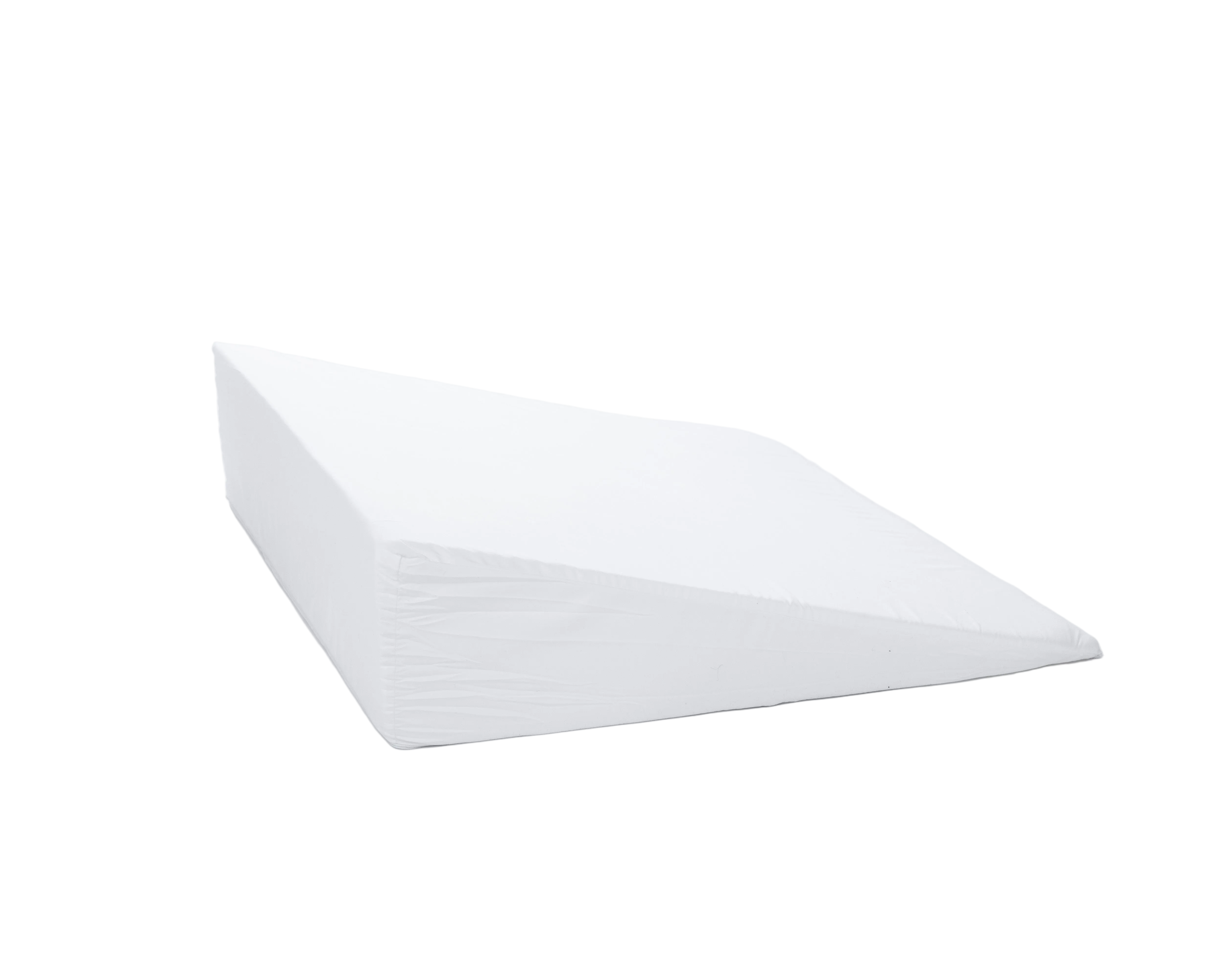
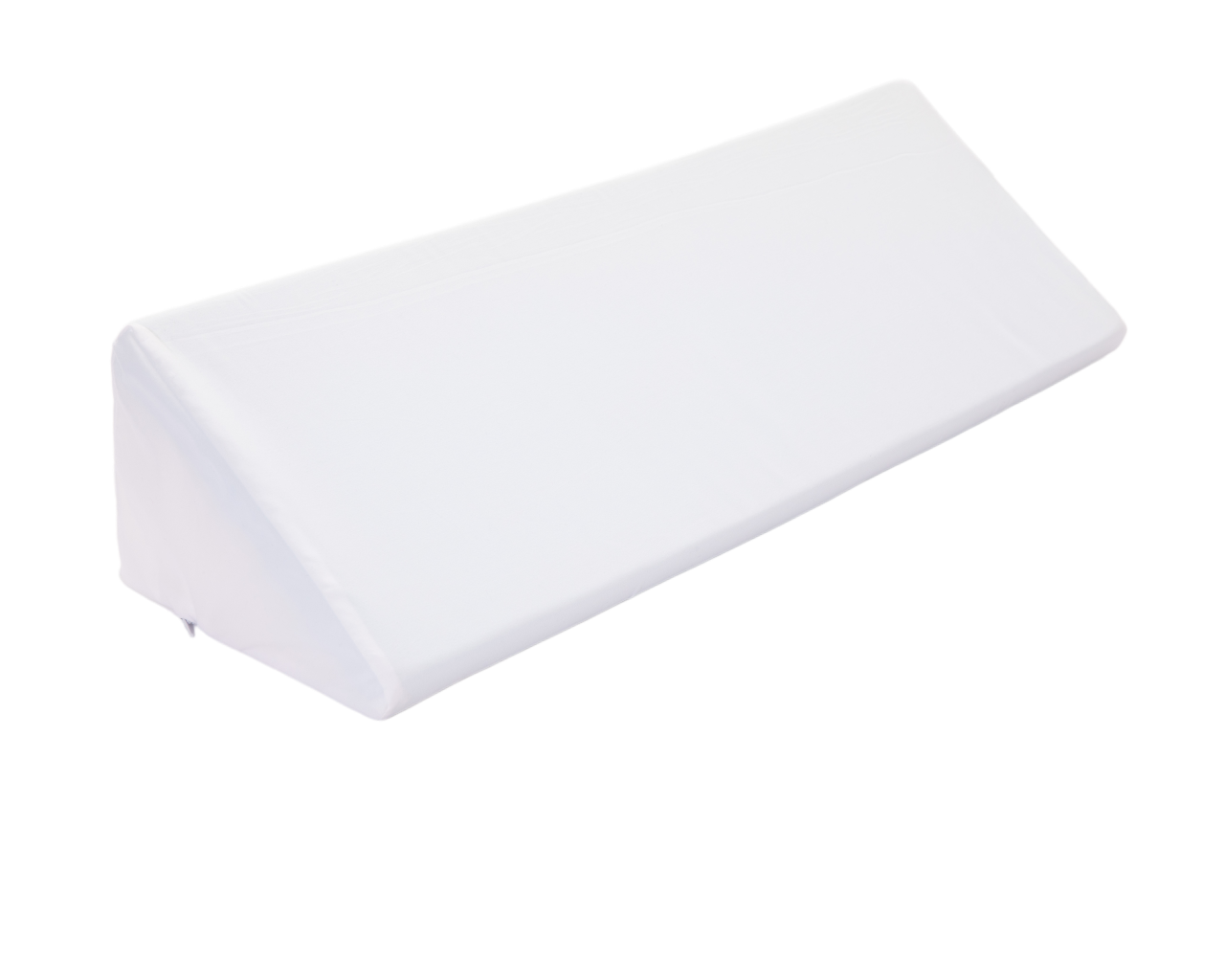
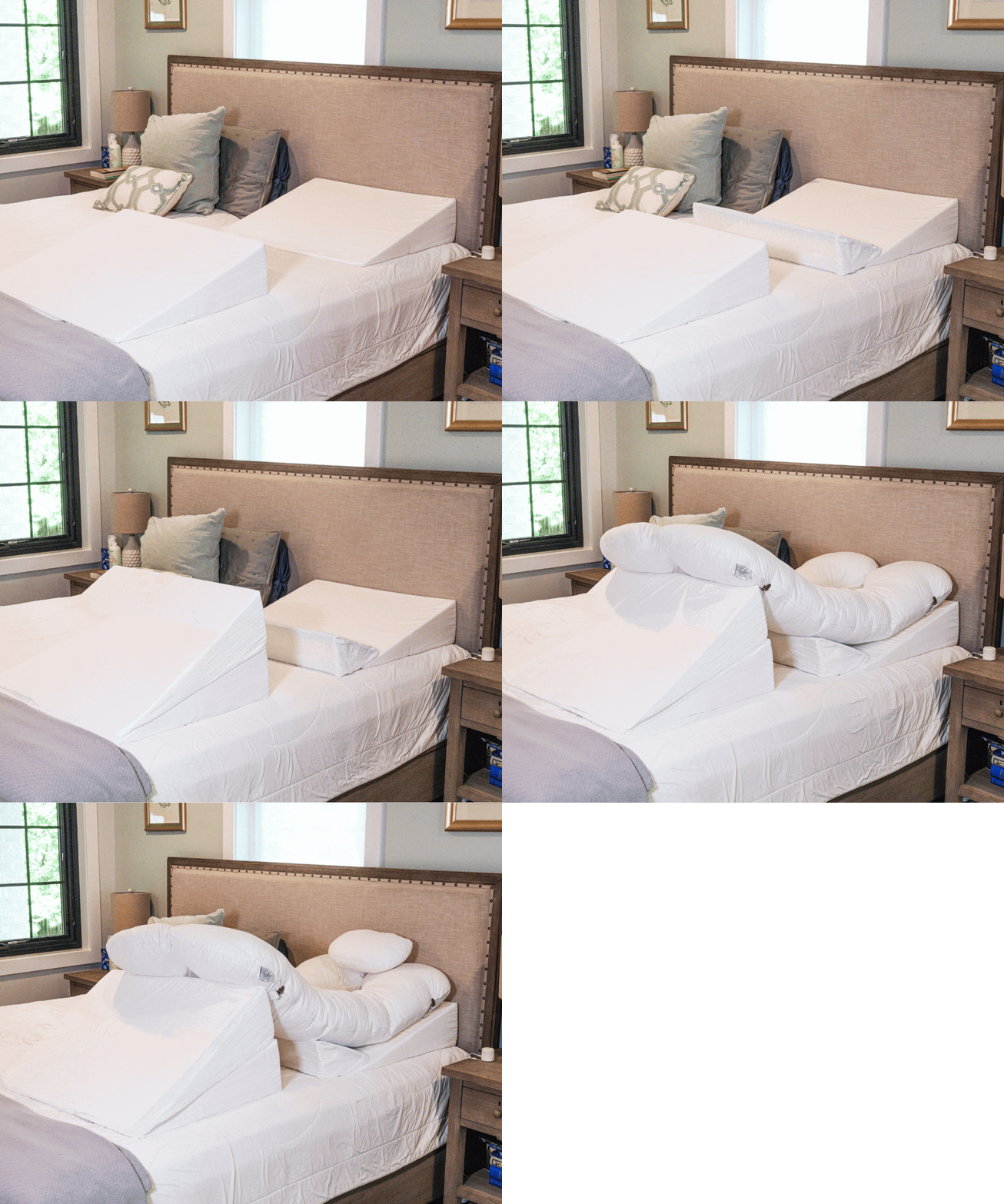
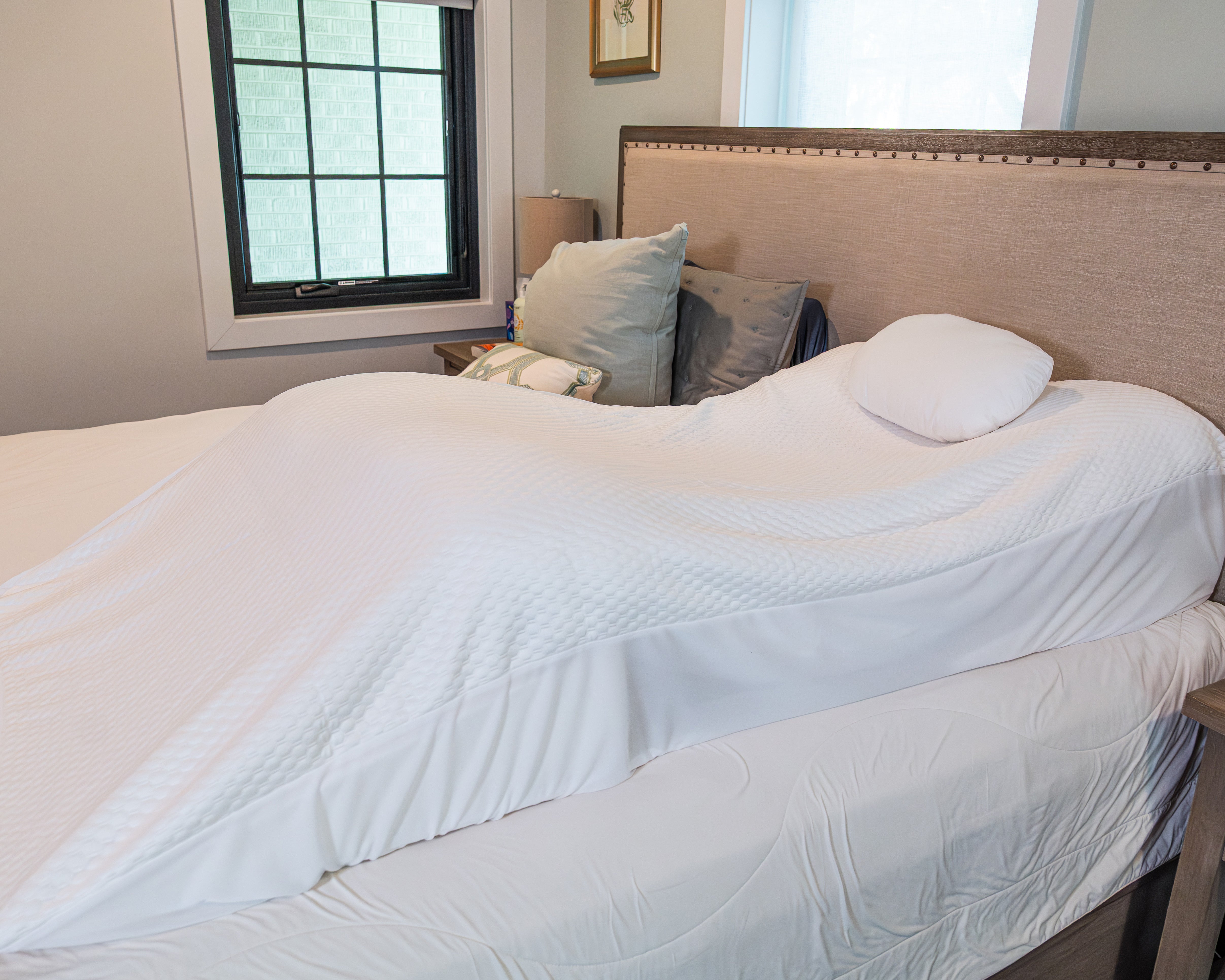
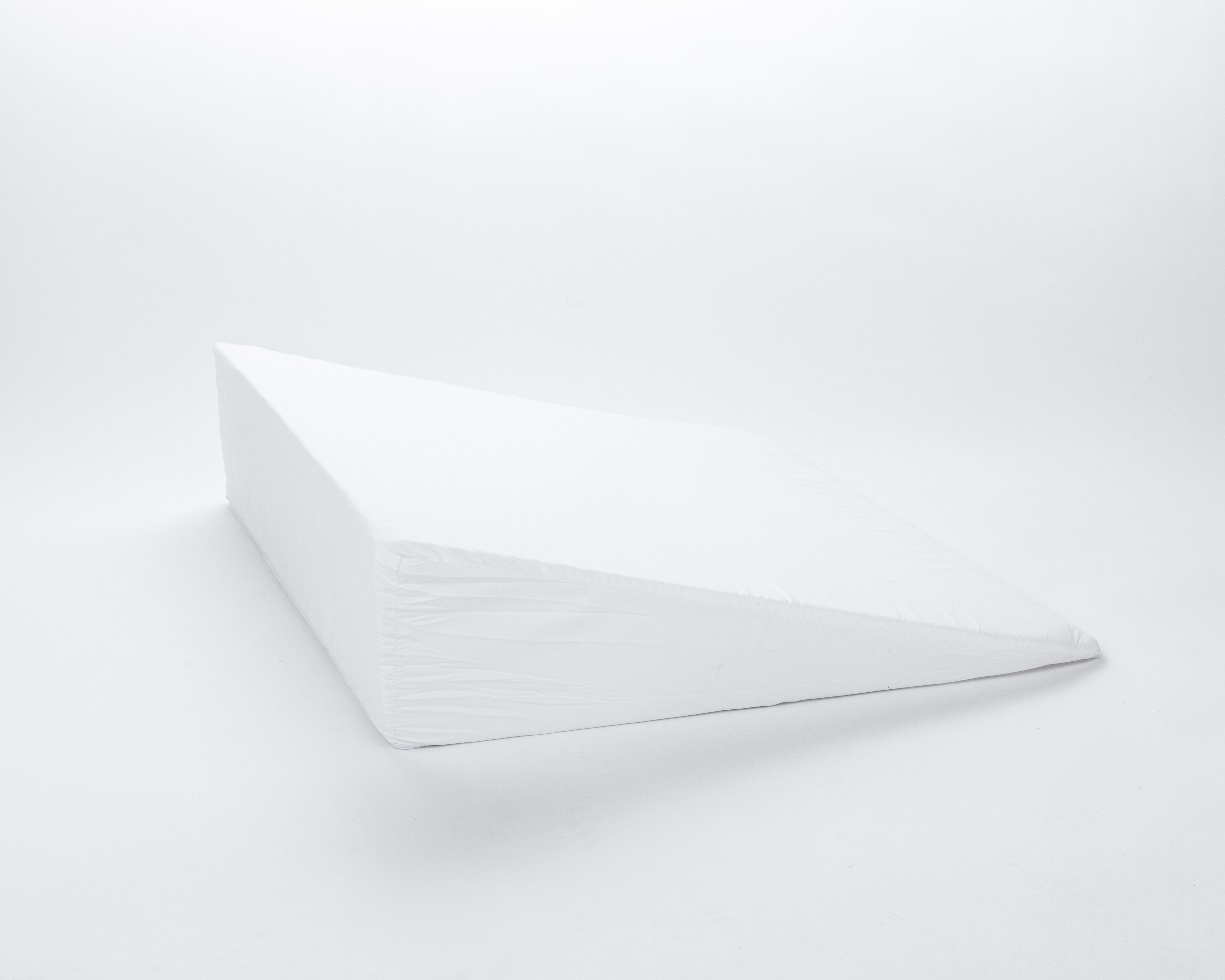
Upper Body Wedge: Creates the precise 15-30 degree elevation that maintains your thoracic curve while preventing shoulder protraction. The gradual incline distributes your upper body weight evenly, eliminating the pressure points that develop with flat sleeping or improper elevation.
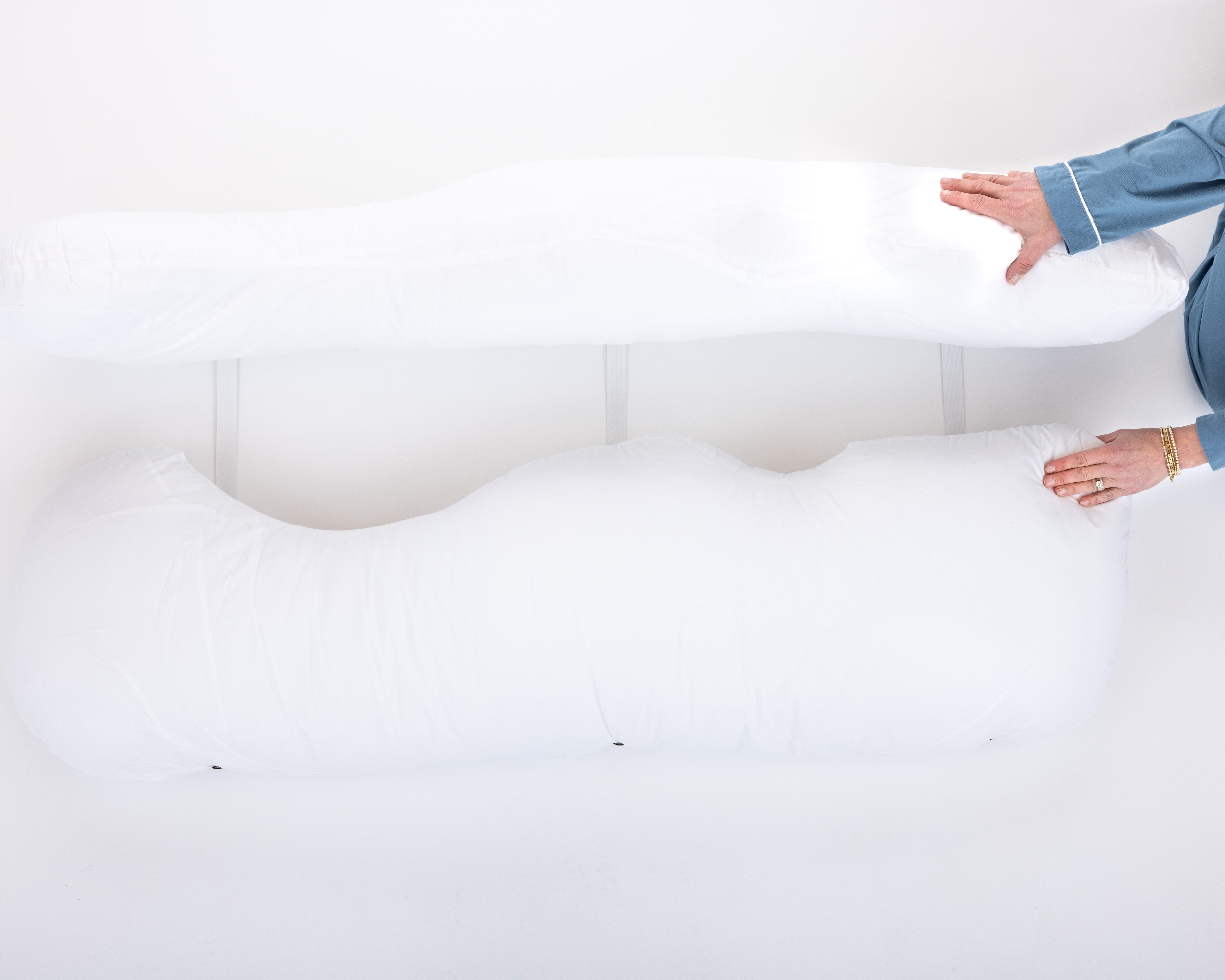
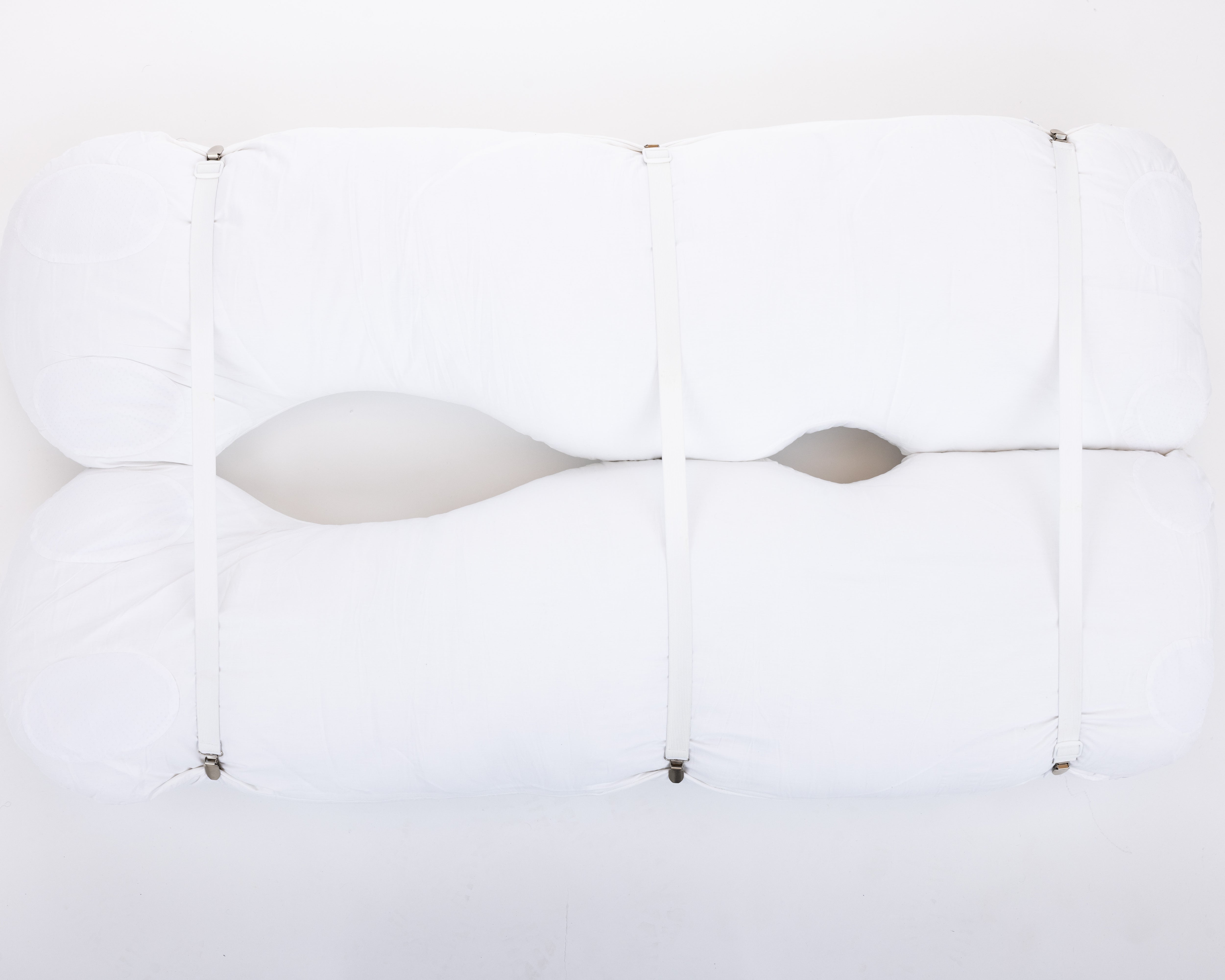
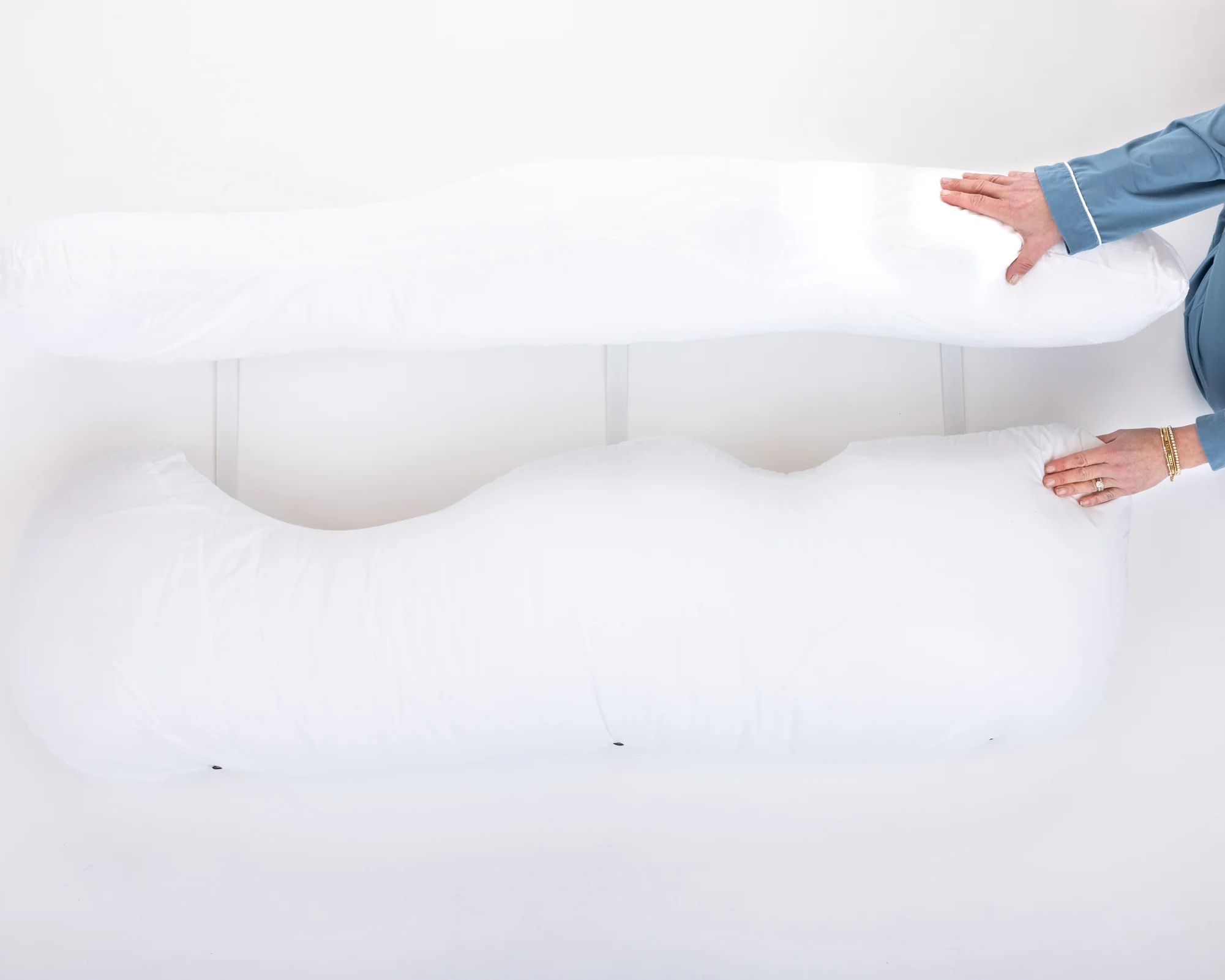
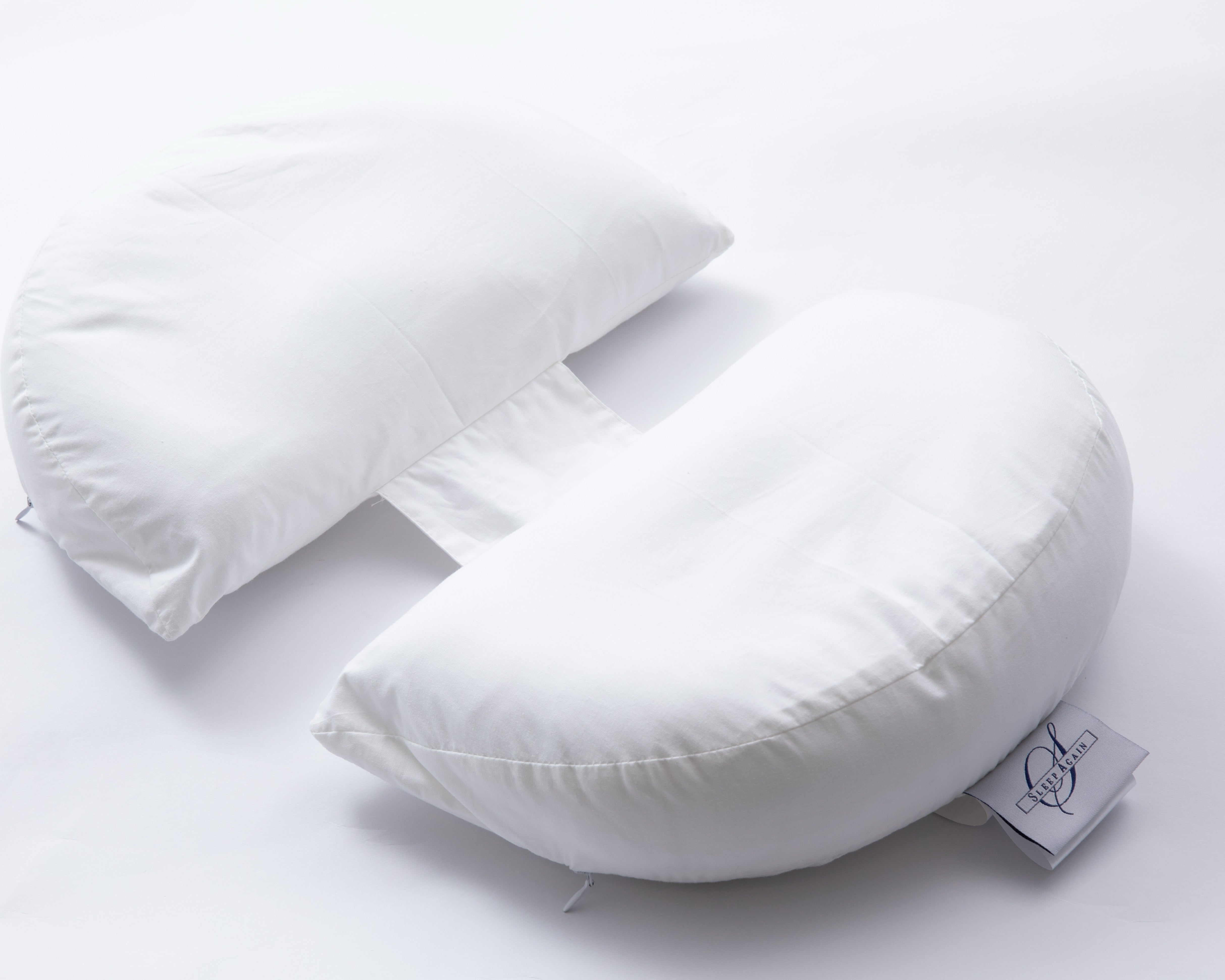
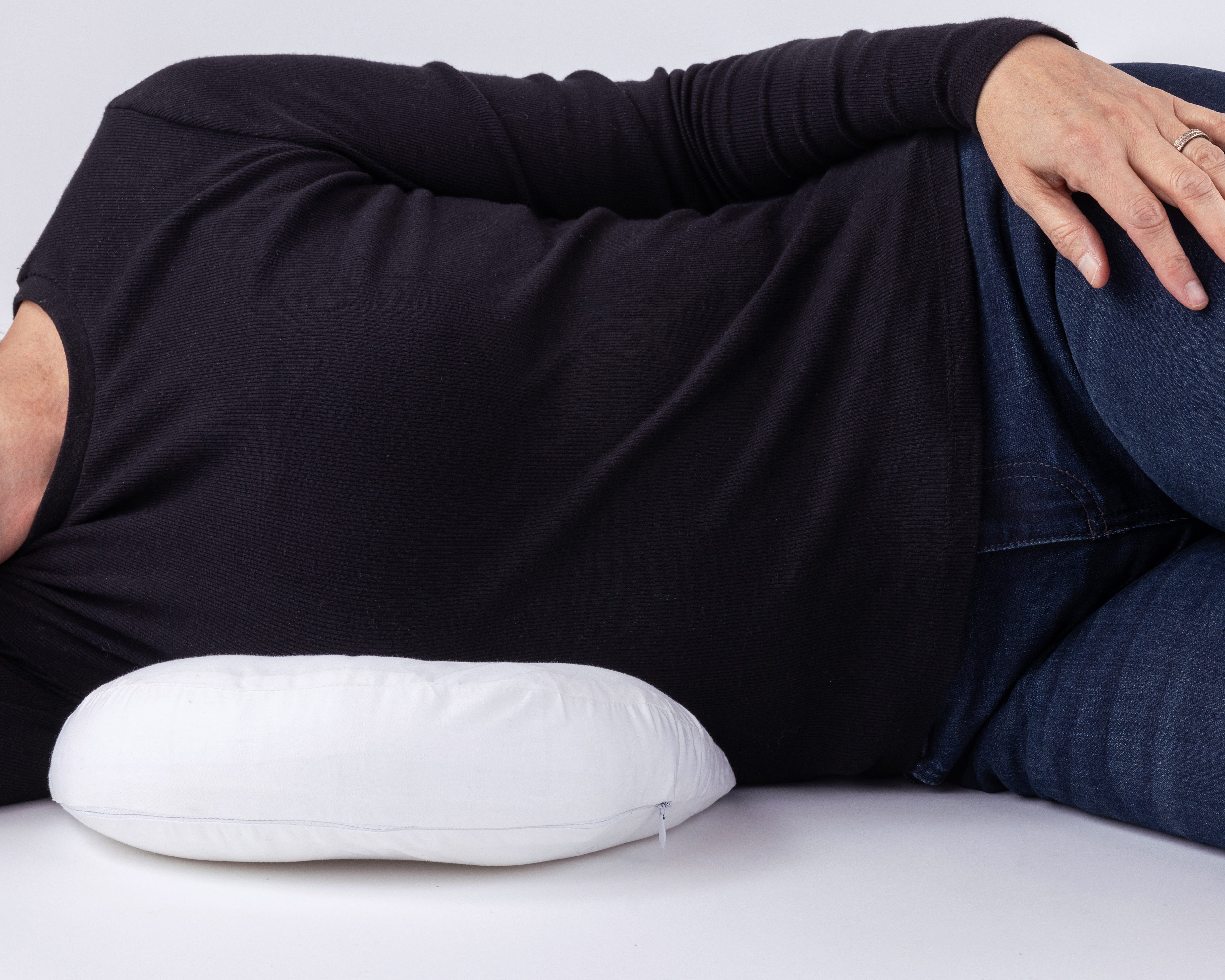
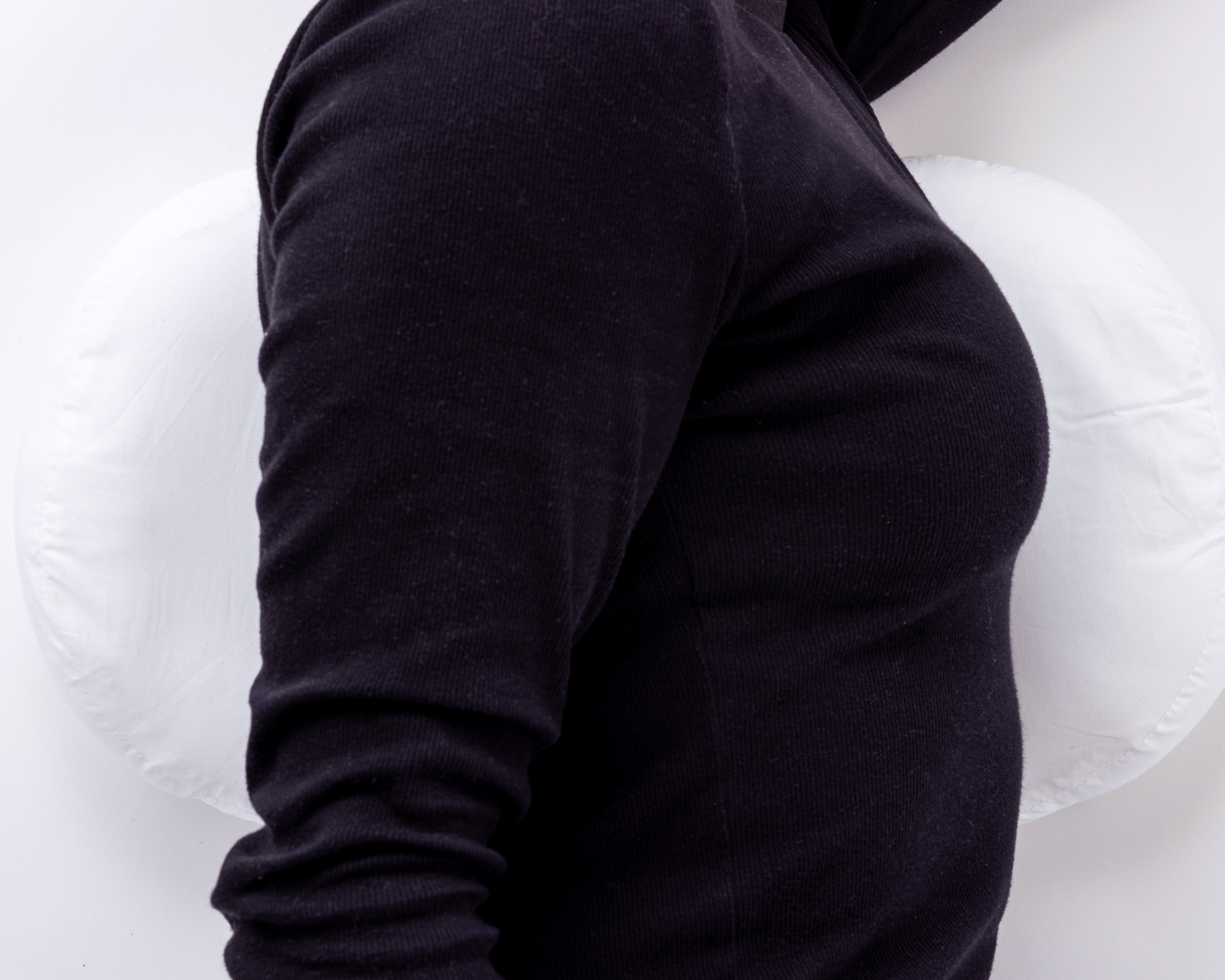
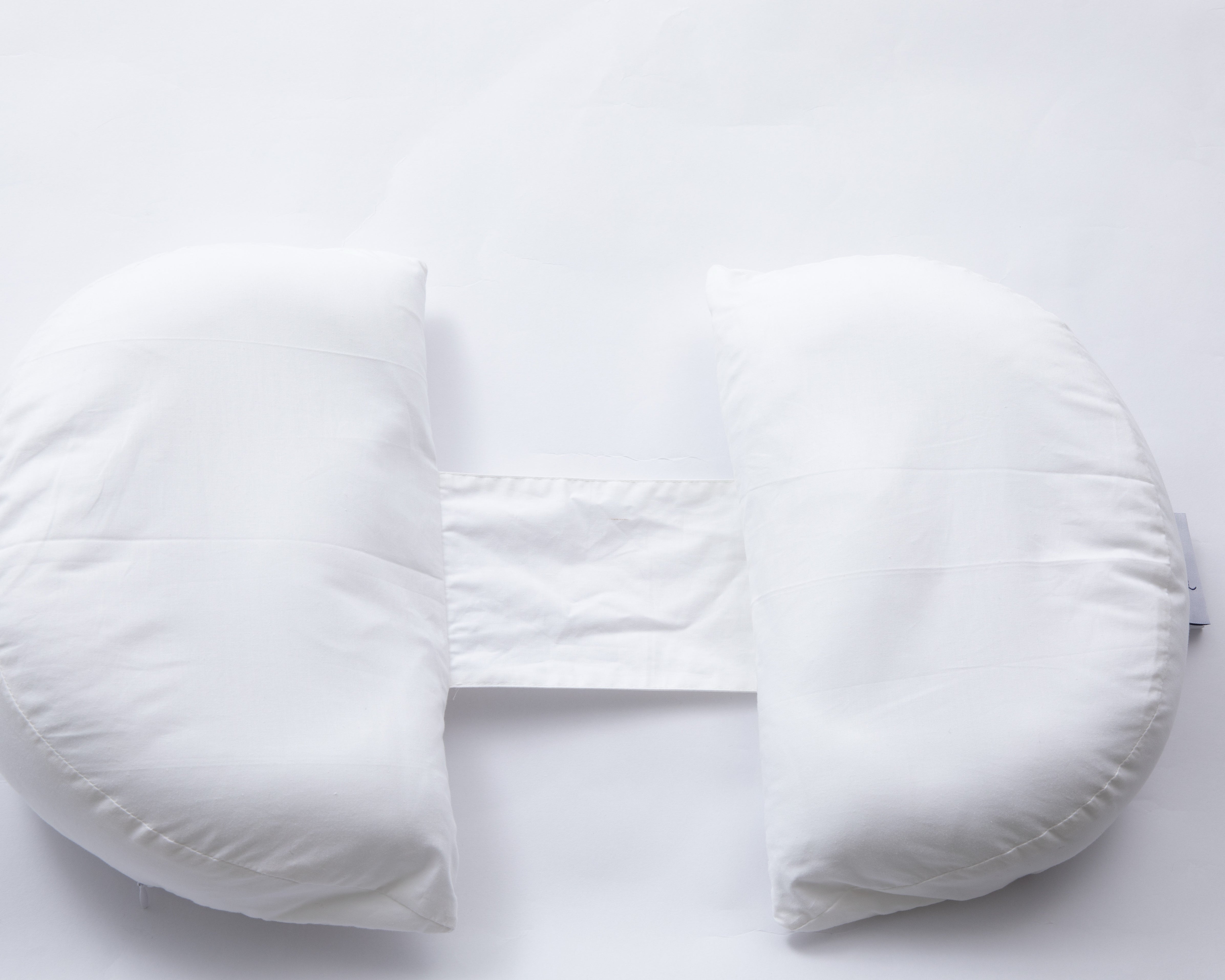
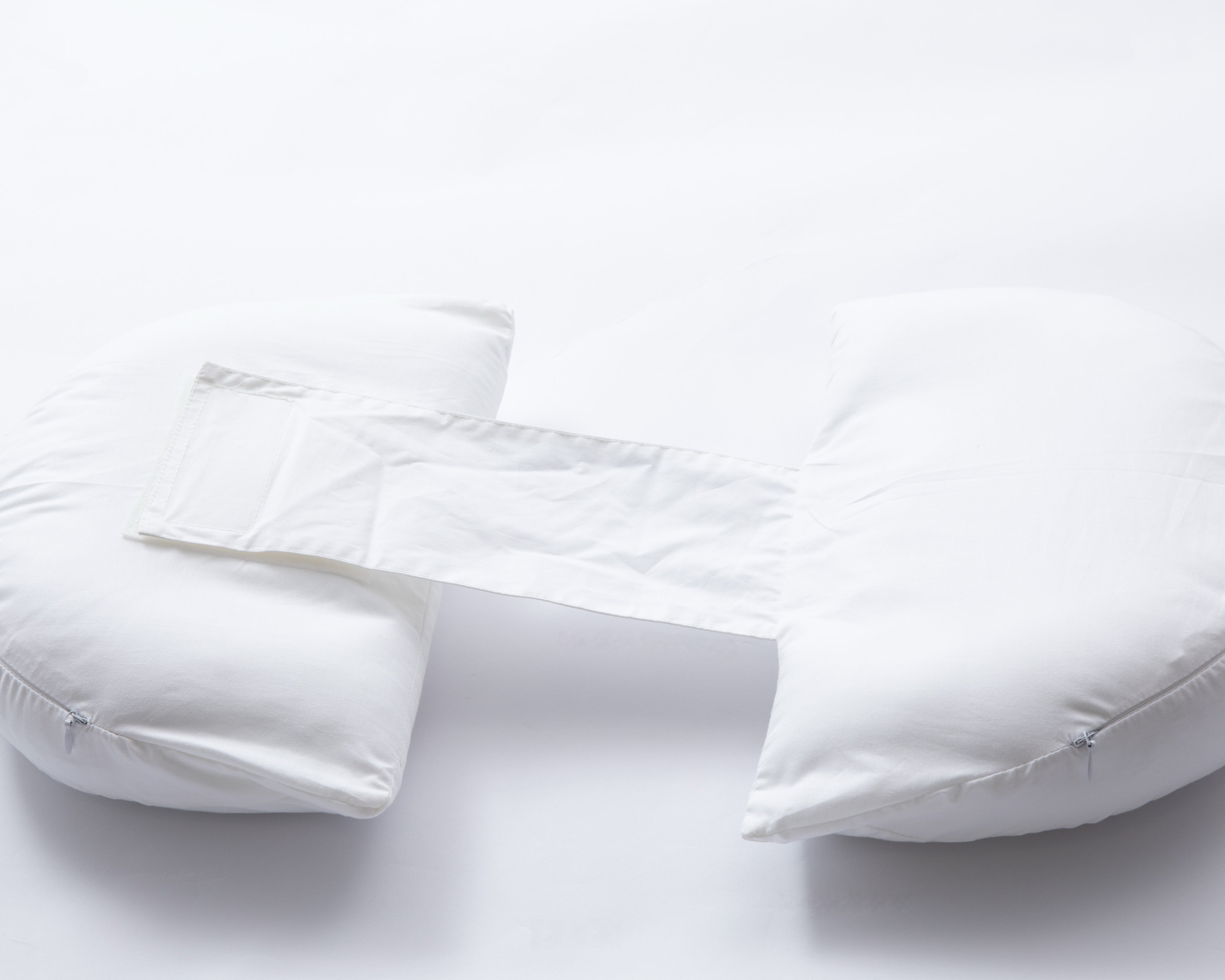
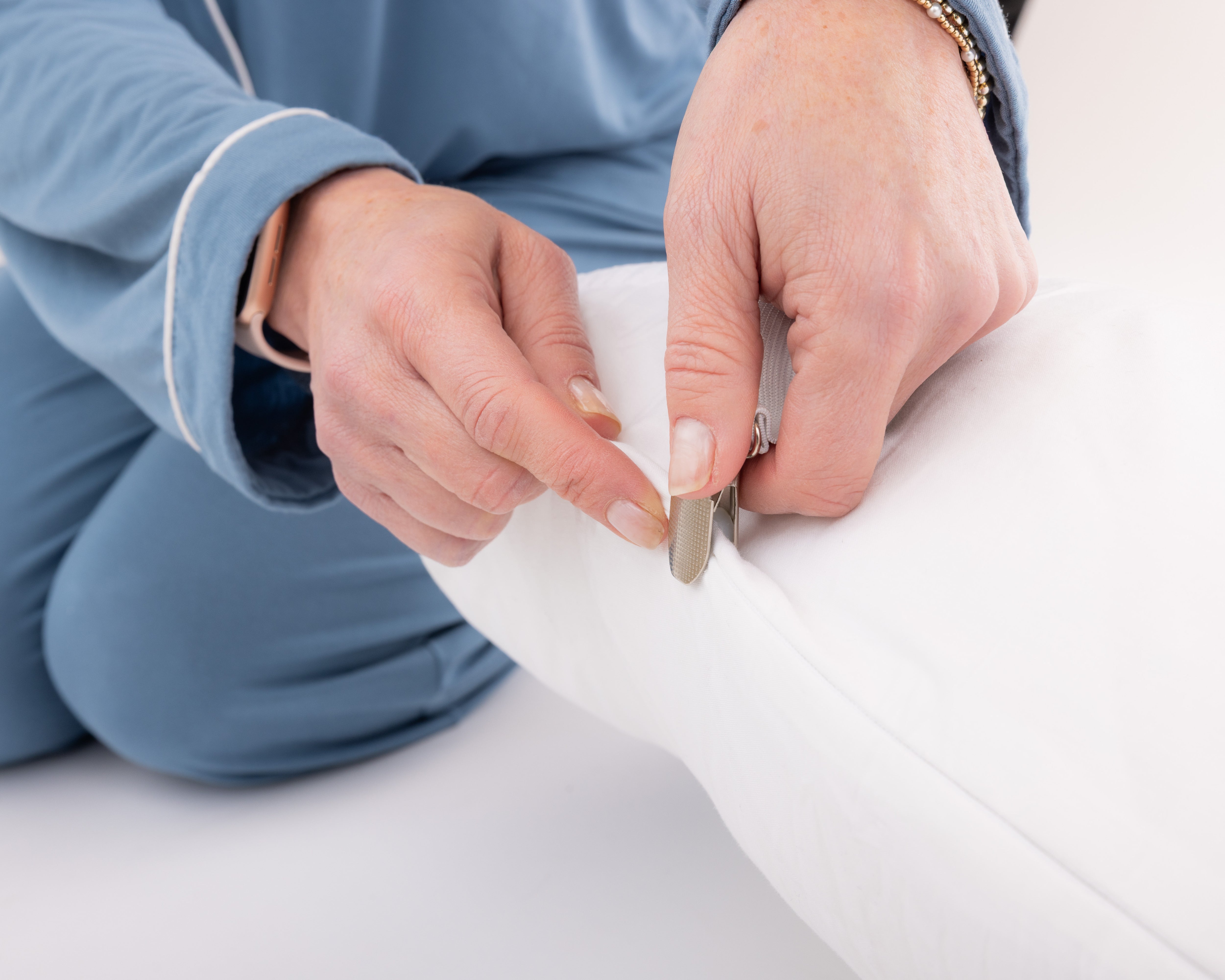
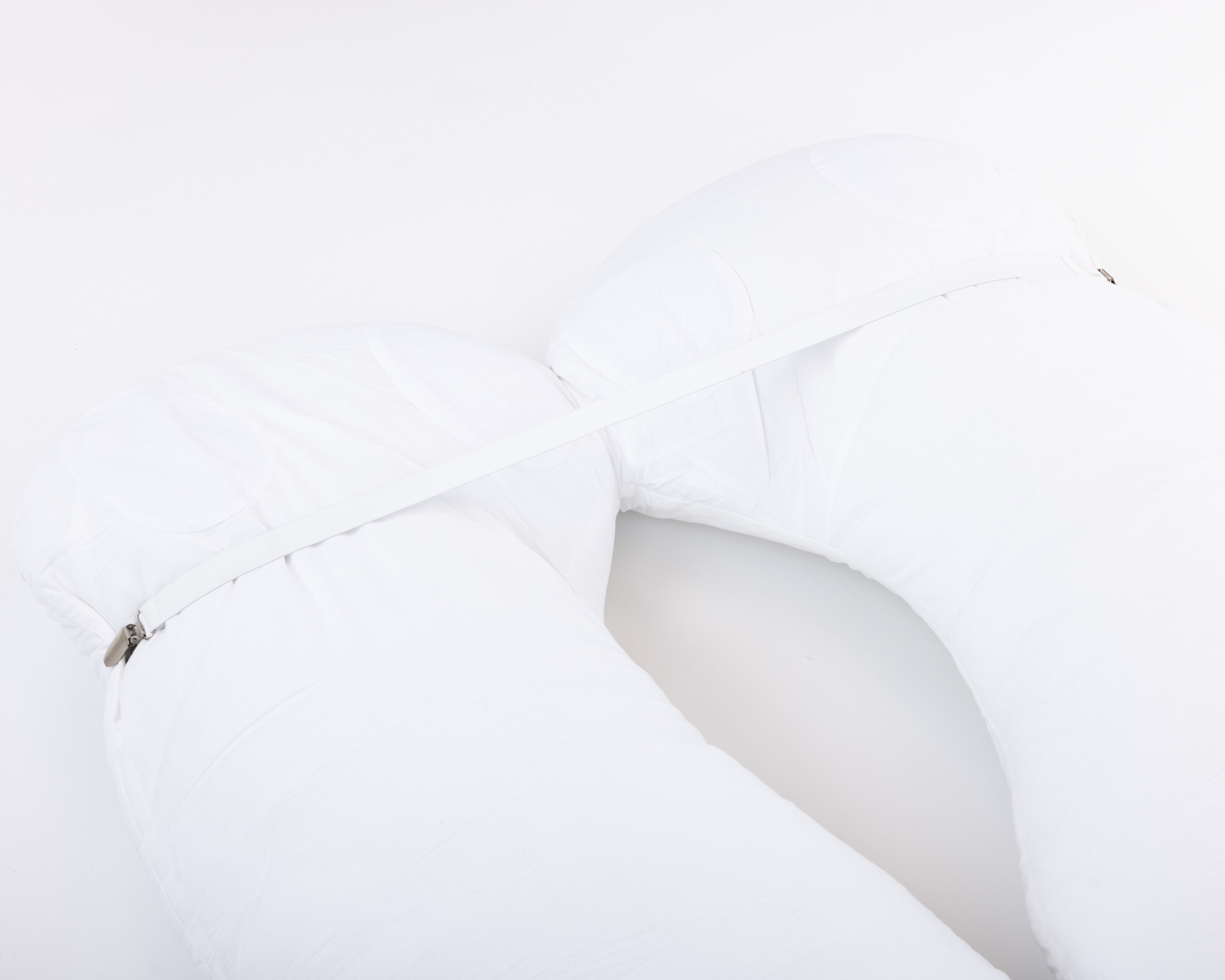
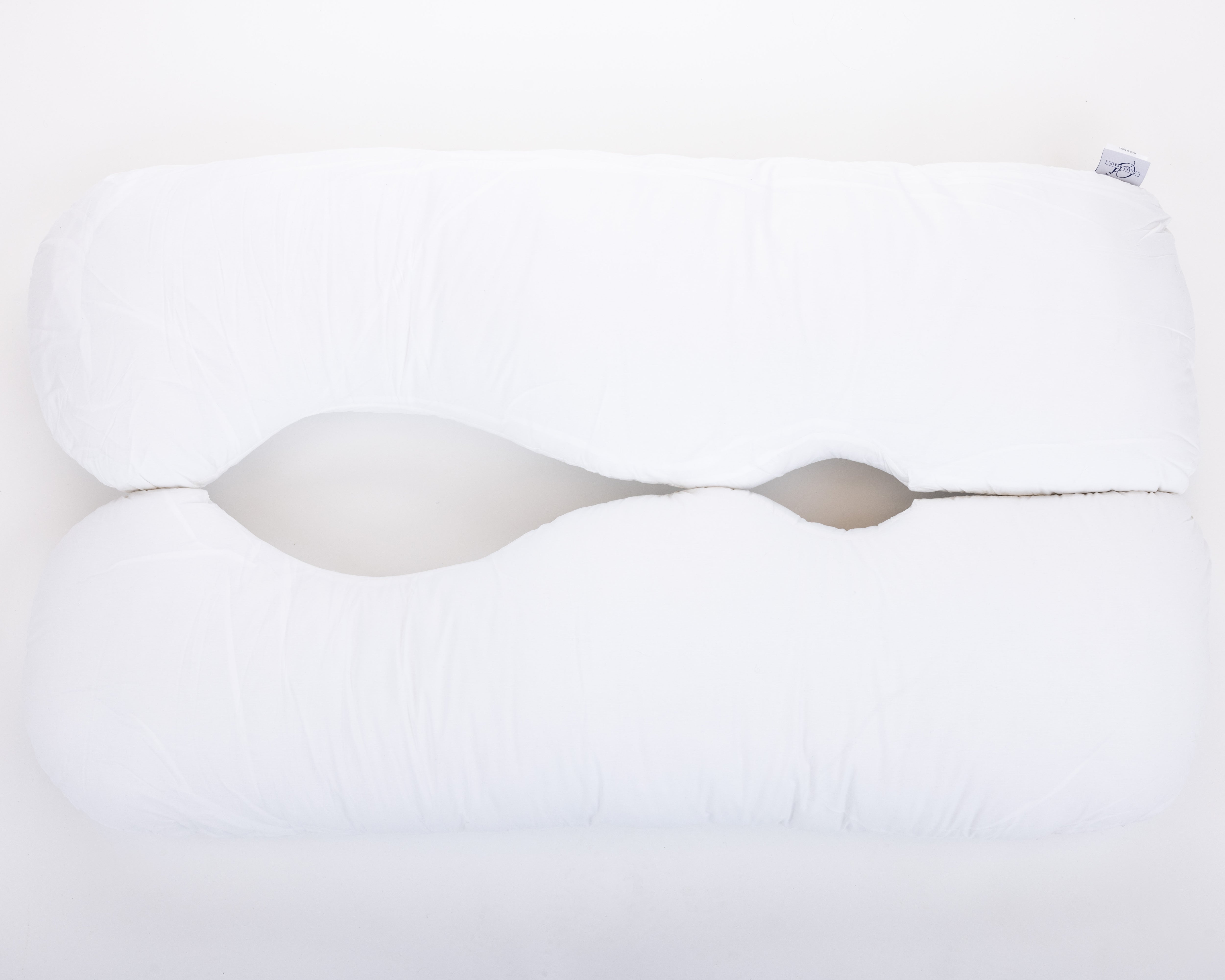
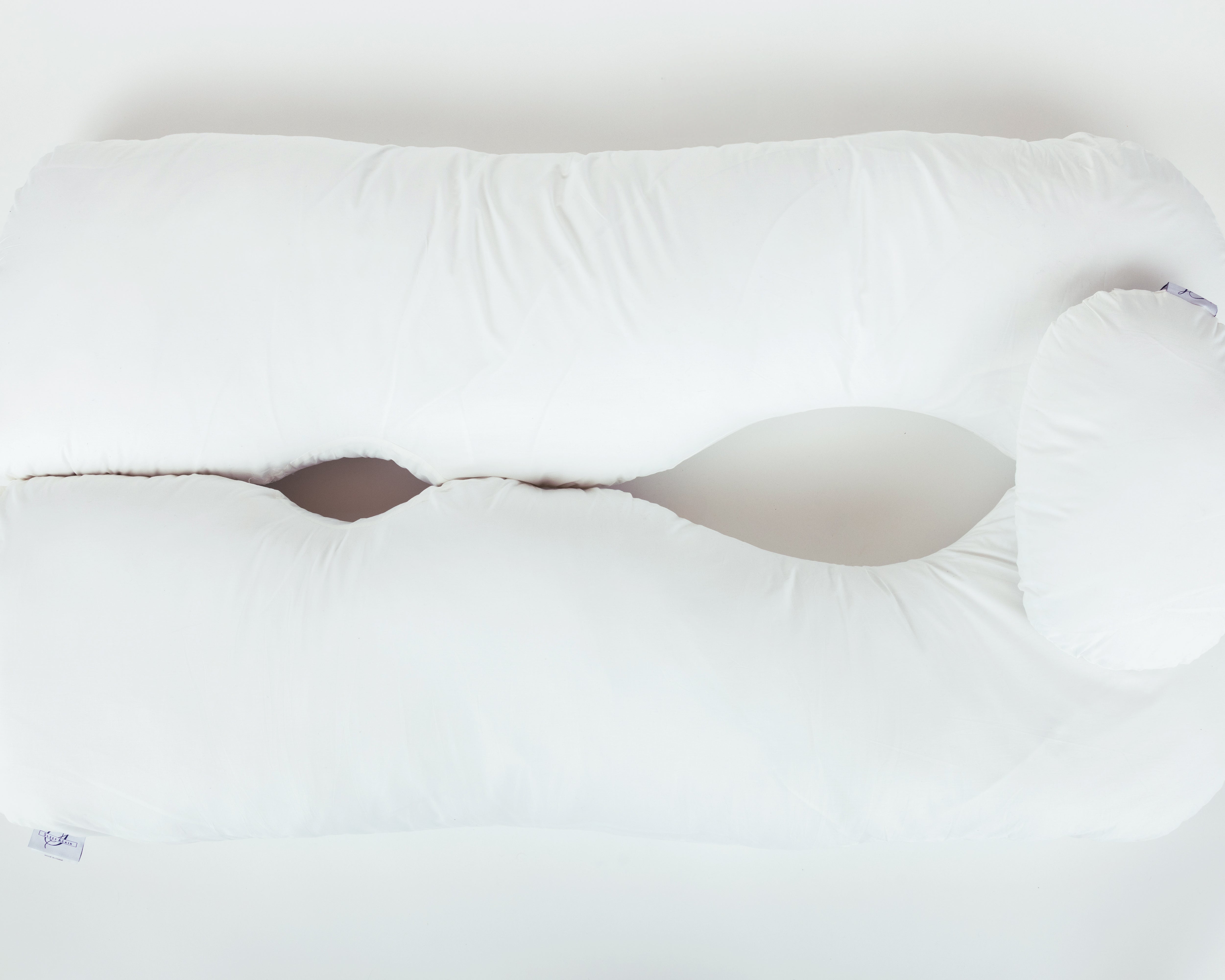
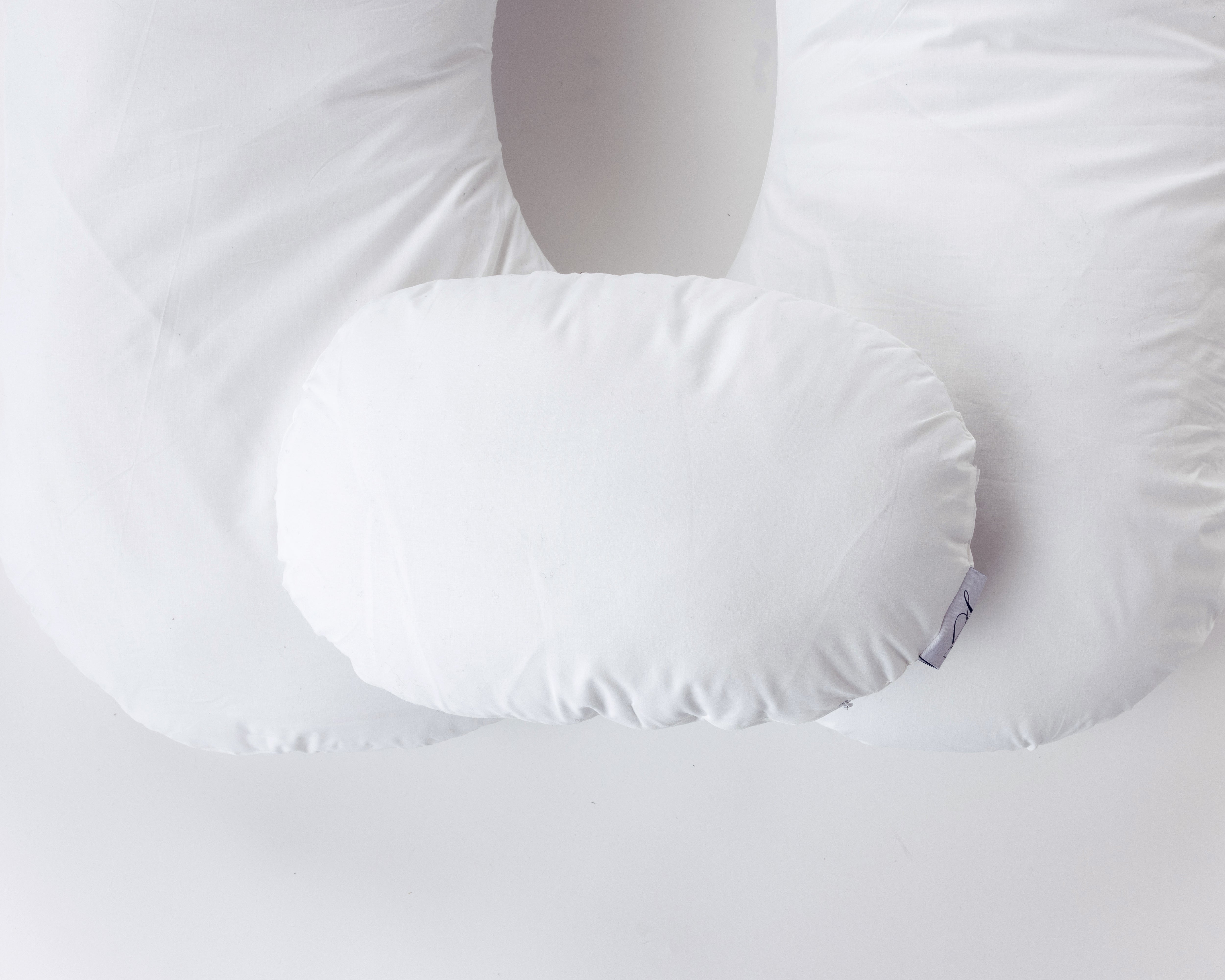
Two Contoured Side Pillows: Prevent rolling and maintain proper shoulder blade positioning throughout the night—absolutely critical for preventing the asymmetric upper back strain that develops when one shoulder rolls forward during sleep. The contoured design cradles your back and hips while providing firm barriers that your body can't push through unconsciously.
Leg Support Wedge: Maintains lower back positioning that directly affects your upper back alignment. This ensures your pelvis stays properly positioned, which allows your thoracic spine to maintain its natural curve effortlessly. Your spine is a connected system—proper lower back support enhances upper back relief.
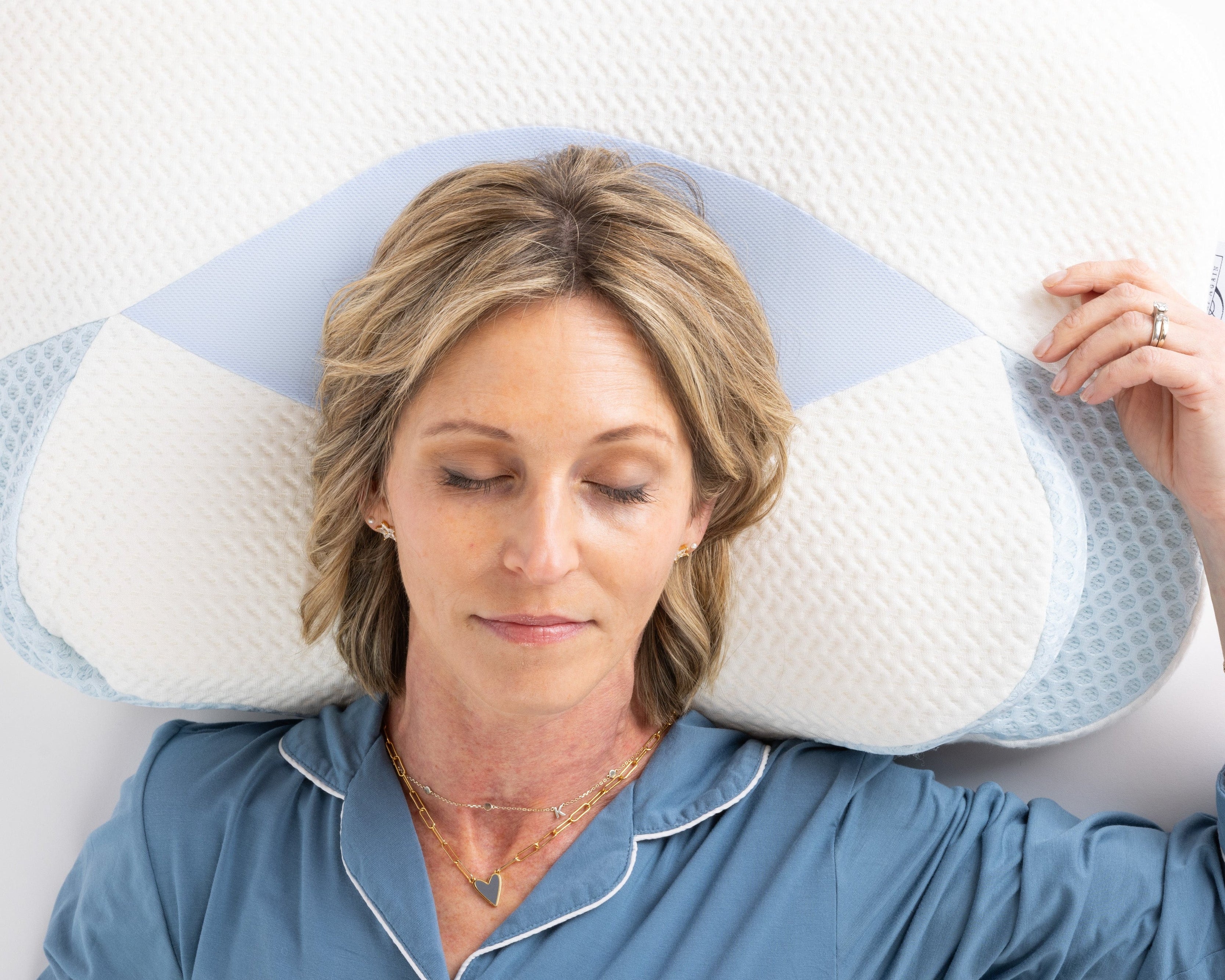
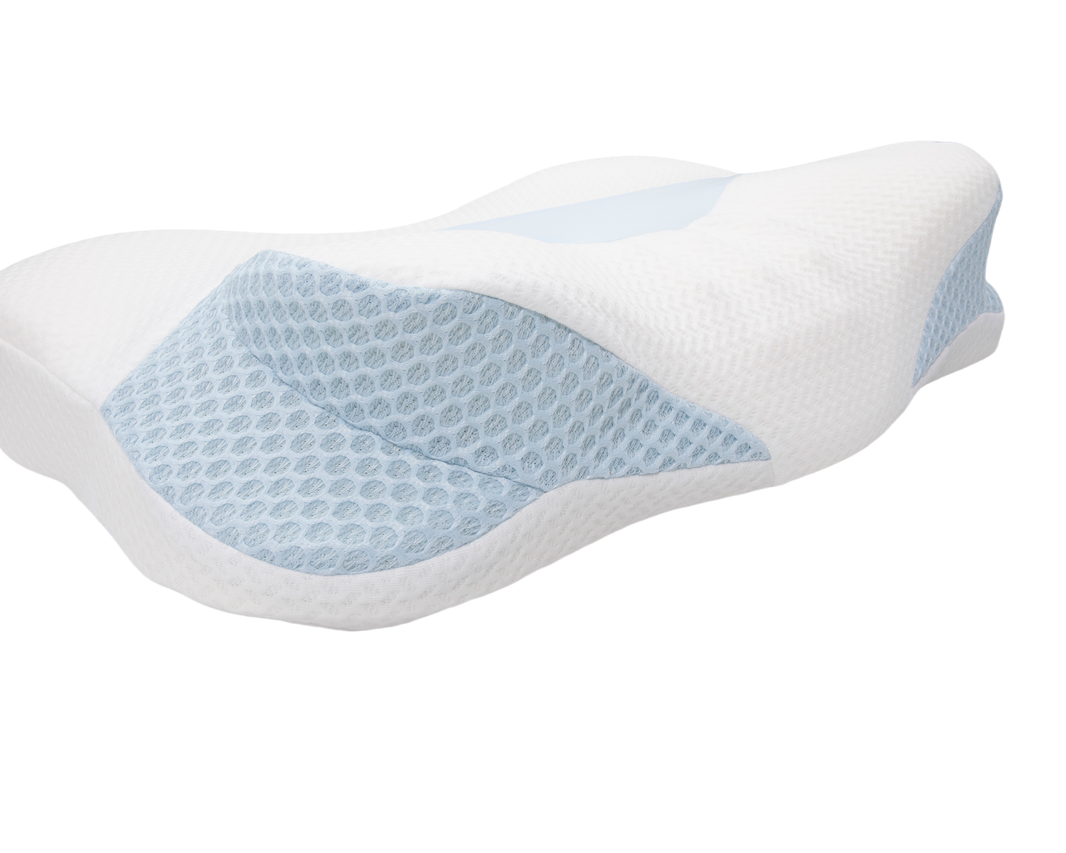
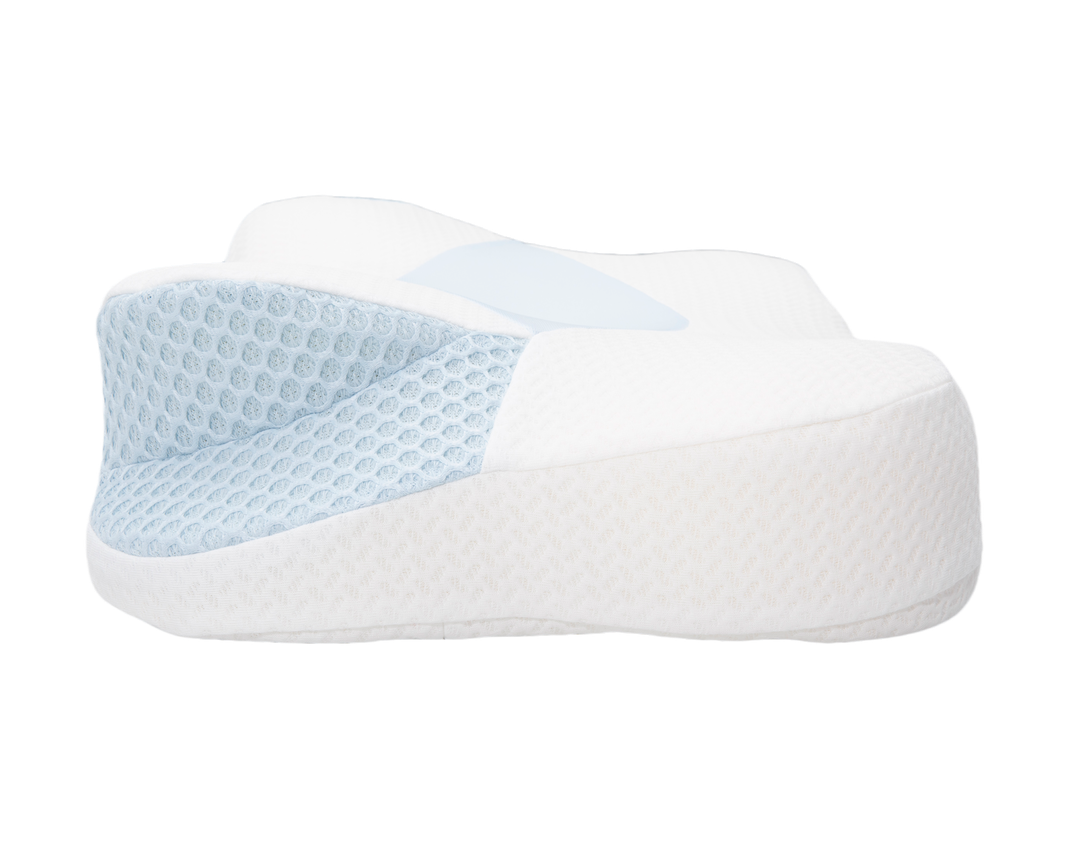
Head Pillow: Provides neutral cervical alignment that prevents upper trapezius strain from radiating into your upper back. Maintains the proper relationship between your head and elevated torso so your neck muscles can fully relax, preventing the cascade of tension that travels down into your upper back.
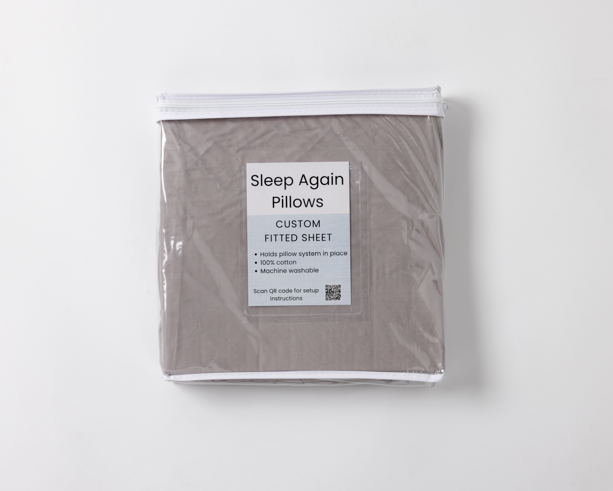
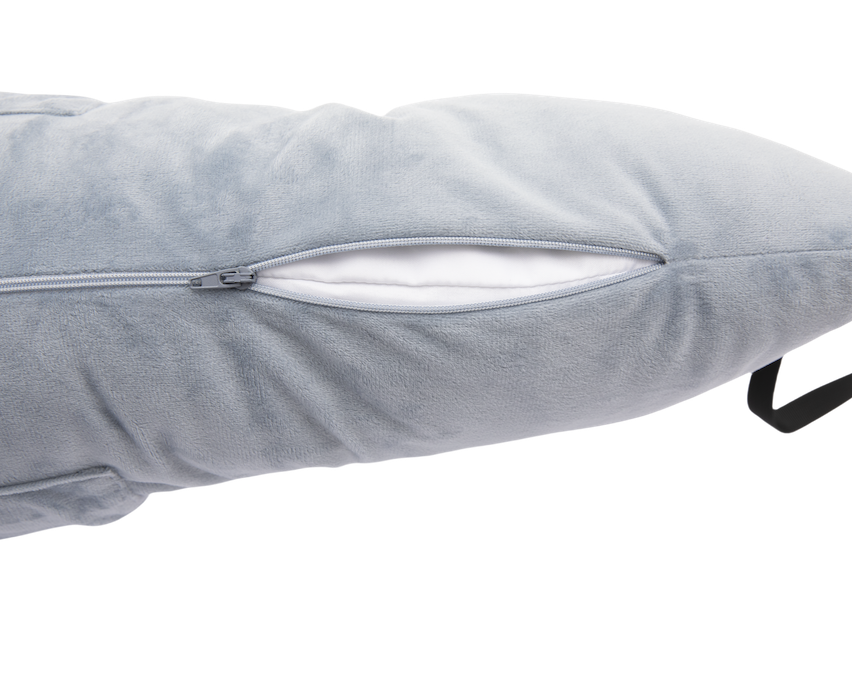
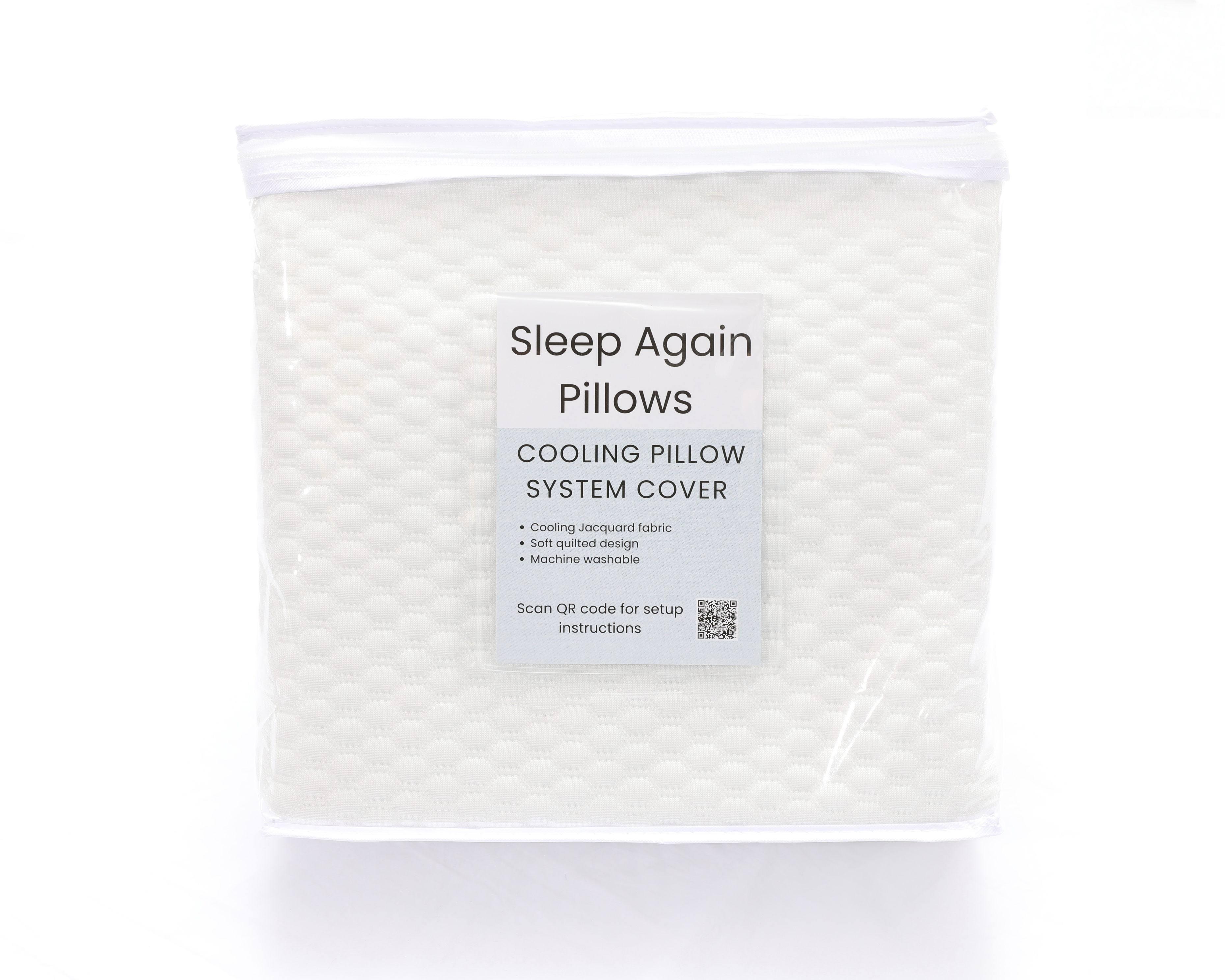
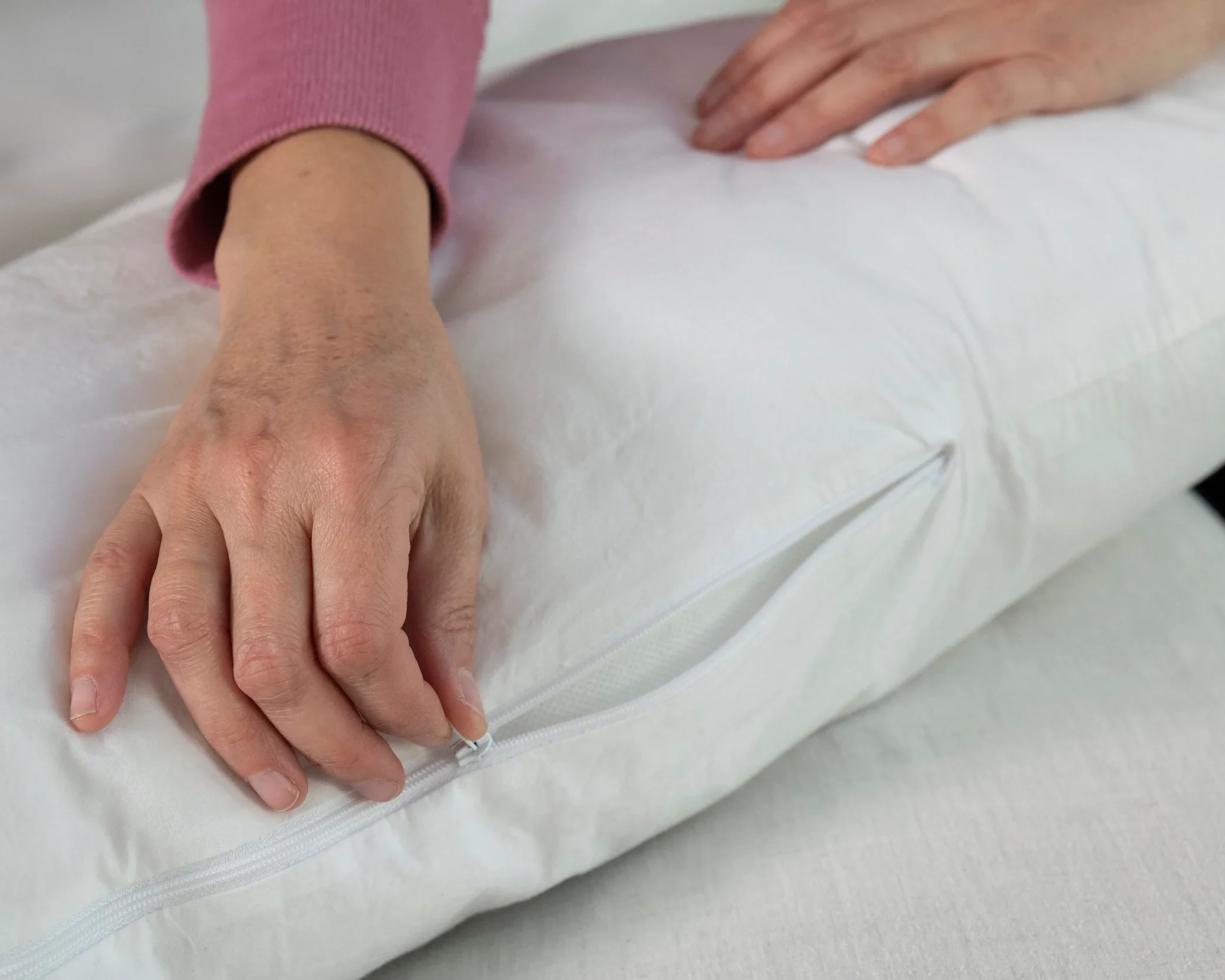
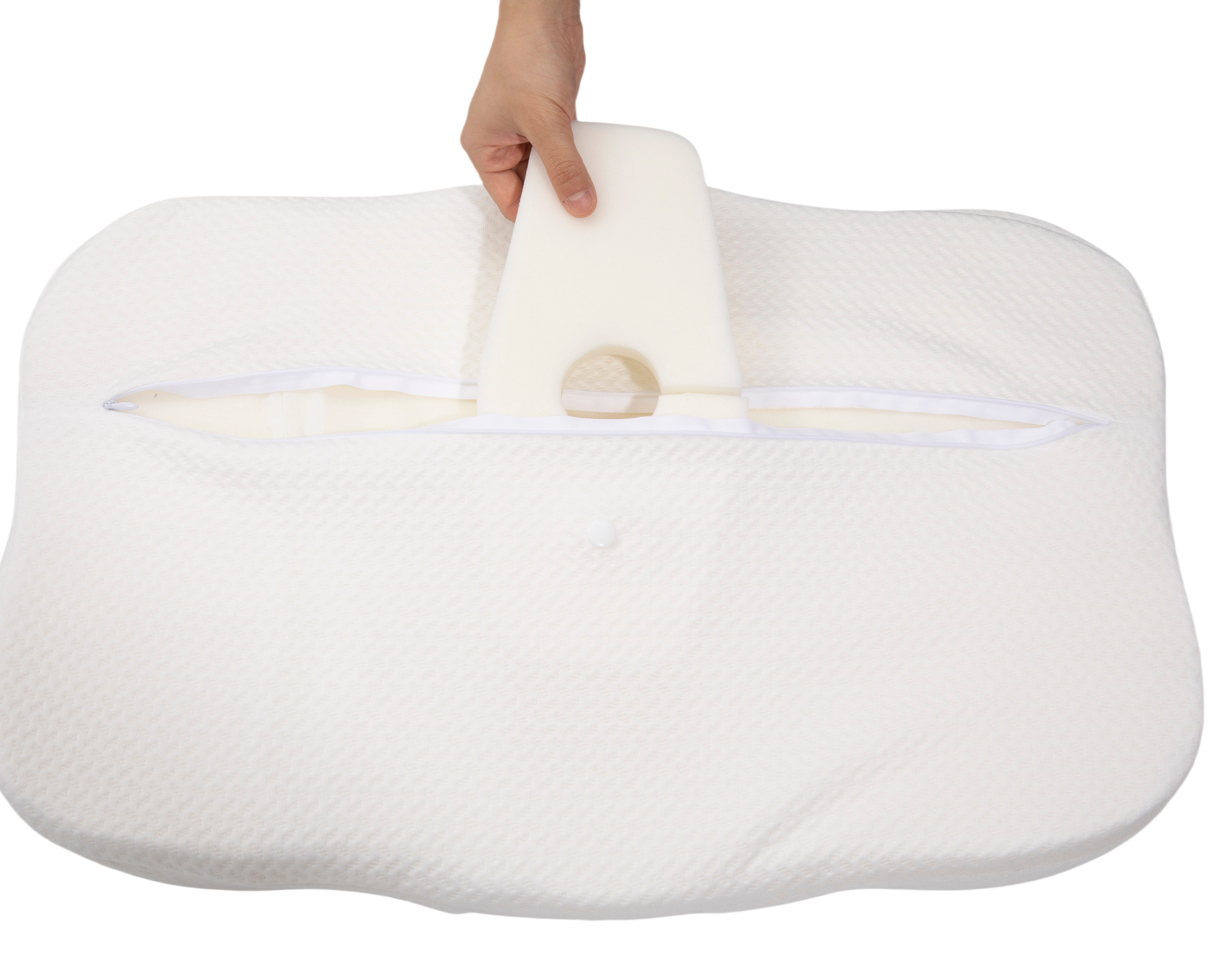
Removable washable slipcovers: Professional positioning support shouldn't require choosing between relief and hygiene.
What Makes It "The Only" Solution
Random positioning pillows address isolated problems—elevate this, support that. The Sleep Again Pillow System addresses your body as a connected unit, ensuring that supporting your upper back doesn't create problems in your lower back, that elevation doesn't cause sliding, and that preventing rolling doesn't create pressure points elsewhere.
This integrated approach is why the Sleep Again Pillow System prevents the upper back pain that people have been accepting as normal for years. It was designed specifically to solve the positioning problems that create morning upper back pain, not adapted from products meant for other purposes.
Whether you're dealing with chronic upper back pain from sleep positioning or recovering from surgery that requires elevated positioning, the Sleep Again Pillow System is the only full-body pillow system designed specifically for comprehensive support.
SHOP THE BEST PILLOW FOR UPPER BACK PAIN RELIEF
The Investment Reality
Most people experiencing chronic upper back pain spend $120-250 trying different pillows, mattress toppers, and positioning aids that ultimately don't solve the problem. The Sleep Again Pillow System costs less than that trial-and-error process and works from night one.
The Sleep Again Pillow System is HSA/FSA eligible, effectively reducing the cost by 20-30% for most people, depending on your tax bracket. When you factor in the cost of poor sleep—lost productivity, ongoing discomfort, potential physical therapy visits for upper back issues—professional positioning support often pays for itself quickly.
Many people continue using the Sleep Again Pillow System long after their upper back pain resolves because it provides superior overall sleep quality. The investment isn't just in solving your current problem—it's in maintaining pain-free sleep going forward.
Beyond Positioning: Supporting Upper Back Health
While proper elevated back sleeping is foundational for eliminating upper back pain after sleeping, these complementary strategies support overall upper back health:
Daytime posture awareness: Work on maintaining neutral shoulder blade positioning during the day. Set hourly reminders to check that your shoulders aren't creeping up toward your ears and your shoulder blades aren't winging out from poor desk posture.
Doorway stretches: Stand in a doorway with your arms at 90 degrees against the frame and gently lean forward to stretch your pectorals. This helps counteract the forward shoulder position that accumulates stress in your upper back throughout the day.
Rhomboid strengthening: Simple exercises like wall slides and scapular retractions strengthen the muscles between your shoulder blades, supporting better posture that translates to less nighttime strain and faster relief from existing upper back pain.
Stress management: Since stress manifests as physical tension in your upper back, addressing your stress directly reduces the baseline tension your sleep positioning needs to overcome. Meditation, deep breathing, and regular movement all help reduce the muscular tension that compounds with poor sleep positioning.
When to See a Healthcare Provider
While most upper back pain after sleeping stems from positioning issues, certain symptoms warrant professional evaluation:
Seek medical attention if you experience: upper back pain that worsens despite positioning changes, pain accompanied by numbness or tingling in your arms, morning upper back pain that persists throughout the day without improvement, upper back pain that developed after an injury or accident, pain severe enough to limit your daily activities, or symptoms that include fever or unexplained weight loss.
A physical therapist can evaluate your specific situation, identify contributing factors like muscle imbalances or postural issues, and provide targeted treatment to complement your improved sleep positioning.
Frequently Asked Questions
Q: How long does it take to see improvement in upper back pain after sleeping?
A: Most people notice significant improvement within 3-7 days of consistent proper positioning. The reduction in morning stiffness often happens even faster, sometimes within the first night, while complete resolution of chronic upper back pain may take 2-3 weeks as muscles release long-standing tension patterns.
Q: Why is elevated back sleeping better than flat back sleeping?
A: Elevated back sleeping maintains your natural thoracic curve rather than flattening it, prevents shoulders from rolling forward, which strains upper back muscles, distributes your body weight more evenly to eliminate pressure points, and allows your postural muscles to fully relax instead of working to maintain stability.
Q: Will changing my sleep position really eliminate my upper back pain?
A: For most people experiencing upper back pain after sleeping, proper positioning is the primary solution. If your pain stems from sleep positioning (which accounts for the majority of cases), correcting your positioning will dramatically improve or eliminate the problem within the first week or two of consistent use.
Q: How do I know if my mattress is causing my upper back pain?
A: If you consistently wake with upper back pain regardless of your pillow positioning, or if your pain improves when sleeping in different locations, your mattress may be contributing. Mattresses that are too soft or too firm can create upper back strain that even good pillow positioning can't fully overcome.
Q: Can I train myself to stop sleeping in positions that cause upper back pain?
A: Not effectively. You can't consciously control your positioning during unconscious sleep. The solution is creating a positioning setup that makes proper positions comfortable and poor positions difficult or impossible. This is why elevated back sleeping with proper support works—it creates mechanical support for optimal positioning.
Q: Why don't regular pillows work well for eliminating upper back pain?
A: Standard household pillows compress 30-40% overnight, losing the elevation and support angles needed for upper back health. They shift and separate, creating gaps that force your upper back muscles to work for stability. Most importantly, they weren't engineered for maintaining precise therapeutic angles throughout hours of sleep.
Q: Is elevated sleeping uncomfortable if I'm not used to it?
A: Most people adapt to elevated back sleeping within 3-5 nights when the positioning is properly supportive. The key is starting with the right angle (20-30 degrees is often ideal for beginners) and ensuring comprehensive support that prevents sliding and maintains comfort throughout the night.
Q: Will the Sleep Again Pillow System work if I've had upper back pain for years?
A: Yes. Chronic upper back pain from sleep positioning responds well to proper support regardless of how long you've been experiencing it. Many people who've lived with morning upper back pain for years find significant relief within the first week of using proper elevated positioning as their muscles finally get the support needed to rest and recover.
Q: Can I use elevated back sleeping if I'm a side sleeper?
A: Absolutely. Many side sleepers find that proper elevated back sleeping actually becomes more comfortable than side sleeping once they adjust to the new position. The key is giving your body 3-5 nights to adapt while ensuring your positioning setup provides complete support without gaps or pressure points.
Q: How is the Sleep Again Pillow System different from a wedge pillow?
A: A simple wedge pillow only addresses upper body elevation—it doesn't provide the head support, side support to prevent rolling, or leg elevation that creates comprehensive positioning. The Sleep Again Pillow System is the only full-body pillow system designed specifically to address all the positioning factors that contribute to upper back pain.
Q: What if I share a bed with a partner?
A: The Sleep Again Pillow System uses less bed space than most DIY positioning setups while providing superior support. The modular design means you can position components on your side of the bed without affecting your partner's space, and many couples find that proper positioning actually improves both partners' sleep quality.
Q: Is the Sleep Again Pillow System HSA/FSA eligible?
A: Yes. The Sleep Again Pillow System qualifies for HSA/FSA purchases, effectively reducing the cost by 20-30% for most people depending on your tax bracket. This makes professional-grade positioning support accessible at a significantly lower real cost.
The Bottom Line: Solving Upper Back Pain After Sleeping
Upper back pain after sleeping isn't something you have to accept as normal or inevitable. It's a positioning problem with a straightforward solution: elevated back sleeping at 15-30 degrees with comprehensive support that maintains proper alignment all night long.
This therapeutic positioning supports your natural spinal curves, prevents shoulder protraction that stresses upper back muscles, distributes weight evenly to eliminate pressure points, and allows your postural muscles to truly relax while you sleep. When your upper back has the support it needs to rest properly, the accumulated tension that's been waking you up with pain can finally release.
The Sleep Again Pillow System—the only full-body pillow system designed specifically for comprehensive positioning support—provides this therapeutic elevated back sleeping from night one. Every component works together as an integrated unit to ensure your upper back gets the support it needs throughout your entire sleep, not just for the first few hours before pillows compress and shift.
Remember that upper back pain you've been living with for months or years won't completely resolve in a single night, but most people notice significant improvement within the first week of proper positioning. The key is consistency—your upper back needs the same quality support every single night to break the cycle of accumulating tension.
Most importantly, you don't have to accept waking up in pain as just part of your life. With proper elevated back sleeping, your upper back can feel as good in the morning as it does in the evening, and sleep can return to being the restorative process it's meant to be rather than a nightly source of additional pain.
Medical Disclaimer
This information is provided for educational purposes only and should not replace professional medical advice. Upper back pain can have various causes, and while sleep positioning is often a contributing factor, persistent or worsening pain should be evaluated by a healthcare provider.
Always consult with your doctor, physical therapist, or other medical professional before making significant changes to your sleep positioning, especially if you have been diagnosed with specific upper back conditions, spine problems, or other health concerns that may affect your sleep positioning needs.
While proper sleep positioning can be a valuable component of upper back pain management, it should complement appropriate medical care rather than replace it. If you experience severe pain, pain that radiates to your arms or chest, numbness, weakness, or other concerning symptoms, contact your healthcare provider immediately.